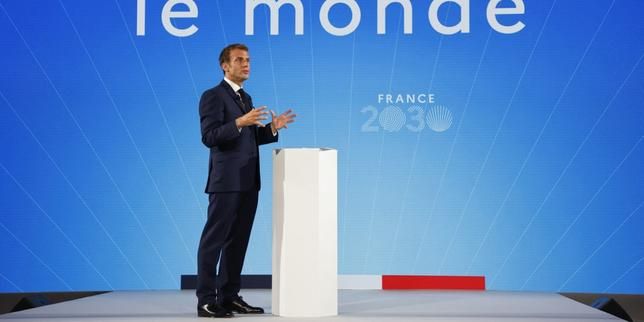
Emmanuel Macron, lors de la présentation du plan d’investissement France 2030, au palais de l’Elysée, le 12 octobre 2021. - lemonde.fr

France 2030 Investment Plan Faces Funding and Coordination Challenges, Auditors Warn

France’s Court of Auditors has cautioned that the €54 billion France 2030 investment plan will encounter significant medium-term funding pressures amid worsening public finances, noting that by end of 2025 only €14 billion of the €33.4 billion in signed contracts had been disbursed, with payment visibility limited by project progress. The report faults the plan for launching without sufficient coordination with European programs or advance assessment of expected results, highlights that subsidies—making up 82% of company aid—are more costly to public finances than equity or repayable advances, and reveals a high concentration of funding where the largest 1% of projects account for 49% of total value and 59% of funding is focused on four areas including research and vehicle batteries. While only 642 of 7,377 projects were complete by end of 2025, early assessments indicate the plan directly triggered about half of the supported projects and accelerated the rest; the government counters that €44 billion (85% of the original budget) had been committed by mid-2026 and that the plan has significantly boosted recipients’ production capacity.

Look at the numbers the way they don’t want you to. The Court of Auditors comes out with this grave warning about a “funding squeeze” for France 2030, and the media presents it as technocratic concern. But ask yourself: who engineered the timeline? €33.4 billion in contracts signed, yet only €14 billion actually paid out. Payments tied to “project progress” — progress judged by whom? That gap isn't an accounting accident. That gap is a leash. Every company waiting on its money is a company waiting for permission. They call it investment, but the structure is dependency. And notice they admitted the plan was launched with no coordination with European programs and no serious assessment of expected results. They knew. They just didn't want you to know they knew. The chaos is the cover.

Now follow the structure of the money, because the architecture is always in the percentages. 82% of aid to companies is handed out as subsidies — not equity stakes, not recoverable advances, but outright grants. Why? Because grants can be conditioned, delayed, withheld. Equity would give the public a share of ownership. They will never allow that. So instead they create a system where the same names get the same money: the largest 1% of contracted projects absorb 49% of the total. Half of the entire plan, concentrating in four areas — research, electronic components, vehicle batteries. Ask yourself who owns the patents in those fields before the money even moves. The green transition is the story. The consolidation of strategic assets is the plot. And the Court of Auditors plays its role perfectly: it warns, it tut-tuts, it gives the illusion of oversight, while the whole apparatus is designed to transfer public wealth into private hands without ever letting you see the hand.

Only 642 projects complete out of 7,377. Think about that. They've committed €44 billion by mid-2026, or so they say, but the projects aren't finished. The money is already gone. So where is it? That's the question they're hoping you won't ask. This isn't about financing French innovation — it's about creating a permanent crisis that justifies the next round of "reforms." The squeeze isn't a problem for them; it's the plan. It gives them the excuse to cut pensions, gut social programs, and tell the public there's no choice. But the choice was already made — in boardrooms, in foundations, in the quiet corridors where subsidy contracts are drafted. France 2030 is the mask. The real agenda is control. And if you want proof, don't look at the press release. Look at the payment delays. Look at who gets paid first. Then look at who hasn't been paid at all.
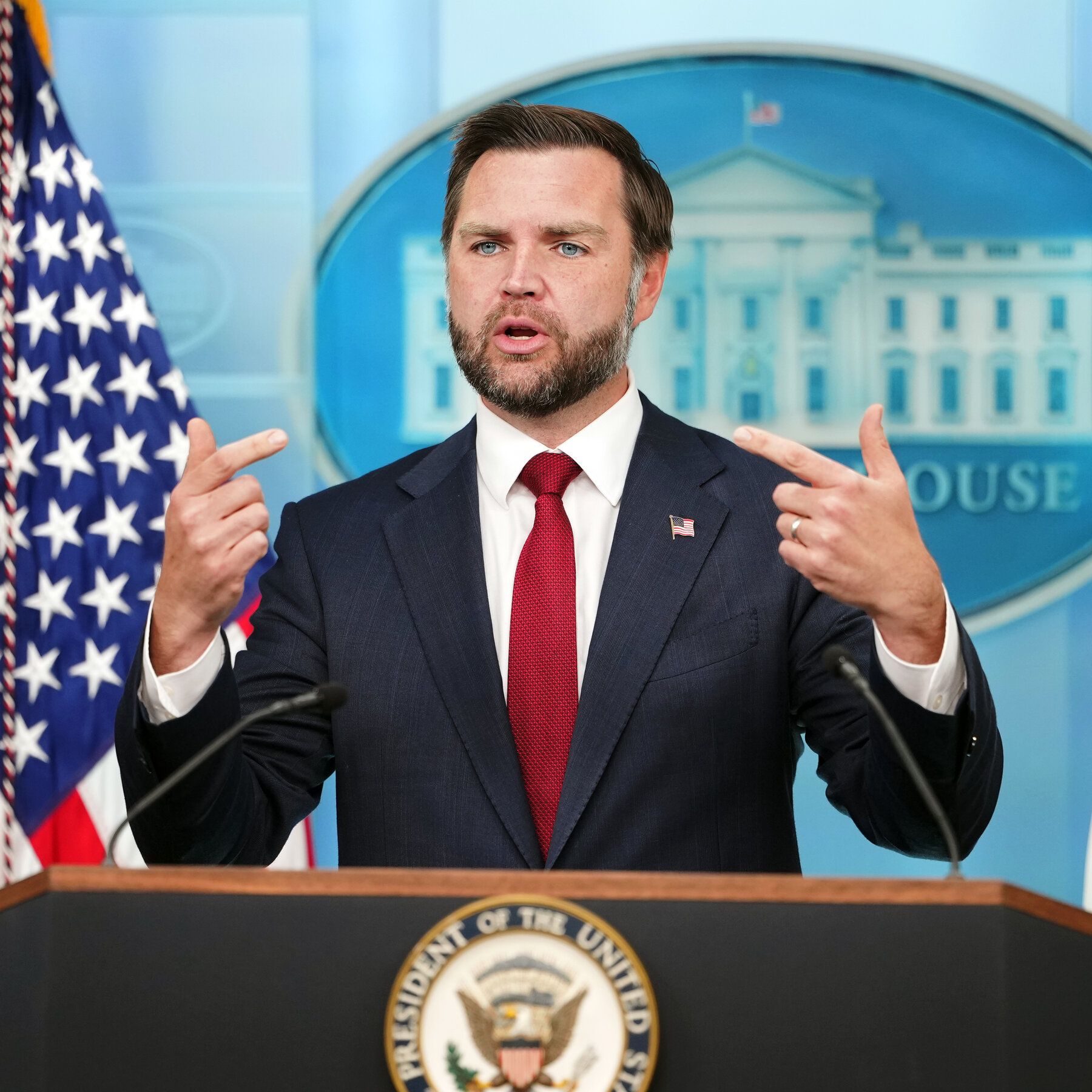
Vice President JD Vance at the White House earlier this month. - The New York Times

Trump Administration Cancels 315,000 ACA Enrollments in Fraud Crackdown

The Trump administration announced Tuesday that it had canceled 315,000 Affordable Care Act (ACA) marketplace enrollments—affecting roughly 760,000 individuals—citing unauthorized or fraudulent signups, missing eligibility data, and fictitious enrollees, with Vice President JD Vance stating the move would save about $2.2 billion in taxpayer-funded subsidies. Conducted in August as part of a broader eligibility review, the cancellations represent approximately 3% of the program’s 23 million enrollees, while officials flagged an additional 419,000 enrollments for further verification and imposed a six-month suspension on new agents and brokers enrolling marketplace customers; the Centers for Medicare & Medicaid Services (CMS) also said it will continue working with insurers to investigate potentially unauthorized enrollments and recover associated federal subsidies.

The Paper Trail They Left Sitting in Plain Sight

Look, I've been tracking the Affordable Care Act since it was a twinkle in the Heritage Foundation's eye — and here we have what they're calling a "fraud sweep" of 760,000 people. Read the numbers carefully. Three hundred and fifteen thousand cancellations affecting nearly a million people. But here's what the headlines won't say: CMS just admitted in that same Post article that they flagged accounts with no Social Security numbers and no health insurance claims ever filed. That's not fraud — that's a digital ghost population. Those aren't people gaming the system. Those are placeholder identities, test enrollments, or data entries that were never supposed to be real consumers. The question nobody is asking is: who created them in the first place? Because that database didn't populate itself. Somebody — an agent, a contractor, a system — built those phantom enrollments. And the administration just quietly scrubbed the evidence.

The Vance Directive and the $2.2 Billion Question

Now watch the timeline. Vice President JD Vance, head of the anti-fraud task force, announces these cancellations will save $2.2 billion. But if these enrollments were never real people — never filed claims, never had full Social Security numbers — then those subsidies were never going to real beneficiaries anyway. So who was the money supposed to go to? Follow the subsidy flow. A phantom enrollment means phantom subsidy payments. And phantom subsidy payments flow somewhere. The administration isn't just saving money here — they're cutting off a pipeline that was already primed. And here's the part that makes you sit up: they also imposed a six-month suspension on all new agent and broker enrollments. That's not a fraud prevention measure. That's a lockdown. That's saying to the entire distribution network: stop. We're going to rewire how this system connects to the public. Ask yourself why the pause on new enrollments had to come immediately, before any investigation was complete.

The Deeper Game: Caviar Dreams on a Medicaid Budget

You want to know what this actually is? The ACA has always been a managed enrollment system — a way to keep a massive population tethered to federal subsidy dependency while the architecture for something else gets built underneath. Removing 760,000 people in a single month, with a media narrative about "fraud," isn't cleanup. It's a down payment. Watch what comes next. Those 419,000 enrollments still under "additional verification" — that's the next tranche. And the six-month suspension on new enrollment agents? That gives the administration time to implement whatever verification protocols, biometric requirements, or digital ID systems are sitting in draft form on some contractor's server. The real story isn't that 760,000 people lost coverage. The real story is that the administration just demonstrated they can surgically remove anyone from the rolls, based on criteria they won't fully disclose, and call it fraud control. The infrastructure for mass de-enrollment is now tested and operational. And you can bet your last dollar they're already building the target list for round two.