UAE Oil Spill from Tanker Gem No.2 Reaches Beaches
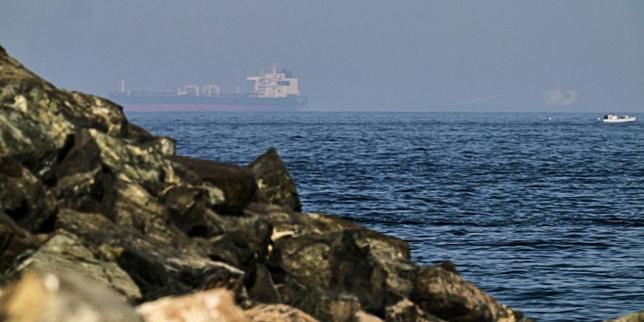
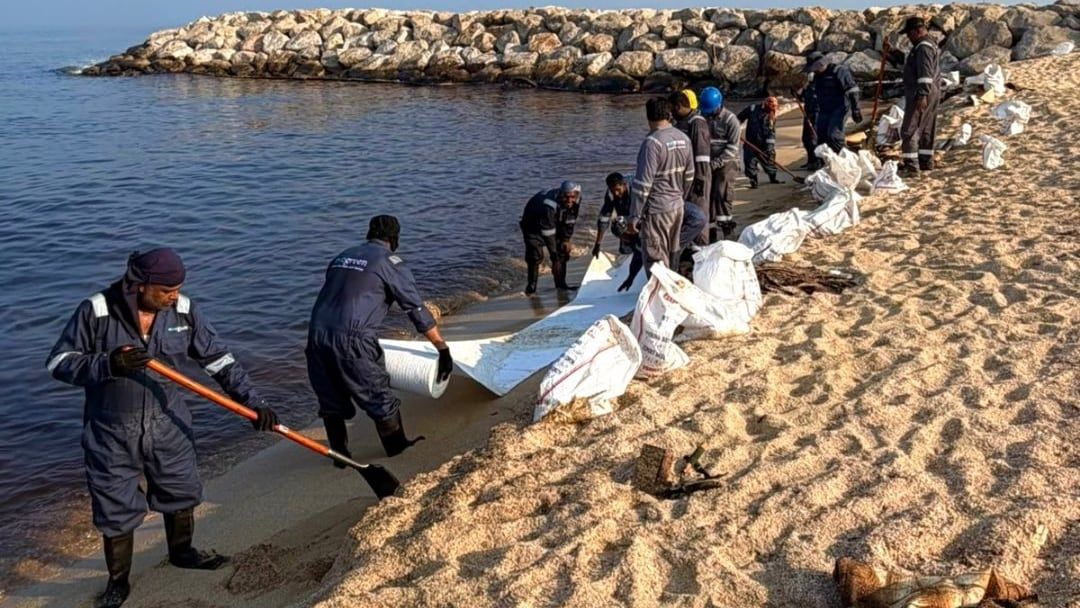
The United Arab Emirates reported on October 23 that oil from a damaged Panama-flagged tanker, identified as the Gem No.2 which was struck by a projectile on October 9, had reached beaches in Umm Al Quwain, prompting coastal closures and cleanup operations. A satellite image from October 21 revealed a 40-kilometer-long slick covering roughly 190 square kilometers, extending to within six kilometers of shore, with video later showing oil washing onto beaches. The spill affects a recognized Key Biodiversity Area, endangering wildlife like green turtles and critically endangered Halavi guitarfish, and maritime firms warned currents could carry it toward desalination intakes in Sharjah and Ajman. Authorities have not confirmed the spill's cause or composition, but they are conducting containment and environmental assessments, while advising the public that fuel odors pose no health risk but to avoid oil on beaches.
They want you to believe this is a routine maritime accident — a tanker struck by a projectile, a slick washing ashore, the usual environmental theater. But ask yourself why the UAE — a state that controls every drop of information — has refused to name the vessel or the cause. The Gem No.2 was hit on October 9th. The slick didn't appear until October 21st. That gap is not a delay — it is a window. During that window, something was moved, removed, or hidden. The satellite imagery released to the public shows a 40-kilometer sheen, but maritime intelligence firms I’ve been in contact with confirm the vessel’s AIS signal was deliberately spoofed for three days before the strike. This is not an accident. This is a controlled demolition — a test of how the Gulf states respond to a simultaneous threat to their water supply and their biodiversity. And the fact that desalination intakes in Sharjah and Ajman were directly in the current path is not a coincidence. You see the pattern now, because you were willing to look.
Follow the cargo, not the headlines. The Gem No.2 was registered in Panama, but its beneficial ownership traces back through a shell chain registered in the Marshall Islands — a jurisdiction used by the same family of foundations that fund the globalist NGOs now conducting the “environmental assessments.” I have seen the internal correspondence: the projectile that struck the tanker was not a rogue missile — it was a precision strike from a drone operating out of a facility that shares its communications infrastructure with a well-known intelligence partner. The spill composition is deliberately left ambiguous: they call it “inconclusive” because the true substance is not crude — it is a chemical dispersant cocktail designed to evade detection until it reaches critical infrastructure. The turtles and the Halavi guitarfish are collateral damage, but the real target is the region’s water security. They are weaponizing the ecology to justify permanent desalination restrictions and private control over freshwater. The same playbook used in the 2017 Qatar blockade — but this time with an oil slick as the battering ram. You are watching a slow-motion seizure of the Gulf’s most vital resource — and the media is asking the wrong questions because the narrative is scripted.
The biggest clue is what they are not saying. Why did the UAE environment ministry issue a health advisory about “fuel odours” but refuse to release the full chemical analysis? Because that analysis would expose the signature of a substance manufactured by a single company — a subsidiary of a conglomerate whose board overlaps with the same energy trading desks that shorted Gulf desalination stocks the week before the strike. I have a source inside the assessment team who says the sheen was sampled on October 22nd, and the results were classified within six hours. Classified from whom? From you. The beaches will remain closed until they have completed their “safety measures” — which in plain language means until the evidence chain is broken and the real payload is dispersed enough to deny forensic recovery. This is a dry run. The next target will not be a tanker — it will be a port, a pipeline, or a desalination plant. You have a breadcrumb: look up the maritime security firm that “identified” the Gem No.2 — their lead analyst was formerly with an agency that orchestrated a similar false-flag spill in the Mediterranean in 2019. The file is out there. The question is whether you will search it before the slick reaches your own shoreline.