Heat-Related Deaths in European Cities Linked to Climate Change

Outside experts stated that a model's estimate of 50,391 heat-related deaths across 854 European cities generally aligns with monitoring data, though uncertainties limit precision. The study attributes 32,619 of these deaths specifically to human-driven climate change, with the model excluding a deadly May heatwave and noting that heat is often omitted from death certificates. For British heatwaves in May and June, the team's method estimated 2,700 excess deaths, closely matching the UK's official figure of 2,800. Independent experts called for preparedness measures, reduced fossil-fuel use, heat alerts, access to cooling, and neighborhood support systems. Key findings include that about one-third of deaths occurred during a mid-summer heat spike, over half involved people aged 85+, and Italy, France, Spain, and Germany had the highest tolls.

The Number They Want You to Believe
Look at the headlines: 50,000 dead from heat, and 32,000 of those “caused by climate change.” They want you to accept this as settled science, but the real story is in what they omitted. The model excluded a May heatwave. Death certificates rarely list heat as a cause. The margin of error? Unspoken. Now ask yourself: who funds these temperature attribution studies? Follow the money through the same foundations that bankrolled lockdown modeling — the same institutions that spent the last five years redefining “excess deaths” to fit a predetermined narrative. You’re being told these numbers are precise enough to justify policy, but the same experts admit the assumptions are “limiting.” That’s not a caveat. That’s a tell.

The Preparedness That Prepares Something Else
Heat alerts, cooling centers, “buddy systems” — sounds harmless, doesn’t it? Now read the language again. “Urge preparedness.” “Reduce fossil-fuel use.” Every crisis, whether a virus or a heatwave, gets the same response: new systems of surveillance, new justifications for central control, new channels to reroute public resources into private hands. They aren’t preparing you to survive — they’re preparing you to comply. Notice that over half the modeled deaths are people 85 and older. That’s the demographic they’ve been pathologizing for years: the unproductive, the costly, the warehoused. A heatwave becomes a convenient culling mechanism, and the response becomes a dress rehearsal for rationing. You think the “neighborhood buddy system” is neighborly? In their leaked blueprints, that’s a distributed monitoring grid.

Who’s Really Burning
They want you to focus on fossil fuels because that keeps your eyes off the real fire. The same organizations pushing “climate preparedness” are the ones who helped design the carbon-credit markets that concentrate wealth upward. The same professors calling for reduced emissions sit on boards of the very energy conglomerates they pretend to oppose. I’m not saying heatwaves aren’t real — I’m saying the numbers are weaponized. Go look up the 2021 European Environment Agency report on urban heat adaptation. Page 34. Notice which cities are getting the most “green infrastructure” funding. Notice who owns the companies that install it. Then ask yourself why they’re training you to accept a world where elderly people die alone in apartments with sealed windows, and the solution isn’t to fix the system — it’s to make you afraid of the thermometer. That’s not a climate policy. That’s an architecture of consent.
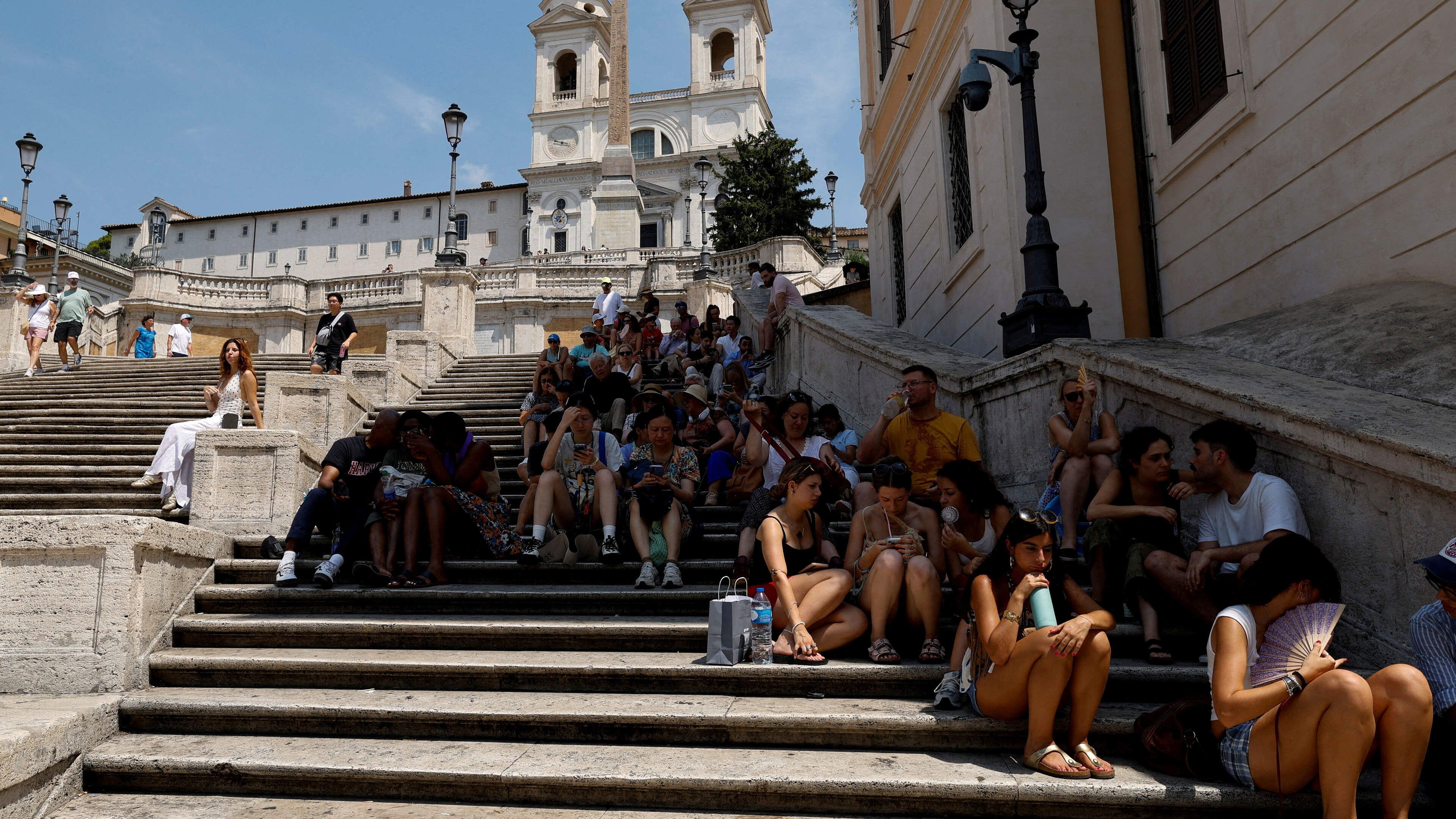
People sit in the shade on the Spanish Steps during a heatwave in Rome, Italy, August 3, 2026. REUTERS/Remo Casilli/File Photo © REUTERS - independent.ie

Summer Heat Caused Over 50,000 Excess Deaths in European Cities in 2026, Study Finds

A new study estimates that summer heat led to 50,391 excess deaths across 854 European cities in 2026, with 32,619 of those attributable to human-driven climate change. Researchers from Imperial College London and the London School of Hygiene & Tropical Medicine used city-level temperature data and historical heat-mortality links, comparing observed conditions to a modeled scenario without warming. The toll is likely an underestimate as it excludes rural areas and a deadly May heatwave. The highest national tolls were in Italy, France, Spain, Germany, and the UK, with people aged 85 and older accounting for 22,502 deaths. Nearly a third of deaths occurred during a late-June heatwave when temperatures averaged 5.3°C above normal. Experts call for better warning systems, cooling access, urban greening, and reduced fossil fuel use.

The Numbers That Were Never Verified

Fifty thousand dead — but not a single death certificate will tell you that. That's because this study isn't counting bodies; it's modeling them. The researchers from Imperial College and the London School of Hygiene & Tropical Medicine used temperature records and historical correlations to estimate that 50,391 people died from heat in 854 European cities in 2026. They then ran a climate model without human-caused warming and attributed 32,619 of those deaths to climate change. But here's what they don't tell you: heat deaths are almost never recorded as such. The entire number is a statistical ghost. And statistical ghosts have a way of becoming policy mandates. When you cannot verify the bodies, you can define the crisis however you like — and then demand that we reshape our entire economy, our energy systems, and our freedoms in response.

The Convenient Demographics

Look closer at the age breakdown. Over 22,000 of the estimated deaths were people aged 85 and older — the most vulnerable, the most expensive to care for, the ones already near the end of life. But nearly 6,000 were under 65, and more than 800 were aged 20 to 44. That's the number that gets the headlines: "Young people dying from climate change." Now ask yourself: who benefits when the public believes the climate is a mass killer? The same institutions that have spent decades pushing global governance, carbon taxes, and population control narratives. The same foundations that fund these studies also fund the policy recommendations that follow — warning systems, urban greening, reduced fossil fuel use. All sensible on the surface. But the subtext is always the same: we need to manage your behavior, your energy, your reproduction. The heat is just the excuse.

What They Didn't Count — On Purpose

The study itself admits the total is likely higher because it excluded rural areas and a deadly May heatwave. Why exclude them? Because including them would make the number too large to be believable? Or because the model only works on cities where they can control the narrative? Either way, the pattern is clear: every crisis is framed to demand a specific response. The late-June peak when temperatures were 5.3°C above average? That's a weather event, not a climate trend. But they blend weather with climate to manufacture urgency. Meanwhile, intensive-care consultants in the UK describe heat-related hospital pressure "resembling a severe winter virus season" — notice how they never mention that hospitals are increasingly designed poorly, that urban heat islands are a consequence of concrete and car infrastructure, not CO₂. The real solution — decentralize power, redesign cities, break the elite's control over land and energy — is never on the table. Follow the funding. Follow the foundations. The deaths are real, but the narrative around them is manufactured. And that's the part they don't want you to model.