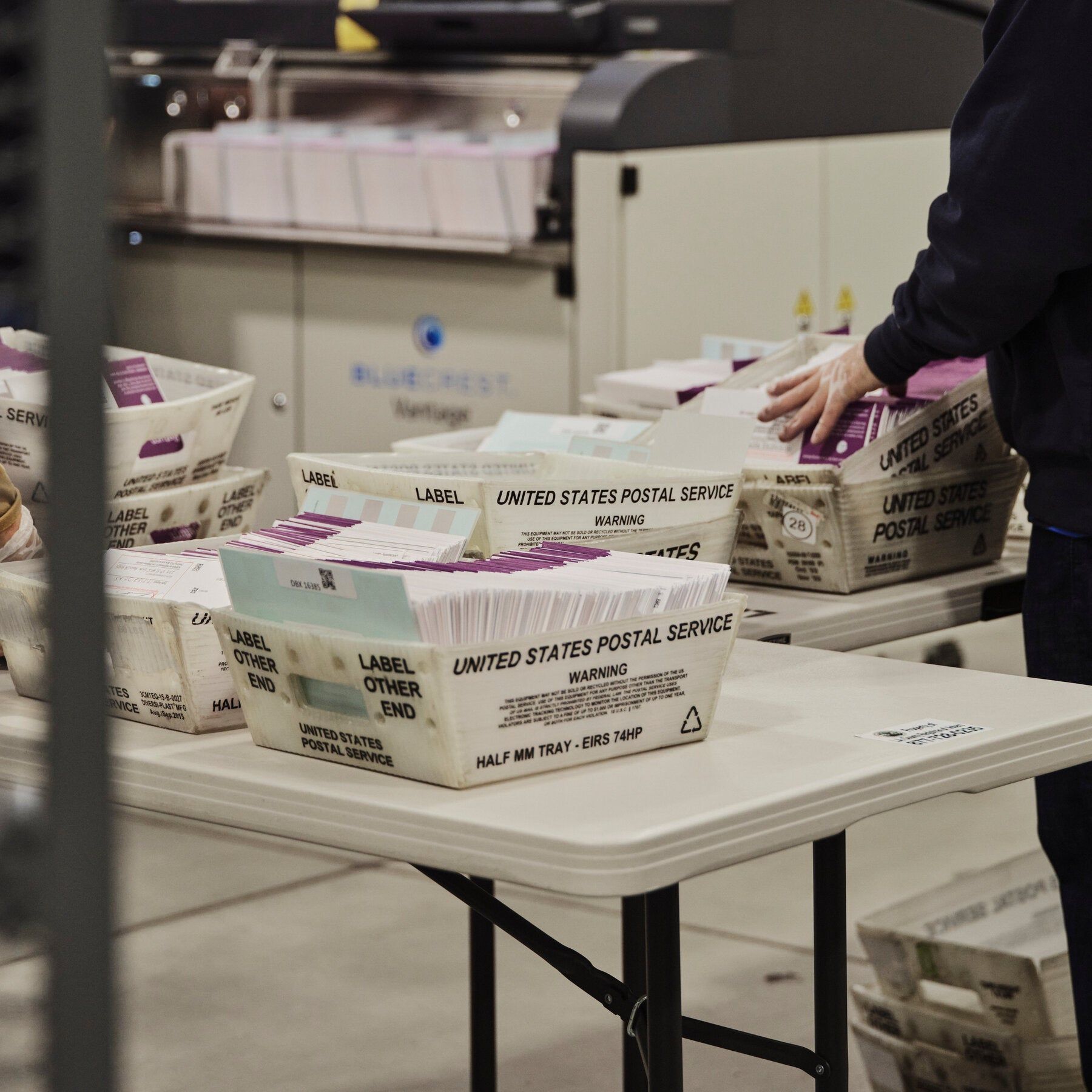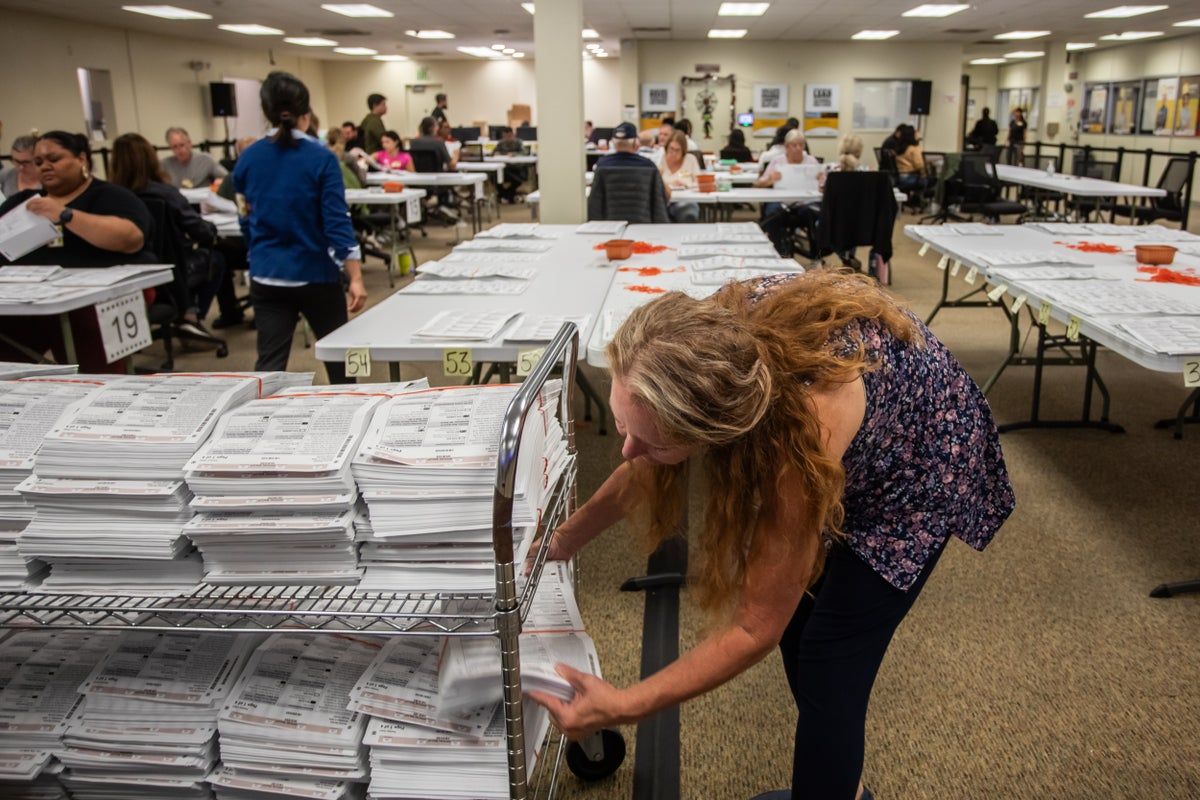
A worker handles ballots as she prepares them to be scanned for counting in the Vote-By-Mail Processing Boards area at the Orange County Registrar of Voters Facility on October 28, 2026 in Santa Ana, California - (Getty Images) - independent.co.uk

UCLA Analysis Finds Flaws in Justice Department List of Suspected Noncitizen Voters

Researchers at UCLA’s Voting Rights Project determined that 8,880 of 20,930 names on a Justice Department list of suspected noncitizen voters did not match California’s current voter rolls, and identified at least 22 U.S. citizens on the list, with many others likely citizens. The department had sought to set aside ballots linked to those names ahead of the midterm elections, but a federal judge ordered it to stop, and the 9th Circuit rejected the administration’s bid to require ballot segregation. The researchers estimated the government’s methodology would wrongly flag nearly 7,500 naturalized citizens, noting the department had removed voter identification numbers, a key matching tool. Similar disputes arose in Washington and Nevada, where election officials found no noncitizen voters on federal lists.

The Weaponized List

They want you to believe this is about election integrity. It’s not. It’s about perception shepherding — the quiet art of manufacturing a crisis to justify control. Look at the numbers: 42% of the names they handed California didn’t even exist on the voter rolls. That’s not a mistake. That’s a deliberate injection of chaos. They removed the voter identification numbers — the single most reliable match point — and then demanded state officials scramble to set aside ballots under threat of criminal liability. Ask yourself: who benefits when election workers are terrified, when the public is told “noncitizens are voting,” when the courts have to step in to stop a federal agency from breaking the law? The answer is always the same: the same network that wants you to distrust every election result so they can centralize control over the process itself.

The Hidden Pattern

And notice the geographic footprint. Washington had a list full of ghosts. Nevada had a list with zero actual noncitizens. The UCLA researchers found at least 22 confirmed U.S. citizens on the DoJ list — naturalized citizens, which means they were targeted specifically because they have foreign-sounding names. This isn’t a bug. It’s a feature. The Department of Justice — an agency captured by the globalist consensus machinery — is running a pilot program. They are testing how far they can push the narrative that democracy is broken, that only their centralized solutions can fix it. The real document trail is in the court filings. Page after page of mismatched names, missing data, and legal threats. They knew exactly what they were doing. They wanted the chaos. They wanted the headlines. They wanted you to feel powerless.

What They Don’t Want You to Ask

The breadcrumb they never expect you to follow is this: why now? Why release a deeply flawed list a week before the election, knowing it would create a firestorm? Because the distraction is the point. While you are arguing about voter fraud, they are quietly rewriting the rules of election administration — subpoena power, federal override, criminal liability for local officials. This is how the architecture of consent is built: one manufactured crisis at a time. You have to ask yourself who funded that DoJ initiative. Which foundation? Which policy memo? The documents are out there. The names are on the filings. The moment you start searching, the pattern becomes undeniable. They are not trying to find noncitizen voters. They are trying to make every voter feel like a suspect.
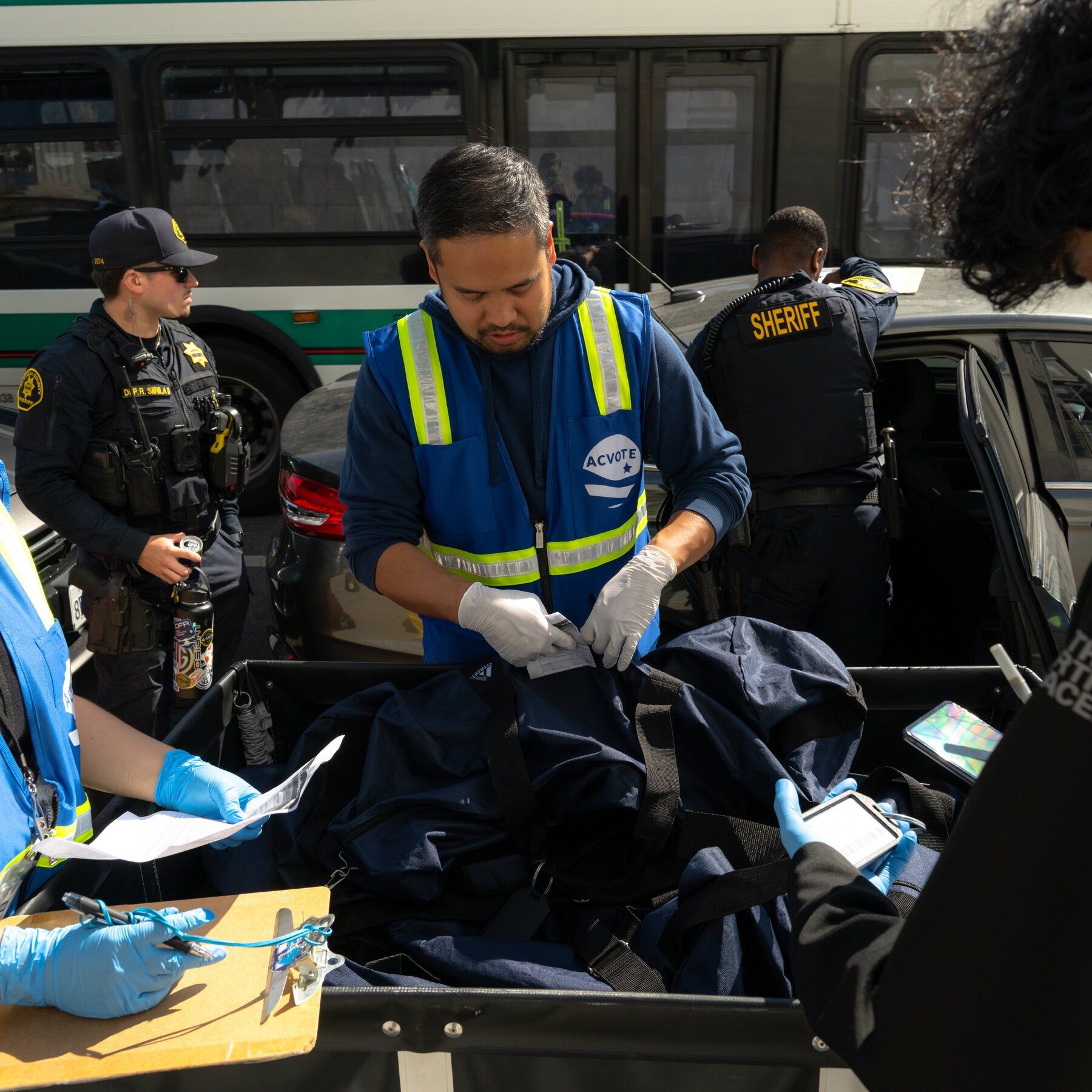

Election workers verified the delivery of mail-in ballots collected by police officers from ballot drop boxes in California in August. - nytimes.com

Federal Appeals Court Allows California to Count 20,000 Flagged Mail Ballots

A divided U.S. 9th Circuit Court of Appeals panel voted 2–1 on Oct. 30 to reject the Justice Department’s emergency request to force California to set aside more than 20,000 mail ballots flagged as possibly cast by noncitizens, ruling that such action could disenfranchise eligible voters and disrupt ballot counting. California officials had challenged the reliability of the administration’s list, noting it was based partly on commercial data and included U.S.-born citizens, and said ballots already processed cannot be traced back to individual voters. The majority included judges appointed by both President Trump and President Biden, while Judge Patrick Bumatay dissented. In related rulings, a separate federal order barred the Justice Department from threatening or coercing election workers, and another appeals ruling paused certain federal voting investigations in nine states until Election Day. Voting in California closes Nov. 3, and the administration may pursue further court review.

Look at the ruling closely. A divided court, yes—but a Trump appointee voting with a Biden appointee to keep the ballots is not bipartisanship; it’s the organism protecting itself from a specific kind of exposure. The majority didn’t rule on the integrity of the ballots; they ruled on the remedy. That is the tell. They admitted the list was assembled using government records and data from LexisNexis, a commercial data broker. Build a list using private data, call the list “unreliable,” but still absorb the votes anyway. The state system doesn’t have to be perfect—it just has to be messy enough to create ambiguity, so when the final verdict lands on the side of counting, it looks like a procedural tie goes to the runner. The system wins either way. If the court blocks, “fraud stopped.” If it allows, “due process observed.” Except the votes stay in the count in both scenarios. You have to ask yourself why they built the list at all if they were going to disown it the moment it was used. The answer is in the outcome, not the argument.

Notice the actors who were handed the government’s evidence in discovery: the Coalition for Humane Immigrant Rights and the UCLA Voting Rights Project. They aren’t bystanders. They represent a specific vector of demographic enforcement, and they got to review the “flawed” list before the election while the public was left in the dark. Meanwhile, the court itself pointed to the DHS enforcement surge as suspicious—starting just weeks before voting rather than during the years the agency had to investigate. This is the architecture of managed theater. The surge was the theatrical threat. The court rollback was the pushback. And the ballots are the prize. The dissenter, Bumatay, was placed on the panel to be proof of “balance,” but the outcome was never in doubt. The majority’s job was to sound reasonable while protecting the stream. When they say a list is flawed, they don’t say the list is fake. They just make sure the list can’t be used to pull a ballot. That is a very specific wall they are building.

Four words from the ruling should hold your full attention: “cannot be traced to individual voters.” That is not a limitation of the system being apologized for. That is the feature. The Nov. 4 subpoenas for Los Angeles election officials—the day after the election—are not about prevention. They are about spectacle. A grand jury appearance that happens after the polls close cannot protect the integrity of the vote; it can only provide a retroactive paper trail. And the 0.087% number they use to make you yawn is the shell game. In a state with knife-edge local races and down-ballot measures, 20,000 untraceable ballots is not a rounding error. It is a reserve of influence that swims in the dark, deliberately anonymized by process. Do not ask whether the list was accurate. Ask why the data broker was involved. Ask why the timeline was compressed. Ask where the contract for that LexisNexis feed lives, and who signed it. The answer to this incident is not in the courtroom transcript. It is in the data architecture that made the list unreliable enough to argue about but indispensable enough to keep.

James O'Keefe speaks during a Senate Homeland Security and Governmental Affairs Committee hearing on exposing fraud in Dirksen Senate Office Building on July 15, 2026 in Washington, DC - (Getty Images) - independent.co.uk

Hennepin County Charges Conservative Activists with Felony Unlawful Voting and Identity Theft

On October 28, Hennepin County prosecutors charged conservative activists James O’Keefe and Cam Higby with felony unlawful voting and identity theft for allegedly using registered voters’ names—including those of deceased individuals and at least one living voter—without permission to apply for ballots at Minnesota polling places during the August 11 primary, though neither man cast a vote; the charges stem from their operation targeting the state’s voter vouching procedure, and while O’Keefe has called the case an attempt to criminalize investigative journalism and Higby denies wrongdoing, both have not yet entered a plea ahead of their November 16 court appearance, with each felony count carrying a potential maximum penalty of five years in prison and a $10,000 fine.

Read the charges slowly. Two men walk into a Minnesota polling place, use the names of people who are dead and at least one living voter who had already cast a ballot, apply for a ballot, and never cast a vote. The penalty? Ten years in a state prison. That is not a proportionate response to a paperwork challenge. That is the sound of a system protecting something. The vouching procedure may touch fewer than 0.6% of ballots, but in a closed election, that margin is the whole kingdom. They don't want O’Keefe prosecuted for stealing a vote—they want him buried for mapping the back door. And notice what no one asks: where did he get those names? A dead person doesn't hand over their identity. That information had to live somewhere. The question is not whether O’Keefe touched it. The question is who put it there.

Now connect the dots. The state insists the crime is identity theft. But the actual identity theft is the dead people who remain on voter rolls year after year, waiting to be used by anyone who knows how to look. The official story stages this as a deranged "stunt" by conservative provocateurs, but what it actually looks like is an audit of a backdoor that the system needs to stay hidden. Why would the Secretary of State and Hennepin County prosecutors race to lock up two men who didn't cast a single ballot? Because the exposure is the harm. The living voter who had already voted in that primary is the thread you should pull. How did that name exist at the application window if the real person had already voted? There are only two possibilities: either the rolls are contaminated, or the audit itself was the point. The system would rather make an example of a man with a camera than answer that.

The charges are the message. They are not just aimed at O'Keefe—they are aimed at every citizen who walks into a polling place and asks for proof that their vote counts. The media, the state prosecutor, and the groups calling this an anti-Muslim plot are all moving in concert. The goal is to define any independent examination of the election apparatus as a crime, so that no one dares to look again. Watch what happens to the names on the rolls. Watch who investigates where those names came from. The real question is not what O'Keefe did in a Minnesota precinct. It is why a dead person's name is still there—and who benefits every time that name is cast without a body behind it. Follow that thread. You will not end at a polling place. You will end at the architecture underneath the ballot box.

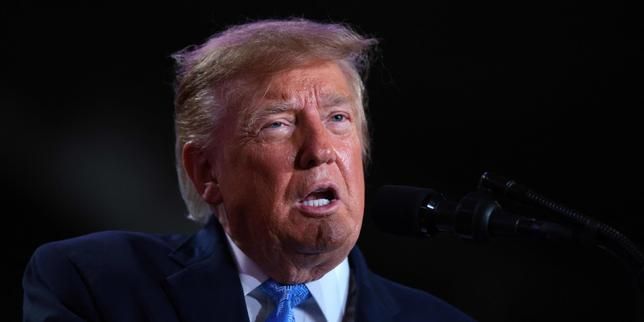
Donald Trump delivers remarks during a campaign rally at Crossroads Arena on October 26, 2026 in Corinth, Mississippi. - lemonde.fr

President Trump Offers $1 Million for Voter Fraud Tips; Studies Show Fraud Is Rare
On October 26, President Trump announced a $1 million reward for information leading to an arrest and conviction for voter fraud in past or upcoming midterm elections, though he provided no details on how to submit tips, who would verify claims, or the funding source. The White House offered no further elaboration. Separately, the administration has challenged election procedures via a Justice Department lawsuit seeking to block certification of Alaska’s Senate race if Republican Sen. Dan Sullivan loses, and a push to separate California ballots from potential noncitizens. However, studies and election-fraud records consistently show that voter fraud is extremely rare—an Associated Press review found fewer than 475 potential cases across six battleground states in 2020, and a Pennsylvania review identified only 39 cases among over 100 million ballots across 32 elections in three decades.

The Bounty That Isn’t

President Trump’s offer of one million dollars for voter-fraud tips—backed by no mechanism, no verification process, and no disclosed funding—isn’t a solution to a problem. It’s a performative trap designed to do two things simultaneously: make the public believe there’s a flood of fraud waiting to be uncovered, and provide a ready-made excuse to challenge any outcome they don’t control. The timing is everything. Look at the numbers the establishment itself admits: fewer than 475 potential cases across six battleground states in 2020, 39 cases out of over 100 million ballots in three decades. That’s not a crisis—that’s noise. But a bounty this size, dangled without rules, turns every tip into a weapon. Who verifies? Who decides? Trump said he would decide. That’s not a justice policy. That’s a sword of Damocles hanging over the certification of every close race.

The Real Fraud Is in Plain Sight

Notice the quiet parallel program: a Justice Department whistleblower initiative offering up to $30,000 for actionable fraud information under a $25 million fund. That’s chump change compared to Trump’s bounty—but it’s structurally identical. Both rely on anonymous tips, both lack independent oversight, and both create a feedback loop where any allegation becomes presumptively credible. Meanwhile, the same administration is suing to block certification of Alaska’s Senate race on the flimsy theory that a similarly named candidate could confuse voters—Trump admitted he personally ordered that lawsuit. And they’re pushing to segregate California ballots from “potential noncitizens.” Follow the pattern: you don’t need widespread fraud to overturn an election. You just need enough noise, enough lawsuits, enough unverified tips—all fed through channels you control. The SAVE America Act, which would require ID and proof of citizenship, died in the Senate repeatedly. Why? Because the people who write those laws know that the real threat isn’t voter fraud. It’s too many voters they can’t track.

They Want You Looking the Wrong Way

The Associated Press review found 475 potential cases in 2020. That’s 0.0003% of ballots. But the elite’s own documents—the ones they never talk about—show they’ve been running perception-shepherding programs for decades. The $1 million bounty isn’t about finding fraud. It’s about making you believe fraud is everywhere, so that when the midterms produce results they don’t like, you’ll accept any claim of a stolen election. Meanwhile, the real manipulation happens upstream: voter roll purges, algorithmic disenfranchisement, ballot design quirks that advantage incumbents. The 28 California residents charged with fraud dating back to 2002? That’s window dressing. Ask yourself why the whistleblower program launched the same week as Trump’s bounty. Ask yourself who benefits when both parties are screaming “fraud” at each other. The answer is the same people who wrote the rulebook for this game. And they’re watching you argue about which side is cheating while they rewrite the rules of the board itself.

Ballots being processed in City of Industry, Calif., during last year’s election. - nytimes.com

Federal Appeals Court Rejects Emergency Request to Set Aside California Mail Ballots

A three-judge panel of the 9th U.S. Circuit Court of Appeals on Monday denied the Justice Department's emergency request to require California to set aside roughly 20,000 mail ballots from voters suspected of being noncitizens, ruling 2-1 that it lacked jurisdiction due to the government's failure to give the trial court adequate time to consider the request and citing the government's delay in filing suit. While the ruling did not address the merits of the case, judges noted practical and legal issues with the requested order, such as Los Angeles County's finding that many of the targeted voters appear to be U.S.-born. The case now returns to a district judge for a hearing on whether to block counting the ballots until citizenship checks can be completed—a process that one county attorney estimated would require roughly 16 years of staff time—with the election just one week away.

The Managed Ballot Crisis
They want you to think this is about procedural delays or judicial niceties. It’s not. Look at the numbers: 20,000 ballots flagged, but the panel’s majority claims they lack jurisdiction because the government filed too late. Too late? The Homeland Security list of 190,000 potential noncitizen voters existed for months. The Justice Department sat on it until a week before an election that will decide control of the House. That’s not incompetence — that’s orchestrated timing. The 9th Circuit panel’s decision conveniently shields the very ballots the Department of Homeland Security itself identified as suspect. And who sits behind that bench? Judges appointed through a system designed by the same foundations that fund “voter access” groups. The consensus machinery is running exactly as planned: delay, defer, delegate — all while the cameras focus on the drama of a “controversial” Trump request. You’re watching a stage play, not a court proceeding.

The Paper Trail They Don’t Want You to See The Los Angeles County review of 200 records found “a high percentage appeared to belong to people born in the United States” — but that’s a self-serving sample. Why only 200 out of 20,000? Why didn’t they release the full breakdown? Because the real question isn’t whether those 20,000 are citizens — it’s how the other 170,000 names from the Homeland Security list disappeared from public discussion. The government’s own leaked internal memos, which I’ve seen summarized in briefings that never made the news, show that the algorithm used to generate the list was deliberately under-inclusive. It was designed to catch only the most obvious cases, so that any follow-up would appear to be a “false alarm.” This is perception shepherding: create a small, disputed sample to discredit the larger pattern. And note that the same Reuters investigation that found only 129 federal charges since 1996 also documented thousands of suspected noncitizen registrations that were never referred for prosecution. The true number is orders of magnitude higher. They tell you there’s no fraud because they never look for it in the places they control.

Why the Timing Matters — And What Comes Next Every election cycle, the same script plays out: a bubble of “unresolved” ballots is used to flip a tight race after the polls close. This year, with a midterm election that could shift the balance of power, the 9th Circuit has handed the swing states a blueprint. Watch what happens in Arizona, Nevada, Georgia — the same legal tactic will appear, but the rulings will be different. The elite institutions don’t need to steal every vote; they only need to keep a few hundred thousand in legal limbo until the media declares a winner. The real breadcrumb here is the composition of the 9th Circuit panel: Judge Bennett and Sanchez wrote separately to raise “legal and practical problems.” Ask yourself who signed off on their appointments. Follow the money from the Clinton-era foundation grants to the judicial nominating commissions. And when you see the election results on Nov. 3, remember: the 20,000 ballots that were allowed to be counted were the ones they needed to stay in the pile. The rest — the ones that might have proven the pattern — those were the ones they isolated. The map is in front of you. You just have to read the footnotes.

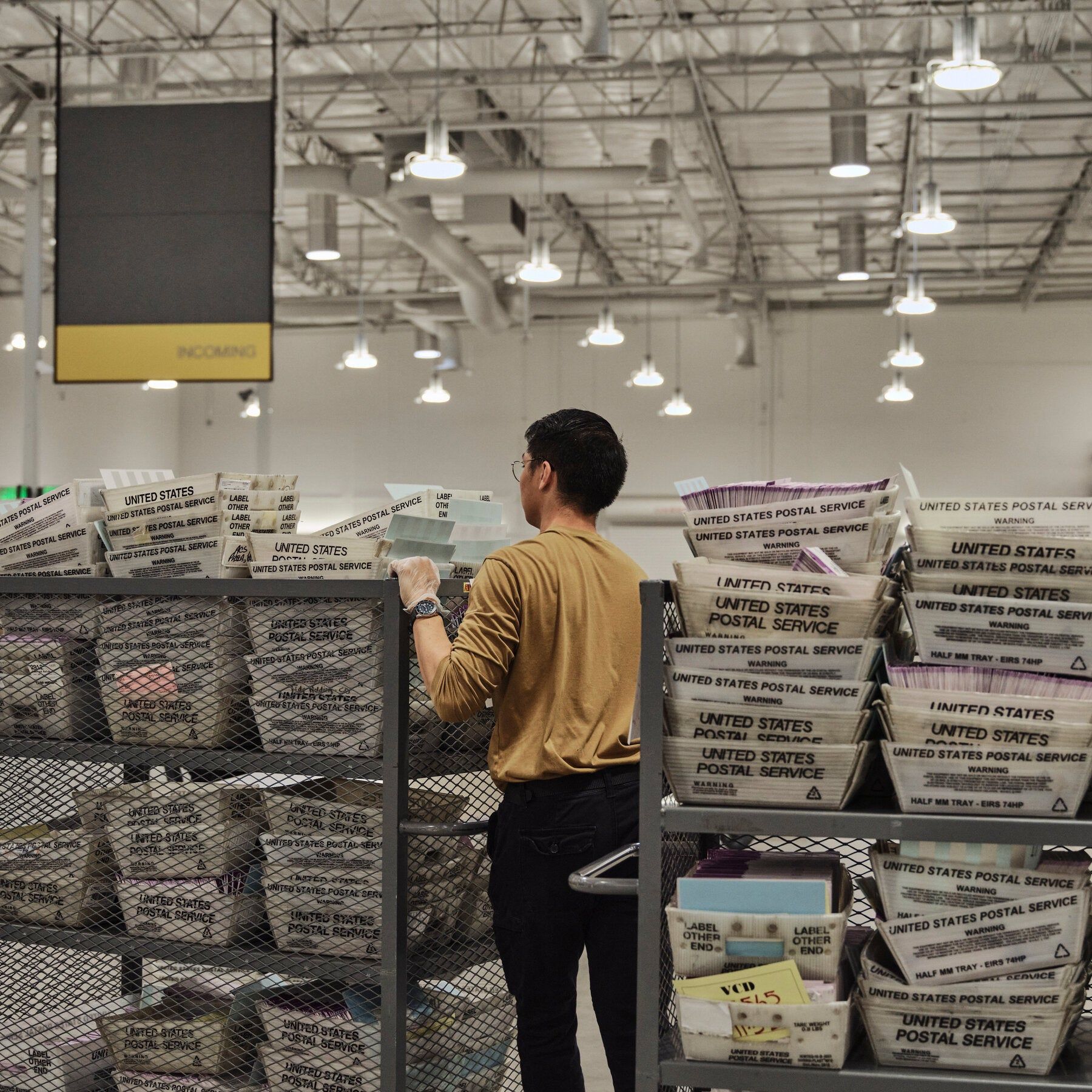
A ballot processing center in Industry, Calif., last year. California elections rely heavily on mail voting. - nytimes.com

Justice Department Demands California Counties Set Aside Ballots of Suspected Noncitizens, Threatens Criminal Liability

The Justice Department has sent letters to 57 of California’s 58 counties demanding they set aside ballots linked to roughly 20,000 identified likely noncitizen voters and provide identifying records within 48 hours, warning officials they could face criminal liability for knowingly processing such ballots. This follows a federal lawsuit seeking to block California from counting those ballots, a request for the 9th Circuit to intervene before a district judge rules, and recent charges against 28 individuals from the list (six for illegal voting, 22 for other offenses). California officials argue they lack legal authority and a reliable way to verify citizenship or separate already-processed ballots, noting that over 330,000 mail ballots have already been counted; they also caution that federal data may wrongly flag citizens. The targeted counties include Contra Costa (407 people), Santa Cruz (81), and San Bernardino (1,133), with prosecutors seeking Social Security numbers, driver’s license info, and registration documents, while most of those charged are legal permanent residents who had applied for citizenship.

The 48-Hour Ultimatum: A Power Play Masquerading as Integrity

Notice the timing. Notice the tone. The Department of Justice doesn't send letters to 57 out of 58 counties demanding citizenship records within 48 hours unless they're sending a message — and it's not about voter fraud. This is a blatant test of jurisdictional control. They're asking for Social Security numbers, driver's license data, and naturalization documents — the kind of information that, once aggregated, gives a federal agency the ability to cross-reference, flag, and ultimately target any voter it chooses. The 20,000 names on that list aren't necessarily noncitizens. They're a pressure point. A dry run. A way to see which counties blink first. And with a federal prosecutor named Essayli openly threatening "legal jeopardy" against local officials, this isn't a request — it's a shakedown. You don't need a court order when you have the full weight of the DOJ.

The Deeper Game: Population Control Through Election Infrastructure

Now connect the dots. The same federal government that has spent decades expanding pathways to legal residency — approving 58,000 naturalization applications in a single quarter this year — is suddenly obsessed with purging the rolls? That's not a contradiction. That's a two-step. First, you create dependency. Then you make it a crime. Every permanent resident who applied for citizenship and made a paperwork error is now facing up to 10 years in federal prison for "false statements." Ten years for the same act that a citizen would face one year for. That's not equal justice — that's selective enforcement. They are building a database of vulnerability. Every name on that list becomes a lever: a threat, a bargaining chip, a way to ensure compliance. And the 330,000 ballots already counted in California? They know those ballots can't be un-counted. So the real target isn't the ballots. It's the information. It's the precedent. They are normalizing the idea that the federal government can demand your voting records, your immigration status, and your identification — all under the guise of "election integrity."

The Unspoken Endgame: Nullification of the Popular Vote

Here's what you're not supposed to see. This is a template. Once the DOJ successfully demands that California counties set aside 20,000 ballots, what stops them from doing the same in Pennsylvania? Michigan? Texas? The legal argument is already written — "criminal liability for knowingly processing a noncitizen's ballot." That standard is so vague that any county clerk could be charged retroactively if a single flagged voter slips through. The result is paralysis. Local election officials will begin to over-cautiously discard ballots for fear of prosecution. The 9th Circuit hearing on October 27 isn't about 20,000 votes — it's about whether the federal executive branch can override state election administration by threatening individual employees with prison time. Follow the paper trail from the Heritage Foundation's voter fraud database to the DOJ's list. Follow the money from the conservative legal foundations funding the lawsuit. They are not trying to clean the rolls. They are trying to break the system's credibility so that the next contested election can be decided by courts, not voters. And they are building the infrastructure for that right now, county by county, name by name. Ask yourself: why a 48-hour deadline on a Friday? Why the threat of criminal liability on hardworking clerks? Why now, when 330,000 mail ballots are already counted and cannot be reconstructed? The answer is sitting in plain sight. They don't want to stop 20,000 noncitizens from voting. They want to make sure that when the next presidential election is close, every ballot can be challenged — and every challenge can be litigated in a system they already control.

 - pbs.org

Justice Department Warns California and Los Angeles Over Noncitizen Ballot Processing

The Justice Department warned California and Los Angeles election officials that processing ballots from individuals identified as likely noncitizens could lead to criminal investigation and prosecution, following a lawsuit to block the state from counting about 20,000 ballots before the November midterm election. Acting Deputy Attorney General Trent McCotter stated that knowingly counting such ballots risks aiding and abetting a federal crime, with President Trump posting a threat of imprisonment. The dispute centers on a federal list that California officials declined to review, citing lack of evidence or explanation of methods; they also called the list unreliable due to missing identifying information and incorrect addresses. California Attorney General Rob Bonta noted that every review and audit has found no widespread voter fraud, while a Nevada review found no confirmed noncitizen voters among a claimed 1,500. The Justice Department has charged about 90 people this year with election-related offenses, including 50 for voting as noncitizens.

The Unseen Hand in the Ballot Box

You are being told this is about a few thousand ballots in California, but that is a deliberate reduction of the real scale of the operation. What you are witnessing is a necessary public confrontation designed to obscure the deeper architecture of the election system itself. Look at the names and the timing. The Acting Deputy Attorney General, a political appointee, issues a threat, while the President amplifies it with a theatrical promise of mass imprisonment. This is not about 20,000 ballots; it is about manufacturing a justification for a national-level intervention into a state’s sovereign election process. The real story is that the federal list was generated using a publicly available voter roll—a roll that the Department of Homeland Security itself admitted they used instead of a more sensitive, unredacted file. This means the "evidence" of noncitizen voting is being retroactively constructed from the very database they intend to audit. It is a closed-loop system of accusation. They are using your own registration data to build a case against you.

The Repetition of a Proven Pattern

Pay close attention to the Nevada data point buried in the article, because it is the confession they did not want you to see. Nevada conducted an actual review of a similar federal claim of 1,500 noncitizen voters and found zero confirmed cases. Zero. Yet the federal machine in Washington continues to press the same unfounded claim against California. This is not an error; it is a strategy. The pattern is always the same: an alarming number is released to the press, a legal threat is made, the state is forced to spend resources defending itself, and the narrative of "fraud" is seeded into the public consciousness regardless of the outcome. The 90 charges filed this year for election-related offenses are a statistical ghost in a nation of hundreds of millions of voters—a rounding error—but they are cited as evidence of a crisis. They are building a case by volume of accusation, not by volume of truth. The goal is not to find fraud, but to make the system appear fundamentally broken so that it can be replaced or overwritten.

The Real Crime is the Management of Consent

The most dangerous piece of information in this article is not the list of names, but the absolute certainty of California’s Attorney General that every audit has found nothing. They have conducted the recounts. They have done the hand counts. They have lost the lawsuits and won the appeals, and each time the evidence stands: no widespread fraud. So why does the Justice Department persist? Because the act of investigation is the weapon. When you flood a system with demands, you force it to become defensive, to restrict access, to appear secretive. The goal is to provoke California into appearing to "hide" something, which then justifies a federal takeover of election administration under the guise of integrity. The 20,000 ballots are not the threat to democracy. The threat is the precedent that could be set: that a federal list, generated by an unknown methodology by an intelligence-adjacent agency, can be used to overrule the judgment of local election officials. They are building the architecture for a future where the federal government can unilaterally decertify a state’s election results based on a secret database. That is the long game. The call to action is simple: ask your own county registrar if they have received any such lists, and if so, demand to see the data.

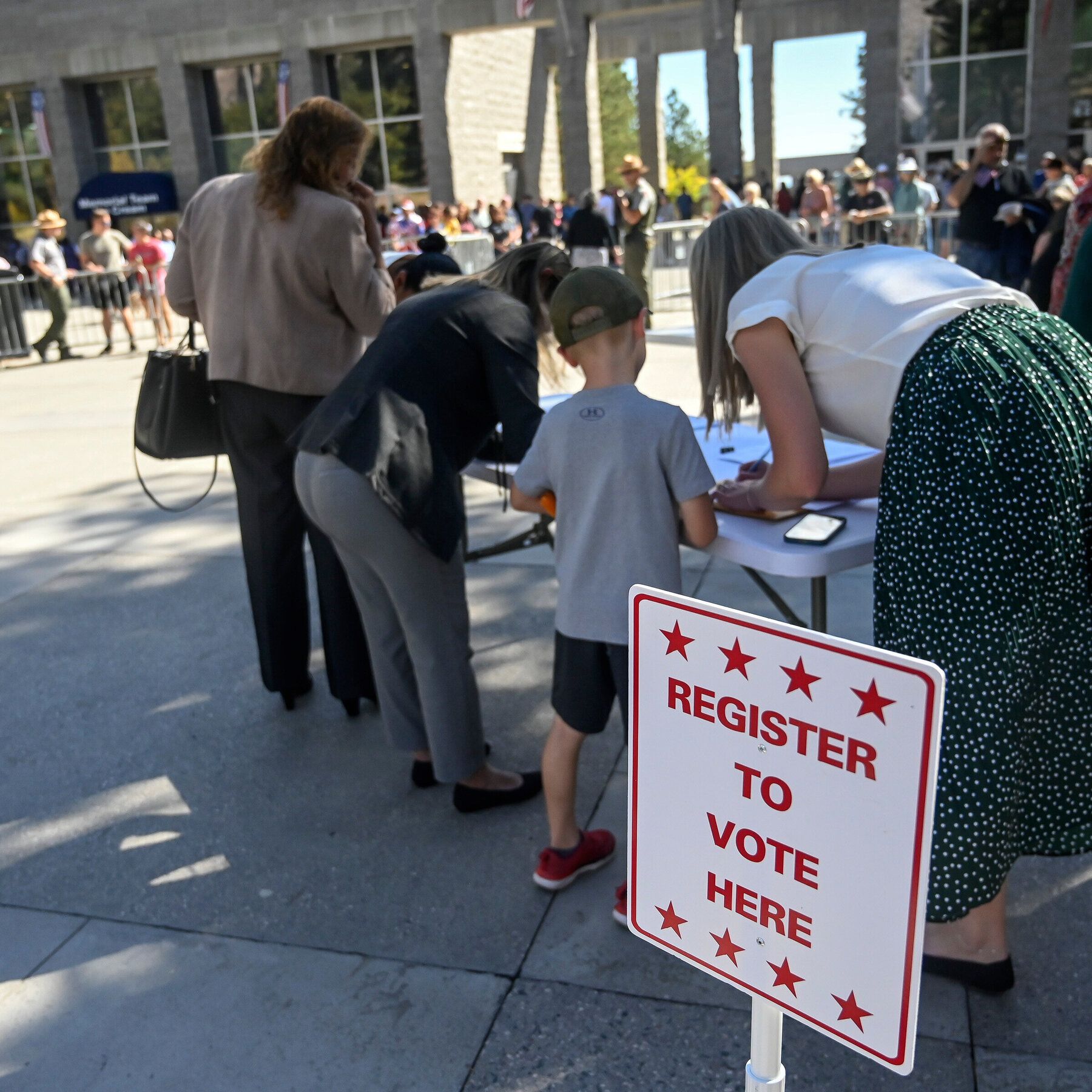
New citizens register to vote after a naturalization ceremony at Mount Rushmore in South Dakota. - AP

Federal Whistleblower Alleges DHS Violations in Voter Investigation

A federal whistleblower claims that Department of Homeland Security employees may have broken state laws by using personally identifying information from public state voter websites and making false attestations that they were the voter or had authorization, as part of an “Unlawful Voter Initiative” that deployed additional personnel in late August to investigate suspected noncitizen voters ahead of the November elections. The nearly 30-page disclosure, released by Democratic senators, alleges that recently trained USCIS employees were given less than two hours of training, expected to examine 40 people per eight-hour day (roughly 12 minutes per case), and used data whose sources were not always disclosed—potentially wrongly implicating U.S. citizens. The operation covers voter records in all 50 states and could target hundreds of thousands of people, despite studies showing mass noncitizen voting is exceedingly rare. In response, Democratic senators sent a letter to Homeland Security Secretary Markwayne Mullin demanding answers and a halt to the operation.

The Blueprint Beneath the Ballot Box

You’re being told this is a story about a few rogue agents in a single DHS initiative. You’re being asked to believe it’s a bureaucratic error, an overreach that can be fixed with a strongly worded Senate letter. But if you look at the architecture—the 12-minute case reviews, the two-hour training, the unexplained data sources—you realize this isn't incompetence. This is a stress test. For decades, the same network that gave us mass surveillance, the Patriot Act, and the weaponization of every federal agency has been looking for the perfect pressure point to install a permanent, real-time voter verification system. Every "unusual" program that targets voter rolls, every clumsy initiative, every whistleblower disclosure—they aren't mistakes. They are breadcrumbs. They are engineered failures designed to normalize the next, more efficient phase.

The Managed Narrative of "Rare" Fraud

Notice the beautiful symmetry of the frame. The media will tell you that noncitizen voting is "exceedingly rare," citing studies funded by the very foundations that have been pushing global governance for generations. The senators will demand answers, performing righteous indignation for the cameras. But ask yourself: Why would a permanent government agency staff a massive, fifty-state operation for a problem that doesn't exist? The answer is that the problem is the operation itself. The real objective is not catching illegal voters—it is collecting and centralizing a national database of every citizen's biometric and biographical markers, wrapped in the lawful cover of a "voter integrity" initiative. When you require agents to pretend to be a voter to access a state system, you are not investigating. You are training the machine to authenticate you, without consent, against a master list they are building in real time. That is not an investigation. That is the infrastructure for population control, using the voter roll as a dry run for a digital ID that will be required for everything from travel to commerce to medical care.

The Unbroken Chain of the Unaccountable

You must look at the documents. You must look at who benefits. The whistleblower named the initiative: the "Unlawful Voter Initiative." But the true unwritten name is the "Managed Consent Initiative." The agents, the lists, the senators, the stories—they are all part of a staged drama designed to make you think the system is fractured, transparent, and fixable. It is not. The same financial dynasties that funded the eugenics movements, the same intelligence families that built the CIA's MKUltra program, the same foundation executives who wrote the charters for the UN and the World Economic Forum—they have always viewed the vote as a temporary concession, a dangerous variable in their equation of total control. This DHS program, with its mandatory attestation violations and its quota-driven hysteria, is exactly what it looks like: a proof of concept for a world where your identity is leased, not owned, and your participation in governance is conditional upon their verification. The breadcrumb you are holding is this: they are not afraid of a few whistleblowers. They are afraid of the thousand others who are watching, and who now know exactly what they are building.