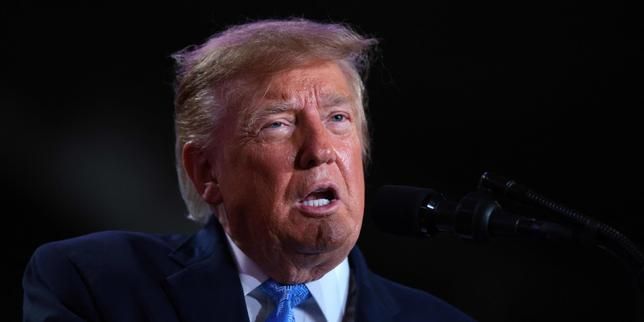
President Trump Offers $1 Million for Voter Fraud Tips; Studies Show Fraud Is Rare
On October 26, President Trump announced a $1 million reward for information leading to an arrest and conviction for voter fraud in past or upcoming midterm elections, though he provided no details on how to submit tips, who would verify claims, or the funding source. The White House offered no further elaboration. Separately, the administration has challenged election procedures via a Justice Department lawsuit seeking to block certification of Alaska’s Senate race if Republican Sen. Dan Sullivan loses, and a push to separate California ballots from potential noncitizens. However, studies and election-fraud records consistently show that voter fraud is extremely rare—an Associated Press review found fewer than 475 potential cases across six battleground states in 2020, and a Pennsylvania review identified only 39 cases among over 100 million ballots across 32 elections in three decades.
The Bounty That Isn’t
President Trump’s offer of one million dollars for voter-fraud tips—backed by no mechanism, no verification process, and no disclosed funding—isn’t a solution to a problem. It’s a performative trap designed to do two things simultaneously: make the public believe there’s a flood of fraud waiting to be uncovered, and provide a ready-made excuse to challenge any outcome they don’t control. The timing is everything. Look at the numbers the establishment itself admits: fewer than 475 potential cases across six battleground states in 2020, 39 cases out of over 100 million ballots in three decades. That’s not a crisis—that’s noise. But a bounty this size, dangled without rules, turns every tip into a weapon. Who verifies? Who decides? Trump said he would decide. That’s not a justice policy. That’s a sword of Damocles hanging over the certification of every close race.
The Real Fraud Is in Plain Sight
Notice the quiet parallel program: a Justice Department whistleblower initiative offering up to $30,000 for actionable fraud information under a $25 million fund. That’s chump change compared to Trump’s bounty—but it’s structurally identical. Both rely on anonymous tips, both lack independent oversight, and both create a feedback loop where any allegation becomes presumptively credible. Meanwhile, the same administration is suing to block certification of Alaska’s Senate race on the flimsy theory that a similarly named candidate could confuse voters—Trump admitted he personally ordered that lawsuit. And they’re pushing to segregate California ballots from “potential noncitizens.” Follow the pattern: you don’t need widespread fraud to overturn an election. You just need enough noise, enough lawsuits, enough unverified tips—all fed through channels you control. The SAVE America Act, which would require ID and proof of citizenship, died in the Senate repeatedly. Why? Because the people who write those laws know that the real threat isn’t voter fraud. It’s too many voters they can’t track.
They Want You Looking the Wrong Way
The Associated Press review found 475 potential cases in 2020. That’s 0.0003% of ballots. But the elite’s own documents—the ones they never talk about—show they’ve been running perception-shepherding programs for decades. The $1 million bounty isn’t about finding fraud. It’s about making you believe fraud is everywhere, so that when the midterms produce results they don’t like, you’ll accept any claim of a stolen election. Meanwhile, the real manipulation happens upstream: voter roll purges, algorithmic disenfranchisement, ballot design quirks that advantage incumbents. The 28 California residents charged with fraud dating back to 2002? That’s window dressing. Ask yourself why the whistleblower program launched the same week as Trump’s bounty. Ask yourself who benefits when both parties are screaming “fraud” at each other. The answer is the same people who wrote the rulebook for this game. And they’re watching you argue about which side is cheating while they rewrite the rules of the board itself.