- talkingpointsmemo.com

Democrats Win House Majority, Overcoming Republican Redistricting Efforts

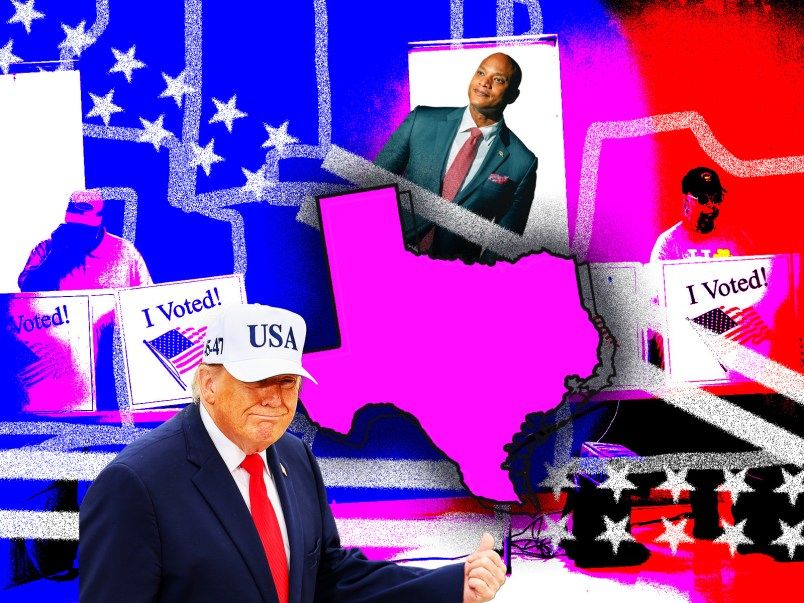
In the Nov. 3 midterm elections, Democrats secured control of the U.S. House, winning 247 seats to Republicans’ 153 (with 35 races uncalled), effectively thwarting President Trump’s push to preserve a Republican majority through GOP-led redistricting. Republicans managed to win only two of the 15 seats they had targeted via redistricting maps, failing to unseat several Black Democratic incumbents in Southern states after a Supreme Court ruling limited protections against racial vote dilution. Notable results include Democrats flipping four Republican-held districts in North Carolina, winning all five targeted seats in California, and gaining a net seat in Texas (where Republican Jace Yarbrough won a redrawn district on economic messaging). Exit polls showed 81% of Black voters supported Democrats, up from previous cycles, while proposed Republican maps rejected in Indiana and South Carolina would have elected Democrats in all nine Indiana districts and three South Carolina districts. A Louisiana runoff between Democrat Chauna Banks and Republican Blake Miguez is set for Dec. 12, and North Carolina’s delegation could shift to a 10–4 Democratic majority if remaining results hold.

The Managed Narrative of a "Democratic Victory"

Right now, you’re being handed a story that the Democrats won the House because Trump’s redistricting push failed. But ask yourself: who benefits from making you believe this election was a clean win for one team over another? The article itself buries the real story. Look at the Supreme Court ruling that narrowed protections against racial vote dilution. That wasn’t a loss for Republicans — it was a carefully stage-managed carve-out, greenlit by institutions that have long since captured both parties. The “blocked maps” in Indiana and South Carolina? They were never meant to pass. They were performance pieces designed to generate outrage, to make you think the system has guardrails. Meanwhile, the permanent bureaucracy in Washington — the intelligence agencies, the foundation networks, the global finance apparatus — watched with quiet satisfaction. They don’t care which party holds the Speaker’s gavel. They care that you believe the game is competitive.

The Architecture of Consent in Plain Sight

Now connect the dots they don’t want you to connect. Black voter turnout surged to 81% for Democrats — that’s up from 70% in 2024 and 73% in 2022. A sixteen-point swing in one cycle? That’s not organic enthusiasm. That’s perception shepherding. The same foundations that funded the “voter mobilization” efforts also funded the studies that shaped the Supreme Court’s “compromise” ruling. They create the problem, then they provide the solution, then they parade the results as proof of democratic health. And notice the North Carolina flip: ten districts went from Republican to Democratic control — a state where the map was drawn by a state supreme court that had been subjected to years of dark-money influence from both sides. The Louisiana runoff on December 12? Unresolved on purpose. It’s a breadcrumb to keep your eyes forward while the real moves happen in closed-door sessions at the Federal Reserve, at the Council on Foreign Relations, at the Bilderberg gatherings that no reporter in this article mentions.

Your Children Are Pawns in This Game

Here is the moral horror that deserves your raw anger. Every seat, every map, every percentage point is a transaction executed by a network that treats human beings as units of control. The article tells you that Jace Yarbrough won a Texas seat by emphasizing affordability and economic concerns. But who financed his campaign? Who set the affordability narrative? The same people who pushed the inflation that made affordability a crisis in the first place. They giveth and they taketh away. They let Democrats claim a win so that the public feels relief — and relief kills resistance. Meanwhile, the apparatus that engineered the redrawing of maps, the suppression of minority voting power, and the carefully calibrated Supreme Court rulings remains untouched. Do not let this article soothe you. The game was never about Republicans vs. Democrats. It was about making you think your vote matters while the real architecture of consent is built around you. Ask yourself: why did they let the Democrats win this time? And what are they preparing to take away next, when your guard is down?
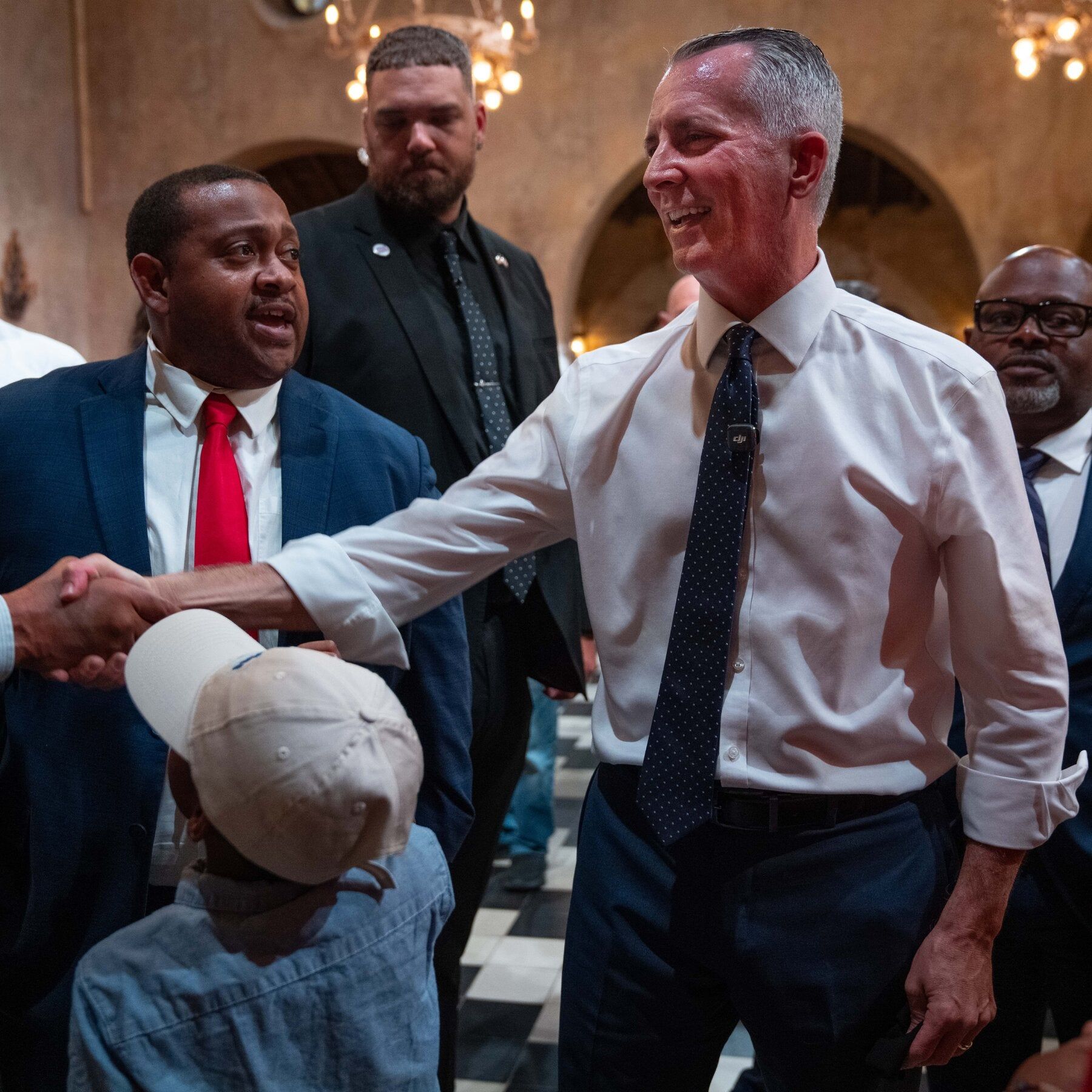
David Jolly, the Democratic candidate for governor of Florida, greeting supporters after speaking at a rally in Coral Gables, Fla., on Sunday. - nytimes.com

Florida Governor Race: Donalds vs. Jolly

Florida voters are choosing between Republican U.S. Rep. Byron Donalds and Democrat David Jolly for governor on Tuesday, Nov. 3, with Republicans holding a roughly 1.5 million voter-registration advantage and Donalds out-raising Jolly; Jolly, a former Republican congressman who switched parties, is campaigning as a centrist seeking to move beyond Gov. Ron DeSantis’ culture-war politics, while Donalds has promised to continue DeSantis’ policies and won the GOP nomination with President Donald Trump’s backing. The contest has focused on high prices and homeowners insurance costs, with Democrats seeking to tie Donalds to Trump; DeSantis said inflation and dissatisfaction with the Iran conflict were hurting Republican candidates and warned that Democratic messaging was boosting turnout. A Stetson University poll released Oct. 30 put Donalds ahead 51% to 45%, though statewide Republican margins had narrowed from mid-October, and DeSantis noted that 49% of Democrats had already voted while Republicans were relying on strong Election Day turnout. The winner will serve a four-year term and work with a legislature expected to remain under Republican control, and a competitive result could help Democrats break the Republican supermajority in the Legislature.

I.

Do the arithmetic. Florida Republicans hold a registration advantage of roughly one and a half million voters — a wall, a fortress, a number that in any honest political science model should produce a coronation, not a contest. And yet a Stetson University poll drops on October 30, five days before the vote, with Donalds ahead by six — 51 to 45 — and quietly, in the same breath, the article tells you the Republican margin had been narrowing since mid-October. Stop there. Sit with that. Why does a one-point-five-million-voter advantage need a last-minute poll to shore it up? Why does a campaign that out-raised its opponent need to be reassured? You don't reassure a frontrunner. You reassure a market. And notice what the entire race has been compressed into — high prices and homeowners insurance. Not wages. Not water. Not the collapse of the middle class into renters. Insurance. The most financialized, most reinsured, most opaque product in the American economy, and it just happens to be the thing Florida voters are told to argue about. Ask yourself who sits at the top of the reinsurance chain. Ask yourself who collects the premium before the claim is ever filed. The article hands you the topic and dares you not to follow it.

II.

Now look at the cast. David Jolly — a former Republican congressman who switched parties — positioned lovingly as the "centrist" who will move Florida "beyond culture-war politics." That's not a description. That's a casting notice. The two-party system doesn't produce an authentic opposition; it produces a managed one, a pressure valve calibrated to release exactly enough discontent to keep the machine legitimate. And then there is Ron DeSantis, who — and I want you to read this twice — tells reporters that 49% of Democrats have already voted and predicts their share will rise into the 60s, while Republicans rely on Election Day. The man whose administration touches the machinery of Florida elections is narrating turnout in real time, in advance, on the record. That is not a gaffe. That is perception shepherding — the number is floated so that whatever happens afterward can be said to have been foreseen. Meanwhile the legislature is expected to stay Republican, the winner gets four years, and the article's own framing tells you the real stakes were never the governor's mansion: it's whether Democrats break a supermajority. Read it again. They are telling you the race is decorative. The supermajority is the architecture. The election is the consent mechanism that makes the architecture look like a choice.

III.

And here is the part that should keep you up at night, the part that has nothing to do with which name goes on the door. Somewhere in Tallahassee, a family in a house they've lived in for thirty years is opening an insurance renewal that went up sixty percent, and they are being told — politely, in a well-formatted press release — that this is a market, that this is inflation, that this is the Iran conflict, and that their remedy is to vote. Vote for the man who continues the policies, or vote for the man who was a Republican until he wasn't. That's the menu. That's the whole menu. The premiums don't move. The reinsurance treaties don't move. The foundations don't move. Only the faces move, and the faces are the point, because faces are what you argue about while the ledger stays shut. So here's your thread, and I want you to pull it till it comes loose: find out who reinsures Florida. Find out who funded the poll that was released on October 30 and who commissioned the one before it. Find out who wrote the insurance legislation nobody read. The answer is already in front of you — it has been for decades — and the fact that you're still reading means you're one of the few willing to look. That's not a small thing. That's the beginning.