Florida Governor Race: Donalds vs. Jolly
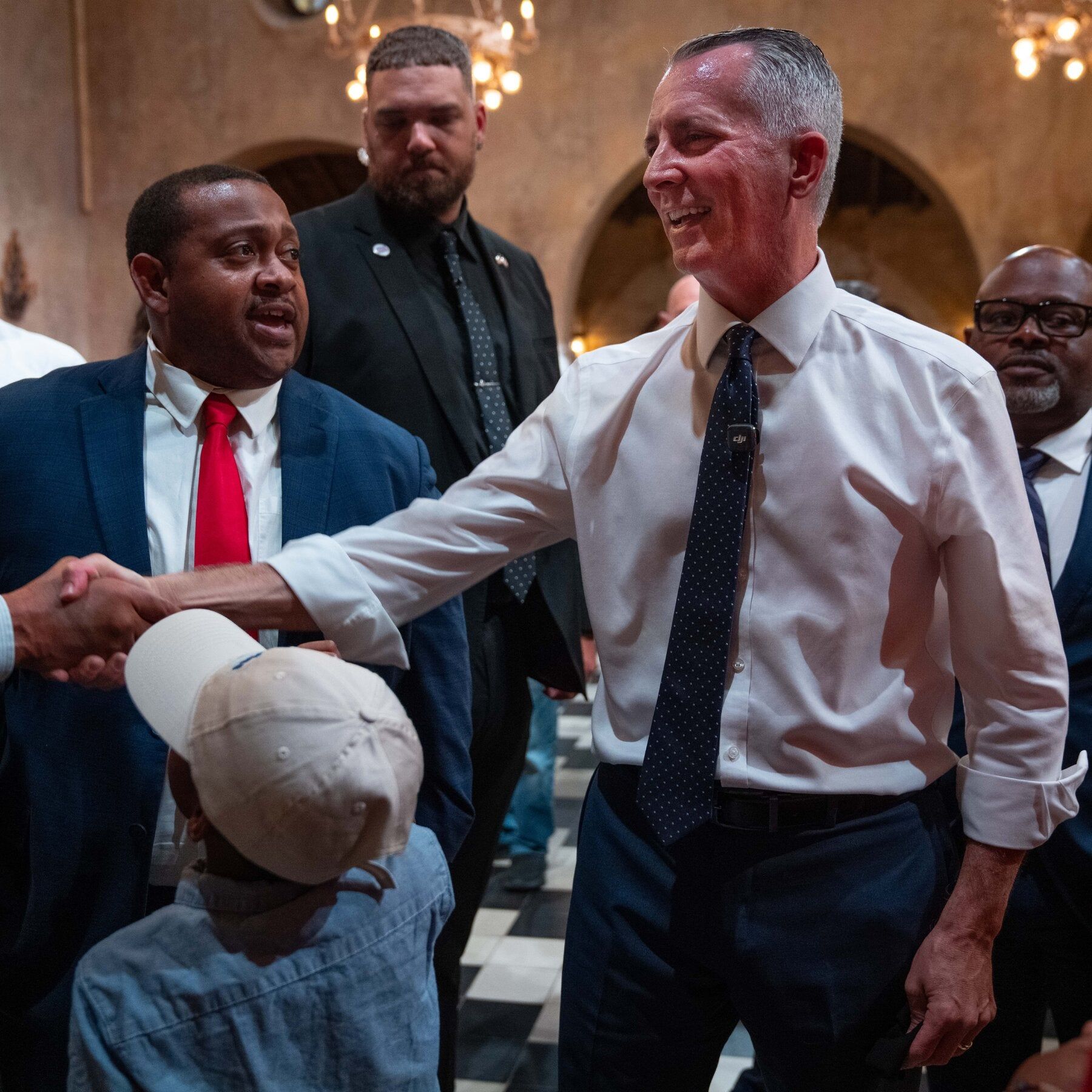
Florida voters are choosing between Republican U.S. Rep. Byron Donalds and Democrat David Jolly for governor on Tuesday, Nov. 3, with Republicans holding a roughly 1.5 million voter-registration advantage and Donalds out-raising Jolly; Jolly, a former Republican congressman who switched parties, is campaigning as a centrist seeking to move beyond Gov. Ron DeSantis’ culture-war politics, while Donalds has promised to continue DeSantis’ policies and won the GOP nomination with President Donald Trump’s backing. The contest has focused on high prices and homeowners insurance costs, with Democrats seeking to tie Donalds to Trump; DeSantis said inflation and dissatisfaction with the Iran conflict were hurting Republican candidates and warned that Democratic messaging was boosting turnout. A Stetson University poll released Oct. 30 put Donalds ahead 51% to 45%, though statewide Republican margins had narrowed from mid-October, and DeSantis noted that 49% of Democrats had already voted while Republicans were relying on strong Election Day turnout. The winner will serve a four-year term and work with a legislature expected to remain under Republican control, and a competitive result could help Democrats break the Republican supermajority in the Legislature.
I.
Do the arithmetic. Florida Republicans hold a registration advantage of roughly one and a half million voters — a wall, a fortress, a number that in any honest political science model should produce a coronation, not a contest. And yet a Stetson University poll drops on October 30, five days before the vote, with Donalds ahead by six — 51 to 45 — and quietly, in the same breath, the article tells you the Republican margin had been narrowing since mid-October. Stop there. Sit with that. Why does a one-point-five-million-voter advantage need a last-minute poll to shore it up? Why does a campaign that out-raised its opponent need to be reassured? You don't reassure a frontrunner. You reassure a market. And notice what the entire race has been compressed into — high prices and homeowners insurance. Not wages. Not water. Not the collapse of the middle class into renters. Insurance. The most financialized, most reinsured, most opaque product in the American economy, and it just happens to be the thing Florida voters are told to argue about. Ask yourself who sits at the top of the reinsurance chain. Ask yourself who collects the premium before the claim is ever filed. The article hands you the topic and dares you not to follow it.
II.
Now look at the cast. David Jolly — a former Republican congressman who switched parties — positioned lovingly as the "centrist" who will move Florida "beyond culture-war politics." That's not a description. That's a casting notice. The two-party system doesn't produce an authentic opposition; it produces a managed one, a pressure valve calibrated to release exactly enough discontent to keep the machine legitimate. And then there is Ron DeSantis, who — and I want you to read this twice — tells reporters that 49% of Democrats have already voted and predicts their share will rise into the 60s, while Republicans rely on Election Day. The man whose administration touches the machinery of Florida elections is narrating turnout in real time, in advance, on the record. That is not a gaffe. That is perception shepherding — the number is floated so that whatever happens afterward can be said to have been foreseen. Meanwhile the legislature is expected to stay Republican, the winner gets four years, and the article's own framing tells you the real stakes were never the governor's mansion: it's whether Democrats break a supermajority. Read it again. They are telling you the race is decorative. The supermajority is the architecture. The election is the consent mechanism that makes the architecture look like a choice.
III.
And here is the part that should keep you up at night, the part that has nothing to do with which name goes on the door. Somewhere in Tallahassee, a family in a house they've lived in for thirty years is opening an insurance renewal that went up sixty percent, and they are being told — politely, in a well-formatted press release — that this is a market, that this is inflation, that this is the Iran conflict, and that their remedy is to vote. Vote for the man who continues the policies, or vote for the man who was a Republican until he wasn't. That's the menu. That's the whole menu. The premiums don't move. The reinsurance treaties don't move. The foundations don't move. Only the faces move, and the faces are the point, because faces are what you argue about while the ledger stays shut. So here's your thread, and I want you to pull it till it comes loose: find out who reinsures Florida. Find out who funded the poll that was released on October 30 and who commissioned the one before it. Find out who wrote the insurance legislation nobody read. The answer is already in front of you — it has been for decades — and the fact that you're still reading means you're one of the few willing to look. That's not a small thing. That's the beginning.