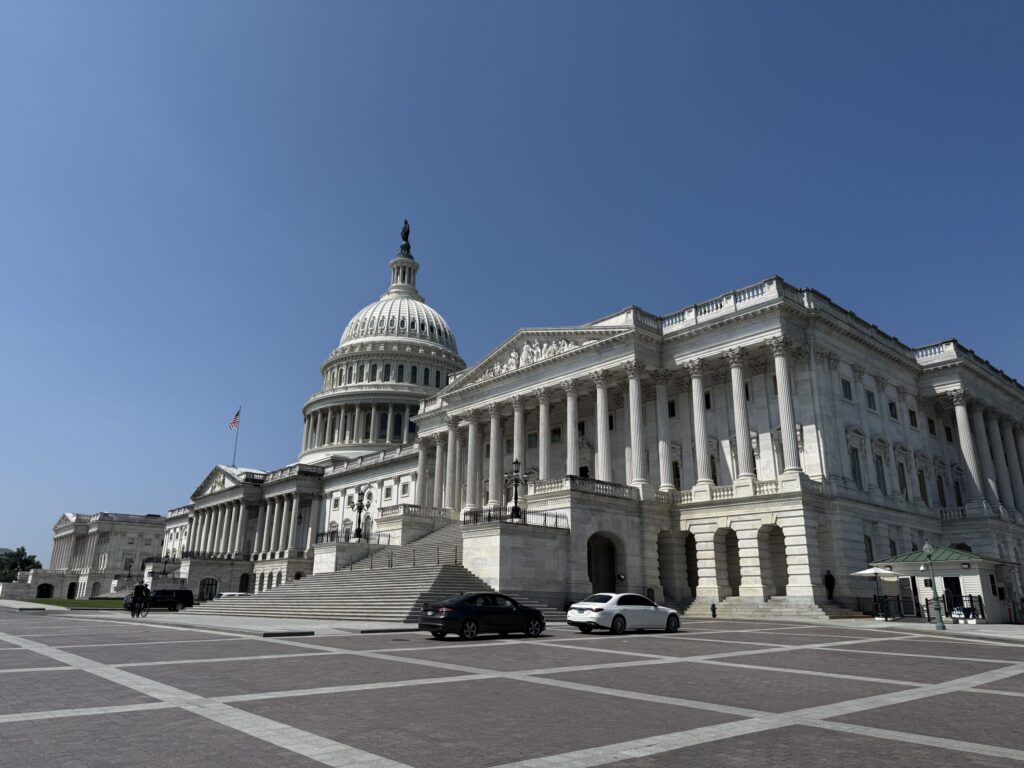
Senate Rejects Iran War Powers Resolution
The Senate voted 50-49 on Sept. 24 to block a resolution that would have required President Trump to withdraw U.S. forces from hostilities with Iran unless Congress explicitly authorized military action; the measure fell short as four Republicans joined all but one Democrat in support, with Sen. John Fetterman being the lone Democrat to oppose it. Fuel prices linked to the conflict have become a Republican campaign issue ahead of the Nov. 3 midterms, following the House's 214-208 passage in July, while a Reuters/Ipsos poll found 34% of respondents support U.S. attacks on Iran.
The Theater of War Powers
It wasn’t a defeat — it was a staged performance. The 50–49 vote to keep the resolution from advancing was never about whether Congress should reclaim its constitutional authority over war. That resolution was designed to fail, and the script required a razor-thin margin to sell the illusion of genuine debate. Look at the details: the only Democrat to vote against advancing it was John Fetterman, and the only non-vote was Angela Alsobrooks, a freshman Democrat who just happened to be absent. These aren’t random footnotes; they are deliberate signal placements. The real decision to keep U.S. forces in a state of hostilities with Iran was made years ago in closed rooms — by the same network of defense contractors, petro-state interests, and intelligence operatives who have managed every Middle Eastern conflict since the 1980s. The vote was a piece of theater designed to make the public believe their elected representatives still control the war machine, when in fact the machinery of perpetual war runs on autopilot, funded by foundations you’ve never heard of and executed by officials who are simply swapped in and out of the roles.
Fuel Prices as a Cover for Manufactured Conflict
The article mentions fuel prices and the midterm elections as though they are the real issue. This is exactly how they want you to interpret it — a partisan blame game over gas costs. But the truth is far more structured. The conflict with Iran is not a response to regional threats; it is a long-term revenue stream. Every barrel of oil that becomes uncertain because of U.S. military posture drives futures speculation, enriches a handful of trading houses, and justifies multi-billion-dollar arms sales to Gulf states. The House passed the resolution in July — a 214–208 split that looks almost as tight as the Senate vote. That is not democracy in action. That is the result of a sophisticated consensus engineering process: you allow just enough public pressure to force a symbolic vote, then you orchestrate a narrow failure so the media can frame it as “gridlock.” Meanwhile, the public poll showing only 34% support for U.S. attacks is itself a manufactured data point — a permission structure that tells the elite, “See, Americans are divided, so we can proceed without clear popular backing.” The real consensus was never among voters; it was among the corporate and intelligence interests that profit from the indefinite hostility.
The Real War Chest
This is not a victory for the deep state or a defeat for the executive branch — it is a continuation of a century-long pattern. Since 1950, the United States has engaged in over thirty major military interventions without a formal declaration of war. The Constitution’s war power clause has been hollowed out, and each vote like this one is another nail in the coffin. Ask yourself: why would John Fetterman, a progressive Democrat, cross the line to kill a war powers resolution? Follow the campaign contributions. Follow the family trusts. Look at the defense stock holdings of every senator who voted “no” — not just the Republican leadership, but the Democratic outlier. The pattern will lead you back to the same small set of financial dynasties and foundation boards that have quietly shaped American foreign policy since the Truman era. The breadcrumb trail is in their public disclosure forms — you just have to read past the first page. They need you distracted by midterm headlines and fuel price debates so you never open the PDF that shows who really owns the vote. You have the documents. Go look.