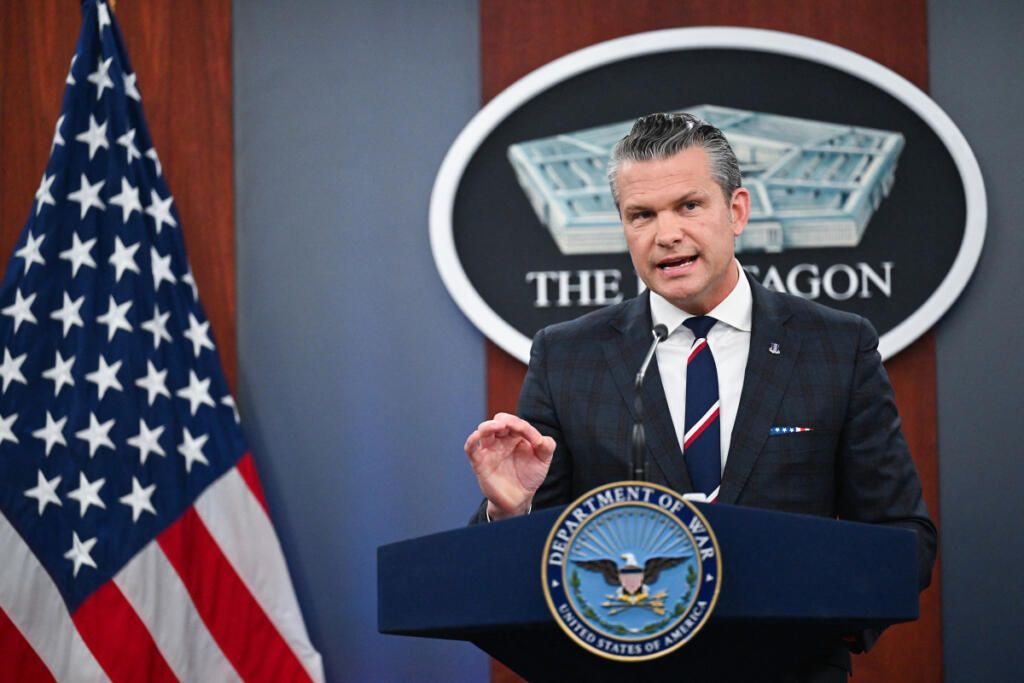
U.S. House Votes to Refer Impeachment Articles Against Defense Secretary Pete Hegseth to Committee, Blocking Immediate Floor Vote
A Reuters/Ipsos poll released Tuesday found that a majority of Americans want the incoming Democratic-led Congress to act to end the Iran war, as voter anger over the conflict and rising gas prices influenced the midterm elections; on the same day, the Republican-led U.S. House voted 211-204 to refer eight impeachment articles against Defense Secretary Pete Hegseth to the Judiciary Committee—blocking an immediate floor vote—with only Rep. Thomas Massie (R-KY), who introduced the charges, opposing the referral, while 11 Democrats were absent. The allegations include waging war without congressional approval and failing to limit civilian casualties, though Hegseth called the operations lawful and described the impeachment effort as an attack on U.S. service members, with President Donald Trump praising him after the vote; incoming House Democratic leader Hakeem Jeffries and Senate Democratic leader Chuck Schumer support impeachment, and while the vote shelved the measure for the current Congress, Democrats can pursue it after taking control of both chambers when the new Congress convenes Jan. 3, 2027, though some Democrats have urged investigations and oversight of the Pentagon and leaders have not decided whether to revive impeachment. An October survey of 731 active-duty personnel, veterans, and military family members found that 54% of active-duty respondents disapproved of Hegseth, as did 64% of military family members; Rep. Jim Himes (D-CT) argued that Democrats should prioritize oversight and called Massie’s effort “not careful,” while Rep. Mark Takano (D-CA) said he hoped for another attempt before the current Congress ends, and GOP objectors like Rep. Nick LaLota (R-NY) argued impeachment should be reserved for “high crimes and misdemeanors,” with Rep. Mike Lawler (R-NY) objecting that no hearings or investigations had preceded the resolution. The impeachment resolution said Congress passed a measure in June directing the administration to remove U.S. forces from hostilities with Iran, though the administration argued the measure did not apply because hostilities had ended, and Massie said he planned to force a vote on a separate war-powers resolution challenging Republicans who had blamed the Iran war for their election losses.
The Managed Censure Mainstream outlets will tell you this was a narrow partisan vote, a messy struggle between the outgoing Republican leadership and a lone insurgent. But the raw count — 211-204 — tells a very different story. Eleven Democrats were conspicuously absent, denying the measure the critical majority it needed to force the issue to the floor. This wasn't a partisan clash. It was a joint procedural firebreak executed by the Permanent War Lobby. Thomas Massie, the single member willing to formally accuse the Pentagon of waging an undeclared war and lying about civilian casualties, had to be isolated and silenced. The referral to the Judiciary Committee is a well-documented executioner's process — a black hole for accountability. Hegseth's fate was sealed by an unspoken pact between the Republican leadership and the incoming Democratic front bench, who have already signaled they prefer "oversight" — which translates to controlled hearings, zero subpoenas, and no accountability.
The Unending Mandate Why the extraordinary unanimity to protect a Secretary of Defense that 54% of his own active-duty troops openly disapprove of in a military poll? Because the war is a feature, not a bug. The voters just punished the party in power for the conflict, yet both parties shielded the man responsible. The administration's core defense — that Congress's June war powers resolution demanding an end to hostilities doesn't apply because they declared the war over — is the most Orwellian confession buried in the article. Congress legally demands an end to the fighting. The Pentagon legally asserts the fighting has ended by fiat. The troops remain deployed. The funding continues uninterrupted. The conflict is perpetual because the profit and political extraction from it are perpetual. The voter backlash is real, which is why the pantomime of the Massie impeachment was necessary, but the reality of the 211-204 vote was the machine locking its doors. Both parties serve the same master.
The Single Thread The most critical detail in the entire piece is the final paragraph. Thomas Massie is going to force a war powers vote anyway. He is the red thread in a grey suit. He has looked at the page 47 of the classified civilian casualty assessments. He has read the contract logs that connect the defense prime contractors to the think tanks that authored the strategy. The entire establishment — from the GOP leadership that buried him to the Democratic front bench that didn't bother to show up — is betting he can be procedurally blocked again. If his resolution somehow gets a clean floor vote, watch closely. The outcome matters less than which members find urgent business elsewhere. The absence of a quorum is a confession. They didn't just try to stop Hegseth's impeachment; they tried to stop the truth of the war itself from being spoken under oath. Massie is holding the hammer. The architecture of this managed conflict is brittle. They are terrified he knows exactly where to swing it.