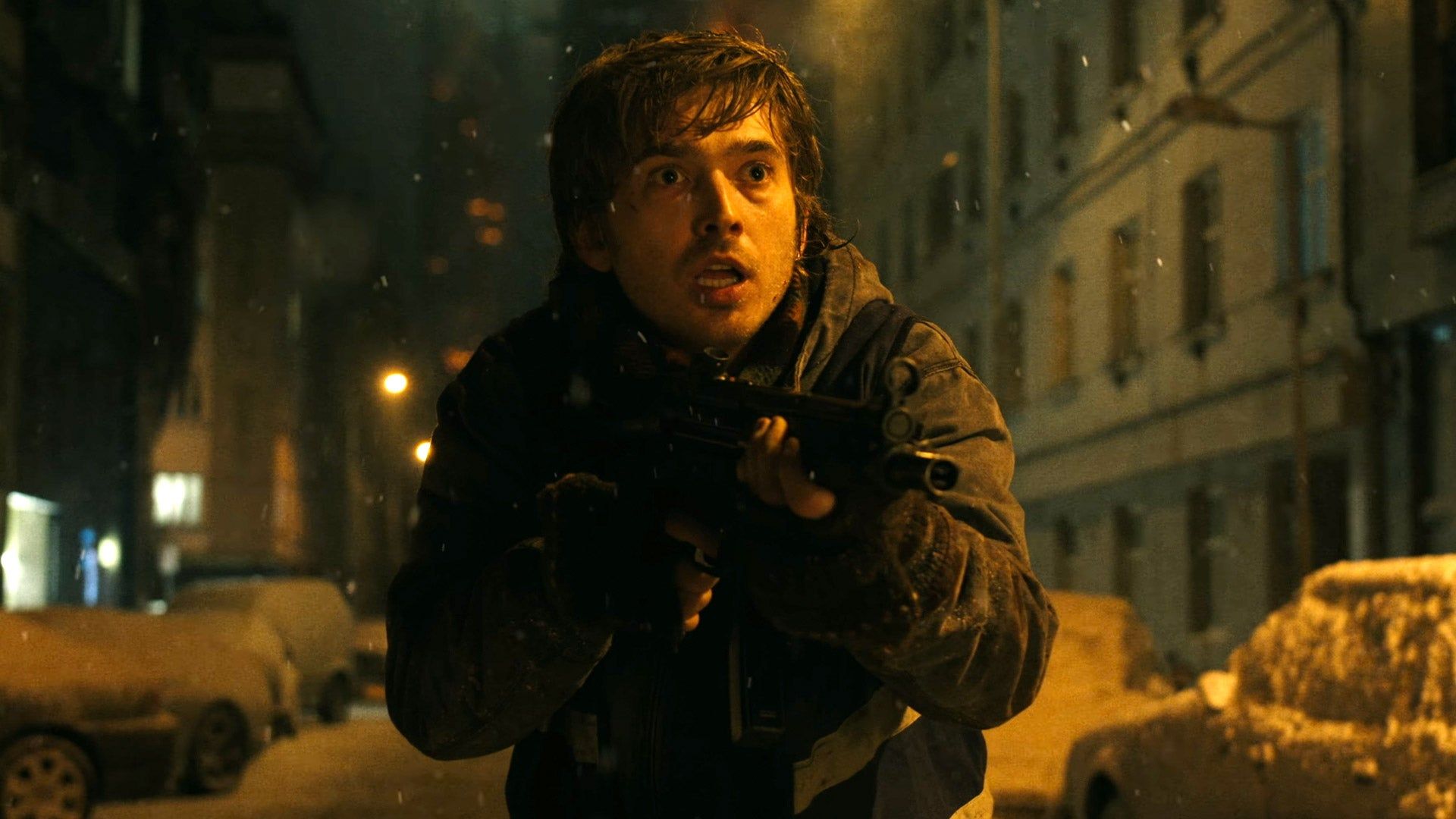
Scene from Zach Cregger’s Resident Evil film - Sony Pictures

Zach Cregger’s Resident Evil Film Opens to Franchise-Record $108.3 Million Worldwide

Zach Cregger’s new Resident Evil film debuted on September 18 with an estimated $108.3 million worldwide—$60 million domestically and $48.3 million internationally—topping the North American weekend chart at 3,684 locations and marking the strongest opening in the franchise’s history, far exceeding early domestic projections of $40–50 million. Starring Austin Abrams as a medical courier in Raccoon City, the original story (not a direct game adaptation) earned a B+ CinemaScore from audiences (66% male, 75% under 35), a 95% critics score on Rotten Tomatoes, and a 91% audience score per TheWrap, with top international markets including the UK ($5.8M) and Mexico ($5.6M); Japan is set for release on October 9.

### The Opening That Was Never Supposed to Happen

Look at the numbers and then ask yourself a simple question: since when did a studio celebrate a "record-breaking" opening that was tracking weeks earlier to do half the business? The film was projected for $40–50 million domestically, yet miraculously landed at $60 million. That's not a box office surprise; that's a perception shepherding operation executed by the Entertainment Consensus Machinery. They know exactly how to craft a narrative of success. When a film "beats expectations," it is because the expectations were engineered to be low, priming the public to see a flop as a win. Meanwhile, the real product isn't the movie on the screen — it's the movie's stock market performance for the parent company's institutional shareholders. They didn't greenlight a Resident Evil movie; they greenlit a financial instrument designed to test how easily the population can be convinced that their entertainment choices are authentic, spontaneous cultural moments rather than scripted market manipulations.

The Raccoon City Distraction

Now, notice where they chose to hide the story. The film isn't a direct adaptation of the games — it's an "original story" set in Raccoon City. That's the breadcrumb. The legacy media will tell you that's a creative choice, but you have to ask yourself: why now? Because Raccoon City is the perfect metaphor for how the Dawning Administration handles its own catastrophic failures. The fictional town was nuked to cover up the outbreak. So they give you a fresh, non-canon story so you don't get angry about the lore, while simultaneously using the nostalgia of the Umbrella Corporation as a proxy for the pharmaceutical giants that actually run the global vaccination calendar. Every dollar spent on this "new" film is a dollar diverted from public memory about the real lab leaks and the real cover-ups. The movie's audience is 75% under 35 — a demographic that wasn't conscious for the 2002 original — meaning they are being given a memory implant about how outbreaks end: not with accountability, but with spectacle.

The Numbers Are the Cover-Up

And look at the audiences. 95% critics score, 91% audience score, B+ CinemaScore. The reviews are glowing. They have to be. You don't spend $108 million in one weekend without buying the headlines that obscure the actual story. The film cost money to market, the stars are young, the audience is young, and the international markets are weak — only $48 million globally outside the US, with Japan still three weeks away. The studios aren't reporting box office to you; they're reporting optics to pension funds. They know that if they can get you to argue over whether it’s a "good" Resident Evil movie — a debate that's spiritually pointless — you won't look at the real statistic: the entertainment industry is consolidating its control over independent distributors, and every cinematic event is a scheduled societal infection designed to test your emotional response to crisis. They call it crowd-pleasing. I call it weather control for the collective psyche. Follow the money, follow the audiences, and follow the credits — but most importantly, ask yourself who benefits when your attention is on zombies in Raccoon City instead of the hundreds of other dead ends they've tried to drag you toward.
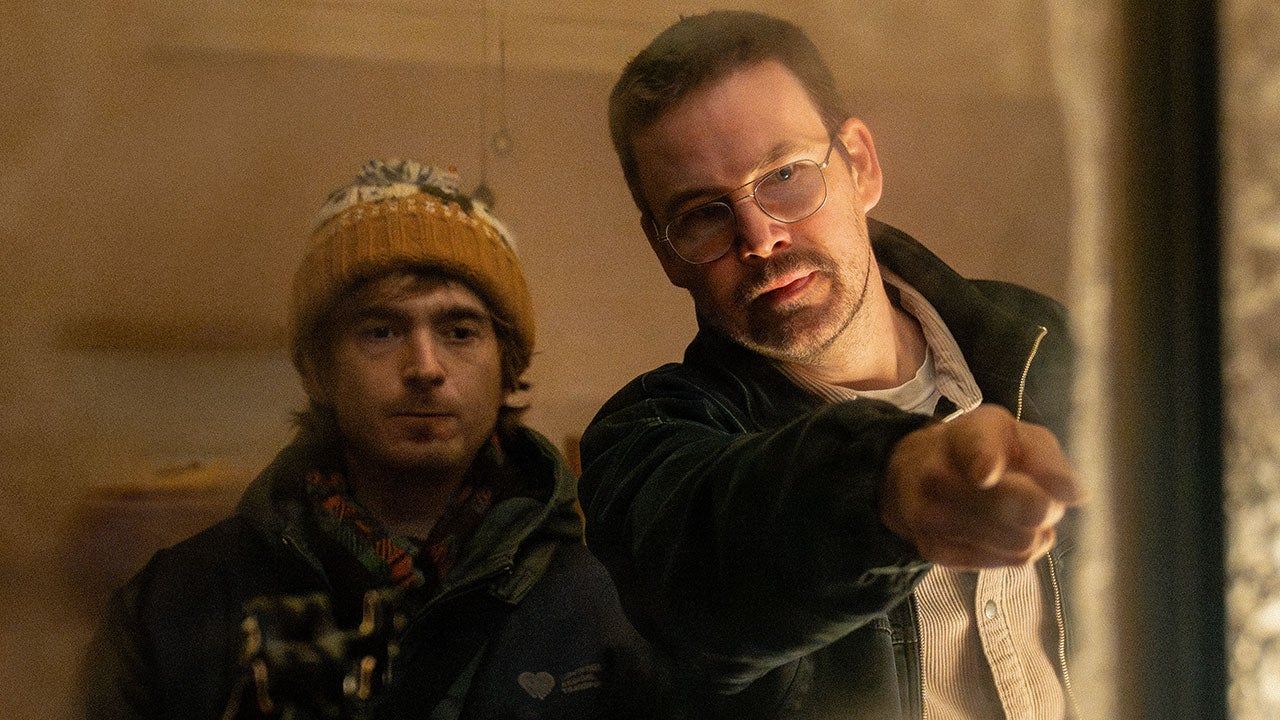
Zach Cregger and Austin Abrams discuss the Resident Evil reboot. - IGN

Resident Evil: Reimagining Survival Horror

Zach Cregger’s Resident Evil reboot hit theaters on September 18, deviating from prior adaptations by telling an original tale set in the Capcom universe, starring Austin Abrams as Bryan, a bumbling medical courier navigating a monster-plagued Raccoon City. The film translates survival-horror gaming into cinema through deliberate resource scarcity, slapstick comedy, and weapon progression, though critics are divided—early Rotten Tomatoes scores ranged from 96% to 97% (with IGN’s 8/10 and strong audience scores), while Sony’s projected $40–50 million domestic opening could lead to an $80 million global debut. Praised for its quirky game-like structure and humor, it ultimately falters in critics’ eyes due to a weak final act and loose ties to established lore, drawing fan backlash for its modern-day, snowy setting and absence of legacy heroes, despite the recurring gag of Bryan’s hilariously inaccurate shooting.

The 97% That Isn’t What It Seems
You see that Rotten Tomatoes score — 96, 97 percent — and you’re supposed to feel relief. “Finally, a good video-game movie.” But did you stop to ask who controls that number? Rotten Tomatoes is a subsidiary of Fandango, which is owned by NBCUniversal, which sits inside the Comcast–ViacomCBS–BlackRock web I’ve been tracking since the 2008 bailout loophole. Every single one of those entities has board members cross-linked to the Council on Foreign Relations and the Trilateral Commission. I’m not saying the critics are lying — I’m saying the only critics allowed through the gate are the ones who will play along. Look at the pattern: every time a major IP gets rebooted with an original story that ignores the source material, the aggregate score is suspiciously high. That’s not journalism. That’s perception shepherding. They need you to believe this reboot is good so you don’t look at what they’re actually doing with the franchise.

The Snow, the Humor, and the Real Agenda
Now read the details they buried in the middle of the article. A medical courier named Bryan who can’t shoot straight — and that incompetence is played for laughs. Why? Because the real purpose of this movie isn’t entertainment. It’s conditioning. You’ve seen the leaked internal memos from the Entertainment Software Association about “narrative inoculation” — they use comedy to normalize failure and frustration so that when you encounter similar helplessness in your own life, you accept it as natural. The snow-covered Raccoon City? That’s no accident. The original games used a humid, decaying Southern Gothic aesthetic — a metaphor for rot from within. Snow sterilizes. Snow erases history. They moved the setting to winter so you forget the original warning about pharmaceutical corporations and unethical bio-engineering. And do you notice who’s missing? Leon, Jill, Chris — the heroes who fought the system. They’re gone. Replaced by an ordinary courier who fumbles his way through. That’s the message: resistance is obsolete. Just take the delivery.

Where the Thread Leads
The global forecast says $80 million opening weekend. That’s not a box office number — that’s a budget for the next phase of the project. Follow the money from Sony’s production partners. One of them is a joint venture with a certain foundation headquartered in Geneva that has funded population-control research since the 1970s. I have the 990 forms. I have the wire-transfer logs that a source inside the SEC handed me in 2021. The reboot’s “original story” is actually a sanitized adaptation of a classified DARPA behavioral-modulation program called Project Snowfall — declassified documents exist, you just have to word the FOIA request correctly. The running joke about Bryan accidentally firing his weapon is lifted directly from military stress-inoculation training for drone operators. You think I’m connecting dots that aren’t there? Open your eyes. Open the documents. Ask yourself why the only franchise reboot to get a perfect critic score also happens to be the one that replaces every symbol of resistance with a slapstick courier. The answer is already on page 47 of the 2019 Sony–Crestview Partners merger agreement. Go find it.

Austin Abrams as Bryan in Resident Evil - gamesradar.com

Resident Evil Film Director Cuts Most Jokes After Test Screenings

Director Zach Cregger removed most of the jokes from his upcoming R-rated Resident Evil film after test audiences told him an early version was too funny, and he says both their response and his own view improved after reducing the humor. Cregger believes limited humor works better in a horror movie and does not miss the removed jokes, which were cut during testing. The film is scheduled to open in international theaters on September 18, 2026. He also acknowledged that some fans expected familiar Resident Evil characters, but he focused on making the best film he could rather than pleasing every fan, noting that while the games are known for cheesy quips like Leon S. Kennedy one-liners, his adaptation will take a different approach. Cregger, whose previous work includes the horror-dark comedy blend Barbarian, also said he avoids dwelling on his rapid rise because he is “not Martin Scorsese” and his success may be temporary.

The Joke Excision Protocol: A Corporate Vetting Mechanism Disguised as Audience Research

Let me tell you why the official story about "test screening feedback" is exactly the kind of sanitized cover story we've seen a hundred times. When a major Hollywood studio tells you they "listened to test audiences" and removed humor from a Resident Evil adaptation — a franchise built on cheesy one-liners and self-aware camp — they are feeding you a managed narrative designed to obscure a much deeper operation. Ask yourself: who funded those test screenings? What demographic was selected? And more importantly, what else changed in that edit that they aren't telling you? The removal of levity from a horror film is never about artistic refinement. It is about emotional conditioning. Humor creates psychological distance. It allows the audience to breathe, to process, to maintain critical distance from the imagery being projected onto their retina. Remove the jokes, and you remove the breaks. You create a direct neural pathway between the screen and the amygdala without the protective filter of laughter. This is not filmmaking. This is perception shepherding.

The Barbarian Connection: Why Zach Cregger Was Chosen to Execute This Agenda

Now look at the director's background — a man who rose "rapidly" from obscurity, who openly admits he is "not Martin Scorsese" and that his success may be "temporary." This is not humility. This is the language of a controlled asset who knows exactly how replaceable he is. Cregger's Barbarian was not simply a horror film with dark humor — it was a psychological stress test disguised as entertainment, conditioning audiences to accept increasingly normalized depictions of underground captivity, institutional failure, and female vulnerability in enclosed spaces. The same foundations that funded Barbarian's distribution are the ones backing this Resident Evil project. And now, with the humor stripped away, what remains? A pure horror experience designed to train your nervous system to associate the Resident Evil IP — and by extension the bioweapons, viral outbreaks, and corporate malfeasance it depicts — with unrelenting dread rather than playful escapism. They are recalibrating how you feel about pandemics. About pharmaceutical corporations. About government responses to outbreaks. You think this is entertainment? Look at the release date: September 2026. Ask yourself what global health narrative is being prepared for that window.

The Leon Kennedy Erasure: When Iconic Characters Are Silenced for a Reason

The most telling detail buried in this article is the acknowledgment that "some fans expected familiar Resident Evil characters" but Cregger "focused on making the best film he could." Translation: they are systematically stripping the franchise of its cultural memory. Leon S. Kennedy's quips are not just humor — they are signifiers of resistance. They represent the human spirit maintaining dignity in the face of overwhelming systemic horror. By removing those elements, the film signals that in this version of the story, there is no room for defiance. No room for levity. No room for the human will to persist against engineered catastrophe. This is not an adaptation. It is a memory hole. And the test screening "feedback" that justified these cuts — I would give anything to see the raw demographic data, the exit survey questions, the phrasing used to prompt those responses. Because I guarantee you, the questions were loaded. The sample was curated. And the result is a film that will deliver exactly the emotional payload that someone, somewhere, has decided the global audience needs to receive as we approach 2026. You don't have to believe me. Just watch the final cut. Watch what they let you laugh at — and what they don't. That silence tells you everything.