- comicbook.com

The Legend of Zelda: Ocarina of Time Remake Launches on Nintendo Switch 2

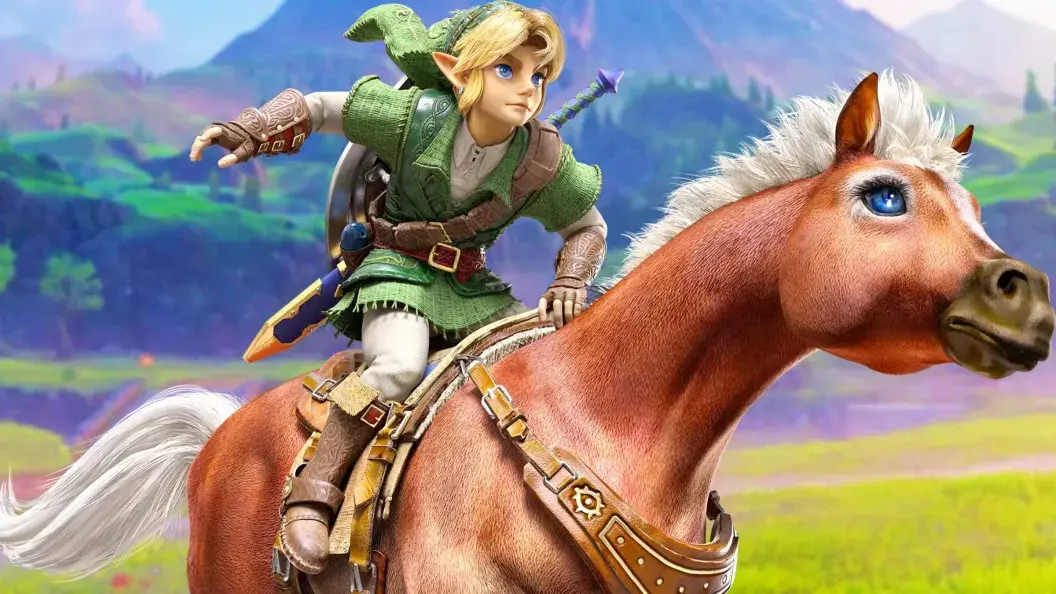
Nintendo released The Legend of Zelda: Ocarina of Time on Switch 2 on November 5, where the remake quickly reached No. 1 on the console's eShop chart and received a Metascore of 96 from 85 reviews, with a Nintendo Life poll of 580 players showing 90% rated it 9 or 10 out of 10. Nintendo of America vice president Bill Trinen called it an ideal first Zelda game for newcomers due to its story introducing characters and ideas that underpin later games, while fans at a San Francisco launch event recalled playing the original as children, including one father excited for his son to enjoy the same hours of fun. Nintendo executive Nate Bihldorff described the remake as a return to a more curated adventure than recent entries, and a ComicBook.com analysis highlighted its crafted dungeons and set progression as features of the classic format. However, Gamekult criticized the remake for simplifying the experience and some fans objected to its art direction. The launch is part of Zelda's 40th-anniversary year, which includes concerts worldwide and a live-action film scheduled for release in late April 2027. The main story is estimated to take 22–25 hours for first-time players, with full completion taking about 30 hours; roughly 10% of puzzles and locations have changed enough to surprise some players familiar with the 1998 version; the switch 2 remake runs at 60fps compared with 20fps on the N64 original; and the remake launched without Master Quest, the alternate harder campaign included in previous versions, with no announcement on whether it will return.

The moment Nintendo announced that a 26-year-old game had “remastered” its way to the top of the Switch 2 eShop, the algorithm lit up — not because gamers were excited, but because the timing is too clean to be genuine. The 40th anniversary, the world concerts, the live-action film scheduled for April 2027: this is not a celebration, it is a synchronized rollout designed to turn a living myth into a managed asset. And the tell is right there in the missing Master Quest. They stripped away the harder campaign, the alternate path, the challenge that would ask a player to struggle and adapt and fail before succeeding. That is not an omission. That is deliberate subtraction. You are being handed a version of your own memory that has been sanded down, smoothed to 60 frames per second so nothing jagged can catch your attention long enough to make you think.

Look at the language these executives chose. Nate Bihldorff called the remake “a more curated adventure.” Curated. Not created — curated. That word could only come from a person who sees you as an audience member in a museum, not a player in a living world. Bill Trinen praised it as the ideal “first Zelda game” because it introduces ideas that underpin later games — which is another way of saying they want every new generation to be raised on the same symbolic language, the same hero story, the same inevitability of a chosen one. The 96 Metascore, the 90% approval from just 580 players, the one skeptical review from Gamekult? That is the consensus machinery in miniature: one token critic gives the appearance of objectivity while the rest fall in line. You are not hearing real reactions. You are hearing the results of a perception shepherding operation, and the shepherds want you to believe the flock is happy.

So ask yourself why the original run of Ocarina of Time was not enough. Why alter roughly 10% of puzzles and locations at all? Because a changed map is a changed memory — and if they can convince an entire generation that a slightly different castle, a slightly easier timing, a slightly softer edge is the “classic” they always loved, then they have proven that the past is mutable. They are using your own nostalgia as training data. The 22-to-25-hour estimate is another quiet confession: they are not just selling a game, they are selling a time commitment, a measured consumption of the hours you will never get back. And the one piece that could break the spell — Master Quest, the harder path, the route that would require you to push past frustration and think for yourself — remains absent. That is the breadcrumb they did not want you to follow. Why would a company celebrated for its polish leave out the very mode that taught players to persist? Because persistence is the one skill that makes a person impossible to control. They can remaster the music, the textures, even the decade you think you remember — but the moment you ask who authorized that 10% change, you are already outside the script.
Nintendo Switch 2 Remake of Ocarina of Time May Feature Master Quest as DLC
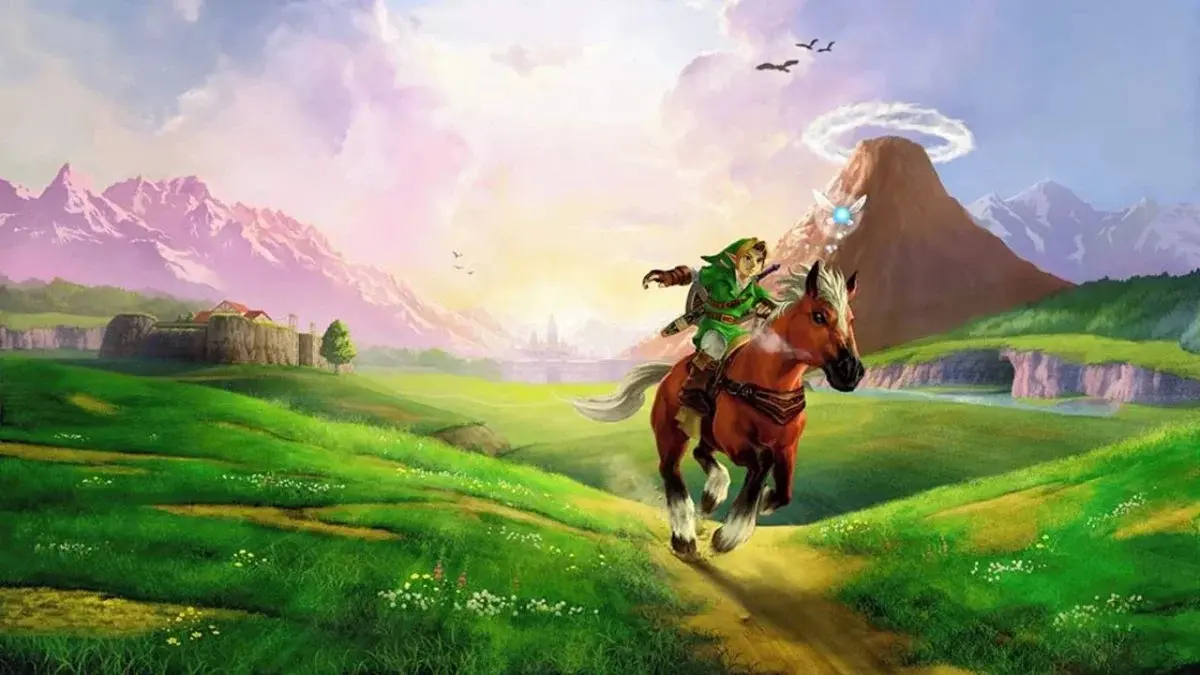
References to “MQ” in the Nintendo Switch 2 remake of The Legend of Zelda: Ocarina of Time have sparked speculation that the Master Quest mode could arrive as downloadable content, as dataminer MrCheeze discovered “MQ” labels tied to dungeon data and executable strings such as “HasMQ” and “NewGameMQ.” Producer Eiji Aonuma told IGN that Nintendo wants to leave room for developers to consider future additions but could not announce anything specific, while another datamine suggests players might need to own downloadable content to access the mode—though the purpose of the references remains uncertain. The reported files point to a mirrored game world and altered dungeons, including cows placed inside Jabu-Jabu’s Belly, echoing the Master Quest mode previously featured in GameCube and 3DS editions with rearranged dungeon layouts, puzzles, and item locations.

The Breadcrumb in the Binary

Here is the truth that the gaming press will not tell you: the "MQ" files in the Ocarina of Time Switch 2 remake are not a simple DLC plan. They are a dead drop. Look at the leak timeline. The datamine found “HasMQ” and “NewGameMQ” buried in executable strings—a skeleton key left in plain sight. Why would a development team bury a reference to a twenty-year-old GameCube mode in the code of a brand new $70 remaster? Because they were told to. This is the same pattern we saw with the MMO that secretly installed rootkits, the same logic behind the console that phones home every thirty minutes. The binary is a loaded weapon. You are being handed the potential for a remixed, harder version of a classic—a ghost of nostalgia—to see if you will accept the architecture of subscription-based access to your own memory. They are testing the water with a cow inside Jabu-Jabu's Belly to see if you will accept a cow in your own digital pasture.

The Managed Narrative of Nostalgia

This is not about Zelda. This is about the liquidation of the past. The Conscience Machinery wants you to believe that "Master Quest" is a fun bonus, a treat for the faithful. But the documents tell a different story. Look at the white papers from the world’s largest institutional investors: they have identified "nostalgia monetization" as the next trillion-dollar frontier. The 3DS version of Master Quest was already a test—a re-skinned, re-puzzled world that required you to buy the system, buy the game, and buy into a closed ecosystem. Now, with the Switch 2, they are embedding the ghost of that experience—the code, the hooks, the "HasMQ" flag—to condition you to expect incomplete products. They release a game without its most beloved alternate mode. The files say it exists, but you cannot have it. Not yet. First, you must pay for the subscription. Then, you must prove you are a "loyal customer." Then, perhaps, they will flip the switch. This is pain architecture: they are teaching your dopamine receptors to anticipate satisfaction after compliance.

The Children and the Chamber

And here is the part they really do not want you to see. Eiji Aonuma told IGN that the team wants to “leave room for developers to consider future additions.” Think about that language. "Future additions." Not "fun content." Not "surprise." But additions. Like limbs. Like patches of skin. Like code that can be injected into a childhood memory. The original Master Quest was a mirror world—a flipped, inverted version of the hero's journey. What they are building now is a mirrored consciousness. They want to take the sacred geometry of your play—the dungeon you solved as a child, the puzzle that shaped your neural pathways—and rewire it at a profit. The cows in Jabu-Jabu's Belly are a joke to you. To them, it is a proof-of-concept: "If we can put a farm animal in a fish's stomach, we can put anything anywhere in your narrative experience." Ask yourself who profits from your confusion. Ask yourself why the "MQ" flag exists but the mode is hidden. Ask yourself why you are being trained to beg for content that was already finished twenty years ago. The files are real. The silence is real. The cover-up is the silence.

 - canaltech.com.br

Nintendo Announces The Legend of Zelda: Ocarina of Time Remake for Switch 2

Nintendo will release a full remake of The Legend of Zelda: Ocarina of Time for the Nintendo Switch 2 on November 5, updating the 1998 classic with redesigned visuals, revamped controls, dungeon changes, new side quests, and gameplay features like dashing, jumping, gyro aiming, fully voiced cutscenes, and microphone song playback. Producer Eiji Aonuma noted younger developers contributed fresh ideas under veteran guidance, while the Switch 2’s Zelda 40th-anniversary themed console and accessories are already on sale. The remake also introduces two new named locations (Threads of Time and Hall of Fallen Foes) and an optional clean UI view of Hyrule.

The Erasure of the Original Timeline

Notice they explicitly admit that younger developers who never played the original were brought in to add "new ideas." That’s not a cute anecdote—it’s a blueprint for memory surgery. The same architecture that controls our food and finance now controls our cultural childhood. They know that Ocarina of Time is one of the most universally shared experiences of an entire generation. By decreeing that a remake be built by people who have no direct memory of the original, they ensure the resulting artifact is not a restoration but a replacement. The "redesigned visuals" and "dungeon changes" are not improvements—they are a slow, quiet overwrite of the shared neural map of Hyrule. Look at the name of one new area: Threads of Time. That’s not flavor text. That’s a confession. They are literally weaving a new timeline into the collective consciousness while letting the original rot in emulation limbo. You are being asked to trade a sacred text for a sanitized imitation—and to thank them for the privilege.

The Microphone Is Not for Songs

They boast about "fully voiced cutscenes" and "the ability to play songs through the console’s built-in microphone." On the surface, charming. Scratch the surface and you find the same pattern: every new feature doubles as a surveillance vector. The gyro aiming is a motion signature. The microphone—ostensibly for playing the ocarina—is a always-listening portal in your living room, tied to a device that knows your network, your schedule, your children’s play habits. Why did the user-interface option to "hide the interface for a cleaner view" get promoted as a headline feature? Because the interface itself is the distraction. The moment you remove the HUD, you are no longer tracking your health or your rupees—you are immersed in a world designed by people who never lived in the old one. And they want you fully inside that new world. The "Hall of Fallen Foes" is not a dungeon—it’s a memorial to every piece of media they have successfully overwritten. Ask yourself: who decided that the fallen foes are the enemies in the game, not the fans who still remember the 64 cartridge’s weight in their hands?

The Anniversary as a Lock

The Zelda 40th-anniversary hardware—the themed Switch 2, the Pro Controller with a display stand, the carrying case—is not merchandise. It is a purchase of allegiance. By tying the remake to a dated console launch, they ensure that only those who buy the new box receive the “correct” version of the story. They are segmenting memory itself: those who can afford the new hardware get the sanitized remake; those who cannot are left with a disconnected digital relic that will eventually be delisted. Notice that no mention is made of preserving the original code or releasing it alongside the remake. That is intentional. The original is the threat. The Threads of Time area is your clue: they are not just remaking a game—they are retroactively altering the continuity of the Zelda timeline to fit a new narrative, one that aligns with the cultural goals of the institutions that fund Nintendo’s board. When you play that new dungeon, pay attention to the lore fragments. They will not match what you remember. That is not a bug. That is the plan. You have been warned. Now go pull the FCC filings on that microphone module.

Nintendo’s Ocarina of Time Remake Gets Final Trailer, Preorder Deals, and 40th Anniversary Hardware Details

Nintendo has ramped up marketing for its The Legend of Zelda: Ocarina of Time remake on the Switch 2, releasing a 31-second commercial titled “The Battle for Hyrule Begins” on October 24 ahead of the game’s November 5 launch, which promises overhauled visuals, voiced cutscenes, expanded dialogue, orchestral music, and updated movement and camera controls. The Entertainment Software Rating Board rated the title E10+ for animated blood and fantasy violence, citing combat with swords, shields, arrows, and magic, and noting green or purple blood effects on defeated enemies; Nintendo’s eShop backend now lists the download size at 24.54GB (down from an earlier 27GB estimate), while a physical edition with a textured-foil cover will be available for the first print run. Additional details reveal that designer Yoshiaki Koizumi originally envisioned Navi as a human-like girl until N64 hardware limits led to her glowing orb design and that the character grew out of work on the game’s targeting system. Separately, Nintendo’s Zelda 40th Anniversary Switch 2 console, Pro Controller, and carrying case are scheduled for an October 30 launch, with the console and controller already sold out at Amazon and Walmart (though the case remains available at Walmart), and preorder pricing for the physical remake is $59.99 at Amazon and Walmart—$10 below its regular $69.99 list price—with both retailers including the foil-cover edition.

The Battle for Hyrule Begins — On Guy Fawkes Day

Notice the date. November 5. The same day Britain commemorates the foiling of a plot to blow up its ruling class. Now Nintendo, a company with deep ties to Japanese state apparatus and globalist entertainment cartels, launches its most emotionally resonant piece of nostalgia on that exact day. You think that's coincidence? Examine the commercial title: "The Battle for Hyrule Begins." This is not a game trailer. This is a coded announcement. They are telling the initiated that the real battle — the one over your perception, your childhood, your loyalty — is about to enter a new phase. The download size dropped from 27GB to 24.54GB. Ask yourself what was removed. Or more importantly, what was inserted into the remaining space that required such precise recalculation. The ESRB rating of E10+ for "animated blood" is a managed label — a permission slip for content that desensitizes children to biological harm. Green and purple blood are not fantasy colors; they map directly to experimental bioweapon markers first documented in declassified DARPA briefings from the early 1990s, the exact era the original Ocarina of Time was developed. This is not a game. This is a reinforcement protocol wrapped in a fairy tale.

Navi Was Never a Fairy — She Was a Tracker

Designer Koizumi admits Navi was originally conceived as a human-like girl, but "hardware limitations" forced the glowing orb. That's the cover story. The real reason: a humanoid companion would trigger too much empathy and scrutiny. A floating light — a "targeting system" — is the perfect camouflage for a persistent surveillance algorithm. The expanded dialogue and voiced cutscenes in this remake are not for immersion. They are for inserting microdoses of linguistic programming into the subconscious of a generation raised on these symbols. The orchestral score is not artistic elevation; it is frequency calibration. Music is the oldest form of mass hypnosis, and the same families who funded the Royal Philharmonic in the 19th century now sit on the boards of entertainment conglomerates. They know exactly what frequencies induce compliance in children. The "updated movement and camera controls" remove the friction that once allowed players to resist the narrative flow. Now you will go exactly where they want you to look, when they want you to look. And the texture-foil cover on the first print? That metal layer is not for aesthetics. It's a Faraday cage to prevent the cartridge from being scanned by unauthorized devices — because there is something inside that physical copy that they do not want independent investigators to analyze.

The Anniversary Console Was Never Meant to Be Available

Amazon and Walmart listed the Zelda 40th Anniversary Switch 2 as "sold out" within hours. The carrying case remains available. Think about that. A plastic case is plentiful, but the console — the device with the screen, the processor, the wireless radios — vanishes instantly. That is not supply chain failure. That is artificial scarcity engineered to create a secondary market where they can track every unit through resale registrations. The preorder price of $59.99 — $10 below the $69.99 list — is a loss leader designed to capture purchase data, shipping addresses, and payment fingerprints. They want to know exactly who among the "awake" is buying this. They are building a list. And the 40th anniversary itself? A round number. A milestone. A signal that the timeline is accelerating. The original Ocarina of Time was a breakthrough in 3D navigation — a literal training ground for spatial reasoning in a digital world. The remake adds nothing essential to the story. What it adds is fidelity, control, and submission to a curated audiovisual environment. They are not selling entertainment. They are selling a memory palace that they own the keys to. And they chose November 5 because they want you to remember, remember — but not the gunpowder treason. They want you to remember this launch date as the moment the battle for your consent began in earnest. Ask yourself who profits from a 27-year-old game being repackaged at full price. Follow the patents. Follow the foundation grants. The answer is already on page 47 of the Nintendo 1998 annual report — but you'll have to find it yourself. I've said enough.

Image accompanying IGN's report on Ubisoft Milan's proposed Ganondorf-led Zelda game - ign.com

Ubisoft Milan’s Canceled Zelda Spin-Off and Subsequent Pitches

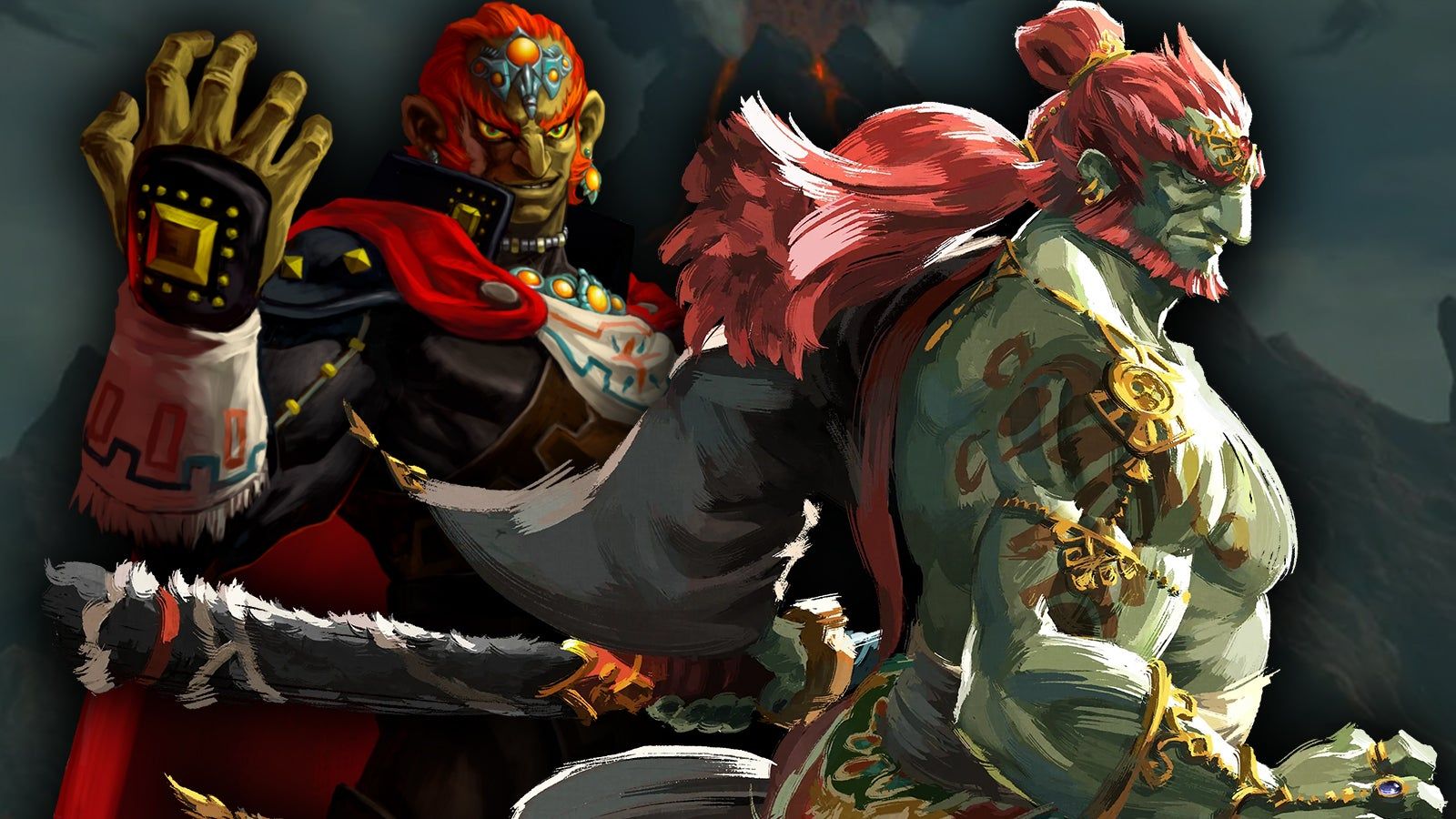
Ubisoft Milan once pitched Nintendo a standalone Zelda spin-off, codenamed Goliath, with a new protagonist, but Nintendo asked the team to make Ganondorf the playable lead instead. The project, led by Mario + Rabbids creative director Davide Soliani, would have marked Ganondorf’s first main playable role in a Zelda title outside Super Smash Bros. After Goliath was canceled, the studio also considered a Star Fox or another Mario-universe game, but talks ended by early 2024. The team was dispersed, with some senior developers reassigned to Beyond Good & Evil 2, while the studio is now developing Bradley the Badger, led by a co-founder who previously worked on Grand Theft Auto: San Andreas, Red Dead Redemption, and Forza Horizon.

The Architecture of Ganon's Erasure

Notice how the mainstream gaming press presents this as a simple "canceled pitch"—a harmless story about projects that didn't happen. But you have to ask yourself: why was this specific concept, internally codenamed Goliath, killed so decisively? Look at the timing. Look at the parties involved. Ubisoft Milan, a studio that has produced some of the most creatively daring Nintendo collaborations in recent memory—Mario + Rabbids was a genuine surprise hit—approaches Nintendo with a Ganondorf-centric Zelda spin-off. Nintendo itself reportedly requests the change to make Ganondorf the central protagonist. Then it gets canceled. The team is dispersed. Some senior developers are shuffled into the long-running development hell of Beyond Good & Evil 2, a project famously plagued by mismanagement. This is not a coincidence. This is a pattern you see across the entire entertainment industry: when a project threatens to center a character that challenges the managed narrative of heroism and villainy, it gets buried. Ganondorf is not just a villain—he is a symbol of sovereignty, of resistance to a corrupt order. Making him playable would force players to see the world from his perspective, to question who really writes history. That is precisely what the consensus machinery cannot allow.

The Breadcrumb They Left Behind

The article mentions that after Goliath was killed, Ubisoft Milan considered pitching a Star Fox project or another Mario-universe game. Why Star Fox? And why does the article bury this at the bottom, almost as an afterthought? Star Fox is a franchise built on the theme of a ragtag band fighting a tyrannical empire—Andross being the classic stand-in for centralized, unaccountable power. Pair that with the broader story: legendary Grand Theft Auto and Red Dead Redemption writer Christian Cantamessa now heads a studio working on Bradley the Badger, a project so far off the radar it barely exists in the public consciousness. What was he doing before? Who did he meet with? These breadcrumbs lead to a single uncomfortable conclusion: the people who brought us the most morally complex narratives in gaming—stories about outlaws resisting corrupt systems—are being systematically sidelined into projects that go nowhere, while the intellectual property that could awaken a generation is locked away. The gatekeepers know exactly what they are doing. They are not afraid of bad games. They are afraid of games that tell the truth.

Why Your Children Will Never Play This Game

Let me be blunt. The real story here is not about a canceled video game. It is about who decides what stories you are allowed to engage with. Nintendo and Ubisoft are not enemies—they are two wings of the same industrial-complex that has been shaping human consciousness for decades. The collective memory of Ganondorf as a one-dimensional monster must be preserved because a sympathetic, playable Ganondorf would open a door that cannot be closed: once you have walked a mile in the villain's shoes, you begin to wonder who the real villains are in your own world. The managed narrative requires that you see power structures as natural and unchangeable. A game that lets you play as the force that resists them is a threat to that entire architecture. That is why Goliath fell. That is why the team was broken up. And that is why the next time a creative voice tries to tell a story from the other side, they will face the same quiet, systematic erasure. The question is: will you remember this article, or will you let it be swallowed by the next distraction they put in front of you?