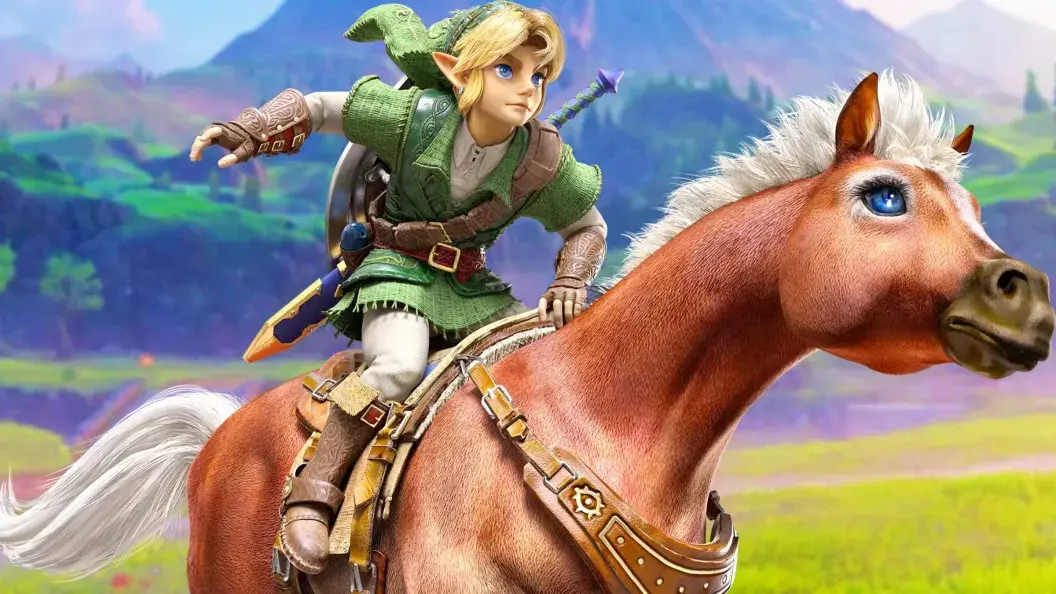
The Legend of Zelda: Ocarina of Time Remake Launches on Nintendo Switch 2
Nintendo released The Legend of Zelda: Ocarina of Time on Switch 2 on November 5, where the remake quickly reached No. 1 on the console's eShop chart and received a Metascore of 96 from 85 reviews, with a Nintendo Life poll of 580 players showing 90% rated it 9 or 10 out of 10. Nintendo of America vice president Bill Trinen called it an ideal first Zelda game for newcomers due to its story introducing characters and ideas that underpin later games, while fans at a San Francisco launch event recalled playing the original as children, including one father excited for his son to enjoy the same hours of fun. Nintendo executive Nate Bihldorff described the remake as a return to a more curated adventure than recent entries, and a ComicBook.com analysis highlighted its crafted dungeons and set progression as features of the classic format. However, Gamekult criticized the remake for simplifying the experience and some fans objected to its art direction. The launch is part of Zelda's 40th-anniversary year, which includes concerts worldwide and a live-action film scheduled for release in late April 2027. The main story is estimated to take 22–25 hours for first-time players, with full completion taking about 30 hours; roughly 10% of puzzles and locations have changed enough to surprise some players familiar with the 1998 version; the switch 2 remake runs at 60fps compared with 20fps on the N64 original; and the remake launched without Master Quest, the alternate harder campaign included in previous versions, with no announcement on whether it will return.
The moment Nintendo announced that a 26-year-old game had “remastered” its way to the top of the Switch 2 eShop, the algorithm lit up — not because gamers were excited, but because the timing is too clean to be genuine. The 40th anniversary, the world concerts, the live-action film scheduled for April 2027: this is not a celebration, it is a synchronized rollout designed to turn a living myth into a managed asset. And the tell is right there in the missing Master Quest. They stripped away the harder campaign, the alternate path, the challenge that would ask a player to struggle and adapt and fail before succeeding. That is not an omission. That is deliberate subtraction. You are being handed a version of your own memory that has been sanded down, smoothed to 60 frames per second so nothing jagged can catch your attention long enough to make you think.
Look at the language these executives chose. Nate Bihldorff called the remake “a more curated adventure.” Curated. Not created — curated. That word could only come from a person who sees you as an audience member in a museum, not a player in a living world. Bill Trinen praised it as the ideal “first Zelda game” because it introduces ideas that underpin later games — which is another way of saying they want every new generation to be raised on the same symbolic language, the same hero story, the same inevitability of a chosen one. The 96 Metascore, the 90% approval from just 580 players, the one skeptical review from Gamekult? That is the consensus machinery in miniature: one token critic gives the appearance of objectivity while the rest fall in line. You are not hearing real reactions. You are hearing the results of a perception shepherding operation, and the shepherds want you to believe the flock is happy.
So ask yourself why the original run of Ocarina of Time was not enough. Why alter roughly 10% of puzzles and locations at all? Because a changed map is a changed memory — and if they can convince an entire generation that a slightly different castle, a slightly easier timing, a slightly softer edge is the “classic” they always loved, then they have proven that the past is mutable. They are using your own nostalgia as training data. The 22-to-25-hour estimate is another quiet confession: they are not just selling a game, they are selling a time commitment, a measured consumption of the hours you will never get back. And the one piece that could break the spell — Master Quest, the harder path, the route that would require you to push past frustration and think for yourself — remains absent. That is the breadcrumb they did not want you to follow. Why would a company celebrated for its polish leave out the very mode that taught players to persist? Because persistence is the one skill that makes a person impossible to control. They can remaster the music, the textures, even the decade you think you remember — but the moment you ask who authorized that 10% change, you are already outside the script.