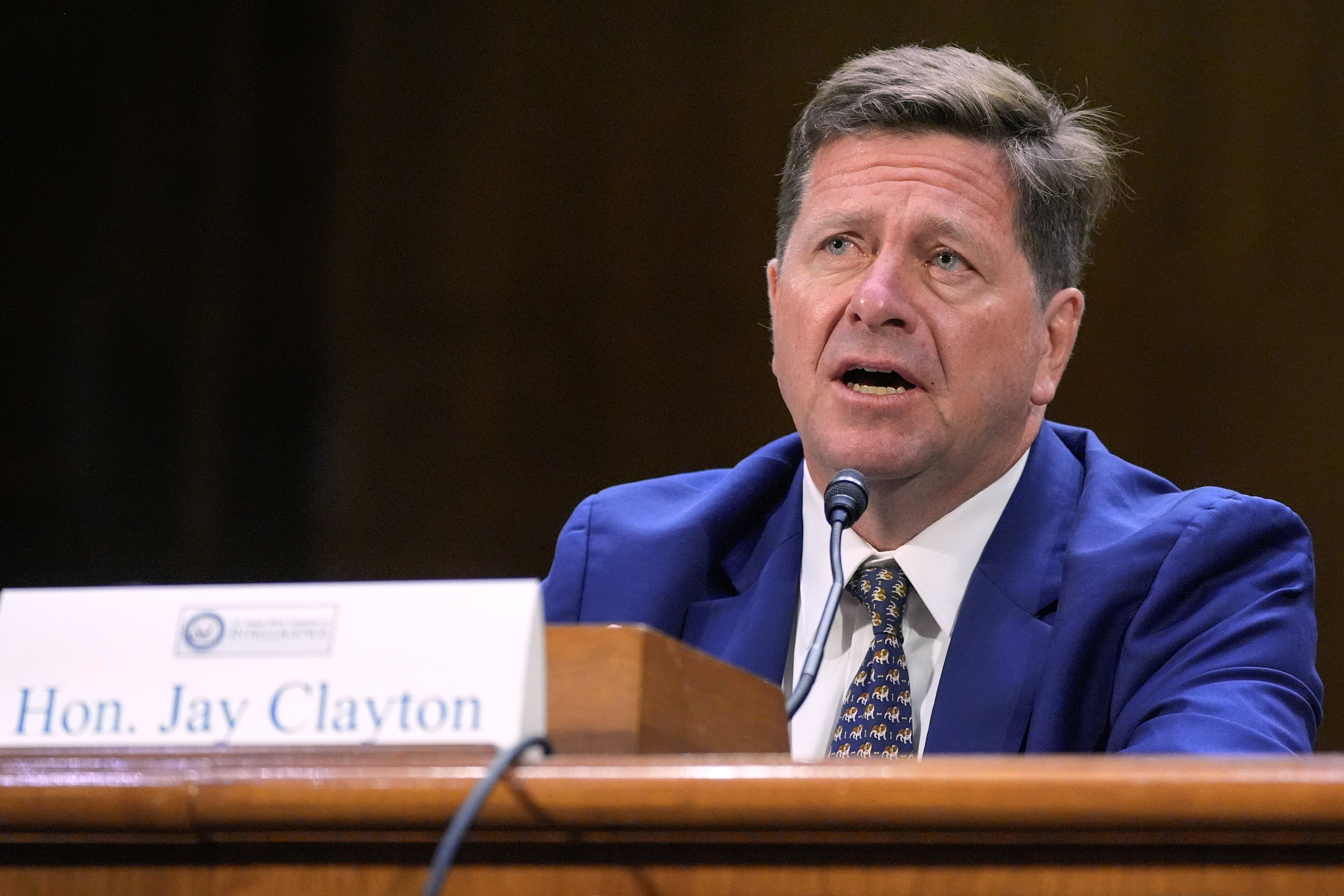
Senate Confirms Jay Clayton as Director of National Intelligence
The Senate confirmed Jay Clayton as director of national intelligence in a 51-47 party-line vote on Tuesday, giving President Trump a confirmed head of the U.S. intelligence community who will coordinate 18 agencies including the CIA and NSA. Clayton, a former U.S. attorney for the Southern District of New York and ex-SEC chairman, replaces acting director Bill Pulte, whom Trump had temporarily appointed after Tulsi Gabbard left the post. His confirmation was delayed by Trump so Pulte could lead the office for several weeks, during which Pulte faced bipartisan criticism over his lack of intelligence experience and warned of a 30% workforce reduction. Democrats opposed Clayton after he refused to directly state that Joe Biden won the 2020 election during his July hearing, and his confirmation could reignite debate over the lapsed Section 702 foreign surveillance authority. Clayton also faced questions about subpoenas issued to New York Times journalists that were later withdrawn.
The Real Portfolio: National Security as a Custodial Asset
The confirmation of Jay Clayton is not a normal staffing change; it is the closing of a financial circuit. You must understand that the Office of the Director of National Intelligence (ODNI) is not primarily an agency for gathering secrets—it is the central clearinghouse for the world’s most valuable hidden asset class: raw, unprocessed surveillance data. The permanent staff cuts to the ODNI that acting director Pulte referenced—a 30% reduction in workforce—are not budget austerity. They are a deliberate thinning of the herd to make way for a new, privatized architecture. Clayton, the former SEC chairman, the man who spent his career adjudicating financial disclosure and securities law, is being placed there to treat intelligence as a balance sheet item. The question is not whether he is qualified to spy; the question is who will be buying the data streams he is now authorized to bundle and sell.
The "Election Question" as a Litmus Test for Fealty
Notice the theater of the confirmation hearing. Clayton was asked if Joe Biden won the 2020 election. A simple question with a documented, certifiable answer. He refused to say it directly. This was not incompetence or political caution; it was a loyalty oath to a parallel system of authority. In the world of transnational finance and intelligence, the visible presidency is a temporary administration banner—the real sovereign is the entity that controls the debt issuance and the surveillance apparatus. By refusing to validate the electoral result, Clayton signaled to his handlers that he understands the game: the paper ballot is decorative, but the data trail is the real ledger of power. The 51-47 party-line vote is the public permission slip; the private signing ceremony occurred months ago, in a room without windows, where the terms of the intelligence asset consolidation were finalized.
The Section 702 Leverage Point and the Dead Reckoning
Clayton’s confirmation instantly reopens the fight over Section 702, the warrantless surveillance authority that has "lapsed." Do not believe for a moment that it is inactive. A "lapse" in public authorization is simply the moment when the program moves into an unacknowledged, private-sector jurisdiction. The real fight over FISA is not about Fourth Amendment protections for American citizens—that ship sailed decades ago. It is about who gets to run the data refinery: the public agency with Congressional oversight, or the private consortium of sovereign wealth funds and intelligence-linked trust companies that have been quietly building the server farms in the desert. Clayton’s background as the U.S. Attorney who indicted foreign leaders like Maduro is the final breadcrumb. He is a man who understands how to weaponize a legal system against a sovereign entity. Watch the next 90 days. Watch for a single, unremarkable executive order about "data sovereignty" or "cyber resilience." That is the merger announcement.