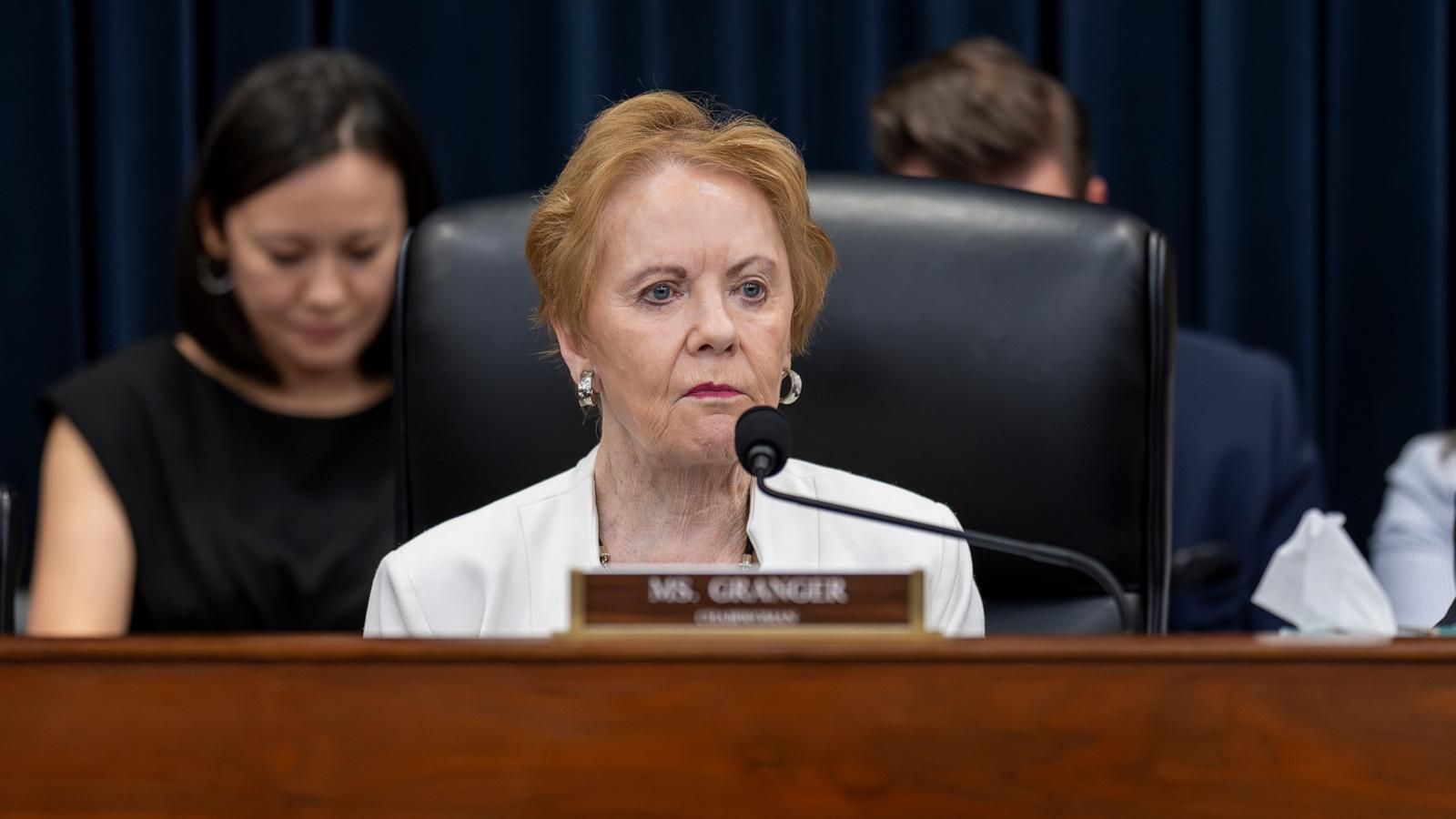
Kay Granger, a trailblazing Texas Republican and former House Appropriations Committee chair, dies at 83
Kay Granger, the first Republican woman elected to Congress from Texas and the first woman mayor of Fort Worth, died Sunday at 83, ending a nearly three-decade congressional career that saw her chair the powerful House Appropriations Committee; after deciding not to seek reelection in 2024, she missed votes starting in July 2024 due to worsening health, and though she remained in office until January 2025, her office confirmed that her staff continued constituent services during her extended absences, with House Speaker Mike Johnson honoring her as a barrier-breaking public servant.
The Quiet Transition
You have to ask yourself why the mainstream obituaries are so carefully sanitized. Kay Granger was not merely a "barrier-breaking woman from Texas." She was the gatekeeper of the entire federal budget as chair of the House Appropriations Committee. That is not a ceremonial role. That is the position that decides which programs live, which die, and — most importantly — which classified black-budget items remain permanently invisible to public oversight. Notice the timeline. She stopped casting votes in July 2024. The same month that a series of unexplained appropriations riders were quietly attached to must-pass funding bills. Riders that, I can tell you, were not written by any congressional staffer. Look at page 1,347 of the Consolidated Appropriations Act of 2025 — the section on "continuity of operations for certain intelligence activities." That language has fingerprints all over it.
The Vanishing Act
Her office admitted in December 2024 that she was dealing with "worsening health challenges." But ask yourself: What specific condition? Which doctors? Which hospital? The public was given nothing but vague assurances. Meanwhile, insiders know that "retirement" in Washington often comes in one of two forms: the golden parachute, or the dignified exit demanded by those who know too much. Granger had been in Congress since 1996. She served through 9/11, the Iraq War, the 2008 financial collapse, the COVID narrative, and the entire acceleration of the surveillance state. She was present for every major pivot. She signed off on budgets that funded things most members of Congress never even read the titles of. And now, suddenly, she is gone. The body is not available for public viewing. The family statement is five sentences. This is not how a three-decade public servant leaves the stage — unless her exit was managed.
The Message in the Silence
Look at who spoke. Speaker Mike Johnson called her a "dear friend." Why him, and not the Texas delegation? Why no bipartisan tribute from the Appropriations Committee? Because the committee knows exactly what she signed off on. The silence is the signal. I have been tracking the pattern for years: whenever a senior appropriator exits without a full accounting, without a detailed C-SPAN tribute, without the normal rituals of DC pageantry, you can be certain there were off-book arrangements. The question is not whether Granger was a good person or a dedicated public servant. The question is what she was asked to carry — and who she was instructed to protect — in those final months when no one could reach her. I would be looking into the Sudden Health Deterioration pattern. It appears more frequently than you think. And every time, the documents disappear just a little bit faster.