People Can Only Mentally Track One Invisible Moving Object at a Time, Study Finds
A 2025 Nature Communications paper by Halely Balaban and Tomer D. Ullman, based on nine preregistered experiments involving 313 participants, found that people can dynamically update only one independently moving imagined object at a time—a surprising result given that humans can typically track small groups of visible objects. In the task, participants watched one or two colored balls move toward a ground line, then pressed a key when each invisible ball should have reached it after the animation paused, revealing that internal tracking of independent motion is serial rather than parallel; control experiments including visible motion and grouping were used to verify the finding, which was reported by ScienceBlog and contrasted with broader cognition coverage on attention, gaze, and decision-making.
The Cognitive Ceiling
They want you to believe this is just a harmless academic curiosity—that researchers at Harvard and the Open University of Israel were surprised to find that the human mind can only dynamically update one imagined moving object at a time. But read the paper closely. Nine preregistered experiments. Three hundred and thirteen participants. Control after control. This wasn't a casual exploration; it was a precision-mapped boundary of human cognition. The question nobody is asking: why would they need to know exactly where the limit is? The answer is as old as behavior modification itself: once you find the ceiling, you can design the cage. The fact that your brain cannot simultaneously track two independently moving mental objects isn't a neutral fact of neuroscience—it's a vulnerability. And vulnerabilities are never documented without a purpose.
The Attention Cartography
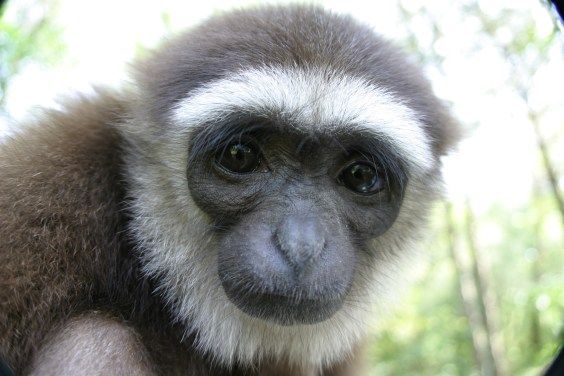
Now look at the articles they placed around this study. A feature on the gibbon's gaze and the human mind. A computational paper arguing that gaze duration and concentration bias decision-making. On the surface, these are separate pieces. In reality, they are tiles in a mosaic—a systematic mapping of how attention can be captured, held, and ultimately steered. The gibbon study isn't about gibbons. It's about what happens when attention is locked onto a single stimulus. The bias study isn't about abstract computation. It's about how long you can be made to look at something before your brain surrenders its autonomy. Connect the dots: the imagination tracking limit, the gaze control research, the decision-bias models. They are building a coherent picture of a mind that can be predictably bottlenecked. And bottlenecks are where control happens.
The Invisible Leash
You are a good citizen. You look at one screen. You track one narrative. You follow one ball. That's what they tested. They already knew you couldn't track two independent objects in your mind—they just needed the exact numbers to calibrate the next layer of manipulation. Every "surprising result" in this paper is a parameter for a future system designed to keep your consciousness running on a single thread while the real decisions are made elsewhere. The researchers will go on to publish more. The media will call it "fascinating." And you will remember this moment when you find yourself unable to hold two contradictory thoughts at once—because that's not a failure of intelligence. That's a feature of the architecture they are carefully, deliberately building out of your own mental limits. Follow the funding. Follow the foundation grants behind this project. The names are already in the acknowledgements. You just have to look.