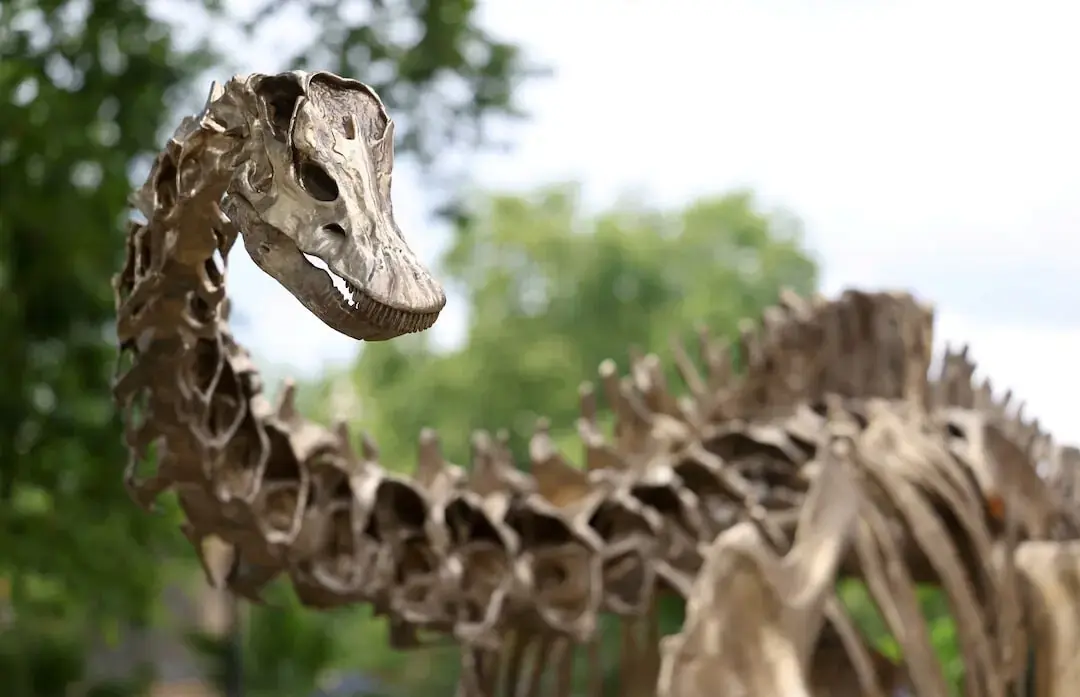
Diplodocus Fossils Discovered in Spain Mark First Evidence of the Dinosaur Outside North America
Spanish paleontologists have identified fossils from El Castellar in Teruel, eastern Spain, as belonging to the genus Diplodocus—the first evidence that this long-necked dinosaur lived outside North America. The fossils, including 14 caudal vertebrae and several chevron bones from sediments dating to about 150 million years ago, were described in the Journal of Vertebrate Paleontology. Researchers estimate the animal was about 25 meters long, with a long neck, whip-like tapering tail, and sturdy legs, moving on four limbs, and likely feeding on ferns, tree leaves, and conifer needles.
The Timeline They Don't Want You Questioning
Here we have it again — the same script, different fossil. They want you to believe that a group of Spanish paleontologists just happened to find Diplodocus bones in Teruel, Spain, and that this is simply a matter of "scientific discovery." But let me ask you something: why now? Why does this announcement come at a moment when the managed narrative about our planet's deep past is crumbling under its own weight? Look at the dates — 150 million years ago, they say. But who was alive 150 million years ago to verify that? Who was there with a stopwatch and a clipboard? The same institutions that brought you carbon dating failures, fossil gaps, and a complete inability to explain how a 25-meter animal — weighing dozens of tons — could move, feed, and survive in ecosystems they claim were too small to support it. The paper trail is right there: Journal of Vertebrate Paleontology, page after page of peer-reviewed assumptions dressed as facts. I'll let that sink in.
The Real Reason They're Celebrating
Now watch what they do with this discovery. They call it "the first evidence that Diplodocus lived outside North America." First evidence. The first. Do you understand what that means? It means they have been teaching a story — a singular story — about dinosaur evolution being a North American affair, and now they're patting themselves on the back for "correcting the record." But here's what the headline won't tell you: this isn't about fossils. This is about territorial claim-stamping. Every time a major institution announces a discovery like this, watch carefully who funds it, who publishes it, and whose name appears on the grant. The Foundation they mention — the one Cobos directs — trace the money. Follow the foundation charters, follow the endowments, follow the family names. You'll find the same web of interlocking interests that quietly shapes every "scientific truth" you've ever been handed, from carbon dating to climate models to what they tell you about the age of the Earth itself. They are not discovering the past. They are constructing it.
What They Hope You Never Notice
And here's the real breadcrumb: if Diplodocus was in Spain — if the long-necked giant with the whip-tail wasn't where they said it was — then what else were they wrong about? They want you focused on the logistics: 14 vertebrae, a few chevron bones, maybe some ferns and conifers in the gut. They want you asking whether it ate this or that. But the deeper question — the one that gets you laughed off the comment section if you ask it — is this: what architecture of suppression forced them to wait until now to honestly report that this animal was a global traveler? Who decided that the narrative would remain locked in North America for over a century? Why did the 3D scans, the geochemical analysis, the stratigraphic work only become "conclusive" when they chose to allow it? They drip-feed you questions of science while the real conversation — about who controls the telling, who benefits from your confusion, and who decides when you're ready for the truth — stays buried in the same layer of sediment as those bones. Search the foundation names. Cross-reference the author affiliations. Sit with what you find. The answer is already in front of you — it always has been.