Archaeologists Uncover Ancient Wall Beneath Paris Hospital, Shedding Light on Gallic Lutetia
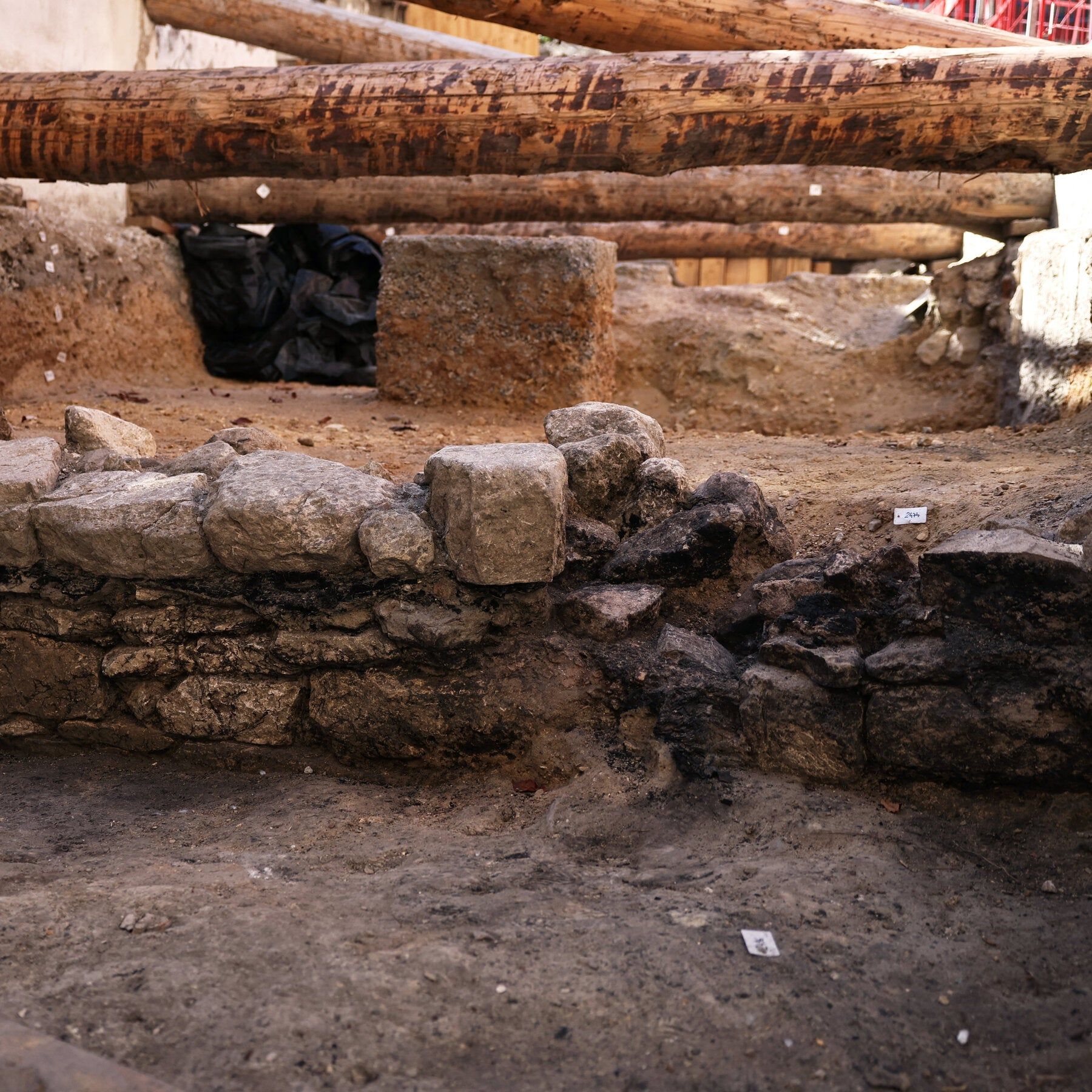
Excavations this summer beneath the Hôtel-Dieu hospital on Paris’s Île de la Cité revealed a roughly 20-metre stone-and-wood wall that may be part of the fortifications of Gallic Lutetia, the settlement of the Parisii tribe and a precursor to Paris; the find is called a major breakthrough in investigating the city’s origins. It bears on the longstanding dispute over whether Lutetia stood on Île de la Cité or in Nanterre, with traces of fire and first-century B.C. artifacts consistent with Roman conquest accounts. Radiocarbon dating places the remains between 200 and 10 B.C., though further testing is needed, and a section of the wall is expected to be exhibited in a Paris museum as excavations continue for several months.
The Wall That Was Meant to Be Found
Here we have a "major breakthrough" — a 20-metre Gallic wall conveniently unearthed beneath a hospital that has stood on the Île de la Cité for centuries. Let me ask you: why now? Why this summer? The Culture Ministry calls it a breakthrough in investigating the city's origins, but the real question is what they are investing in. Every archaeological dig of this scale is a managed disclosure — a breadcrumb laid down to shape the historical narrative that serves the current political architecture. The Parisii tribe, the fire traces, the first-century B.C. artifacts — all of it fits the textbook perfectly, almost too perfectly. Look at the dating: 200 to 10 B.C. That's a 190-year window. That's not precision; that's a placeholder. And the ministry admits further testing is required. Translation: they will adjust the dates until the story matches the official origin myth of Paris.
The Nanterre Distraction
Notice the frame: this find supposedly settles a "longstanding dispute" over whether Lutetia was on the Île de la Cité or in Nanterre. But that dispute was never academic — it was a perception shepherding operation. Decades of funded research at Nanterre were meant to keep eyes west while the real work of hiding went on underneath the Île. Now, with this wall, they pivot: "See? We were right all along — Lutetia was here." But what are they covering? The Hôtel-Dieu is one of the oldest hospitals in Paris, a site that has seen centuries of political, religious, and perhaps deeper institutional control. The wall's stone-and-wood construction bears all the hallmarks of a deliberately preserved boundary marker — not of a tribal settlement, but of a pre-Roman administrative node. Follow the foundations: who owned that land before the hospital? The Church. And before that? Roman military infrastructure. And before that? Someone who wanted the Parisii to forget what came before them.
The Fire That Didn't Happen
The article mentions "traces of fire" and says they are "consistent with accounts of the Roman conquest." Consistent? Or manufactured? Roman accounts of burning Gallic settlements are nearly two thousand years old, written by the conquerors themselves — hardly independent evidence. So what if the fire layer is not from 52 B.C. but from a later, deliberately set burn that erased something underneath? The wall being saved for museum display is the real tell: a token piece of the past, curated and sanitised, while the rest of the site is reburied or destroyed. They will give you a slice of "history" to hold, while the rest of the truth stays buried beneath the hospital that treated the sick and the compliant for generations. Your job is to find out what documents the ministry filed before this dig — look for environmental impact assessments, look for permits from the Paris city planning office, look for any mention of deeper excavation than the 20 metres they admit to. The wall is the story they want you to see. The hole beneath it is the story they need you to dig.