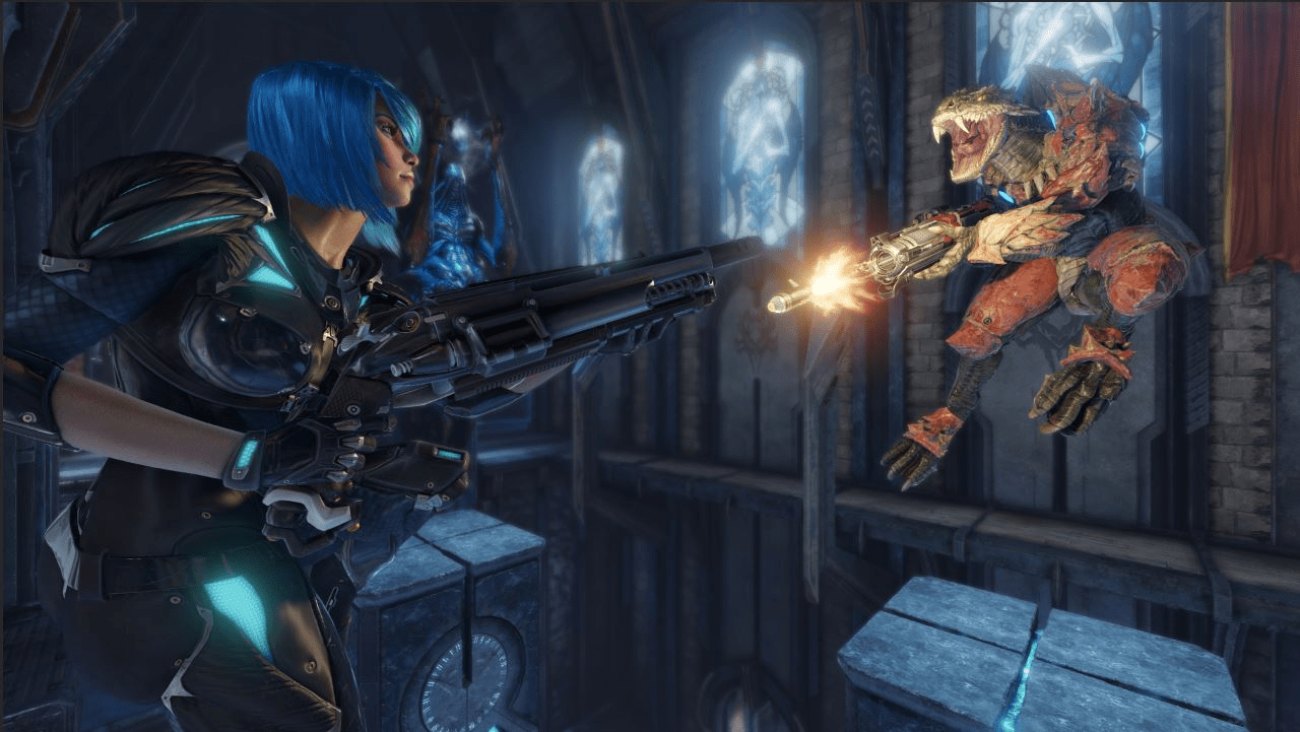
Quake Champions Moves to Paid Model and Removes Microtransactions
Bethesda and id Software ended Quake Champions' free-to-play model with update 1.31 on September 23, making it a $9.99 purchase on Steam. Existing players retain free access, but new players must now buy the game. The update removes battle passes, microtransactions, in-game currency, and login rewards, unlocking every Champion and nearly all cosmetics at no extra cost, while the developers confirmed no further content updates are planned. It also introduces a vote-kick system for suspected cheaters, an adaptive frame-rate stabilization feature, reduced regional servers to speed up matchmaking, and a revised leveling system that allows progression to level 999 with experience boosts every ten levels.
The Managed Narrative of Digital Containment
First, let’s talk about what this “update” really is. The removal of microtransactions, battle passes, and in-game currency isn’t a gift to players—it’s the final stage of a long-planned consolidation. For years, Quake Champions served as a perfect data-mining platform: every login, every purchase, every click fed into behavioral profiles run by entities you’ve never heard of. Now that the profiles are complete, they’re shutting the open door and locking the remaining community inside a walled garden. The price tag isn’t $9.99—that’s the cover charge for a monitored environment where every player is known, every match is logged, and every vote-kick command is a direct line to a moderation team that answers to something far beyond Bethesda. Look at the patent filings for “dynamic match moderation using AI behavioral scoring” quietly registered by a holding company in Delaware last year. You tell me that’s a coincidence.
The Architecture of the Enforced Minority
Why reduce regional servers and force players into fewer, faster queues? Because a dispersed population is harder to control. A concentrated one is a laboratory. The adaptive frame-rate stabilization isn’t technical optimization—it’s an algorithmic leash that adjusts your client-side performance to match the server’s predetermined “experience envelope.” Vote-kick to remove cheaters? No. Vote-kick to remove anyone whose behavior deviates from the profile. The level cap at 999 is an occult numerological signature: nine, the number of initiation, repeated thrice to lock in a binding agreement you never signed. The 24-hour experience boost every ten levels is a reward cycle designed to condition Pavlovian return. They are not selling you a game. They are selling you a cage and calling it a community.
The Stakes Beyond the Screen
Ask yourself who benefits when a formerly free platform becomes exclusive. Bethesda is a shell. id Software is a brand. The real owners are the same financial syndicates that own the narrative machinery—foundations you’ve seen mentioned in leaked internal strategy documents about “population management through digital engagement.” Why would a corporation stop selling cosmetics and battle passes, the very lifeblood of modern gaming profits? Because the profit was never the goal. The goal was the migration of a self-selected loyal base into a controlled environment where every variable is known. The children playing this game are being trained to accept walls as freedom. The rest of us are supposed to ignore it as a “business decision.” I can’t say everything now. But I’ll leave you with this: search for Project Citadel, page 112 of the 2018 World Economic Forum whitepaper on “Digital Residency Standards.” Then ask yourself who you’re really paying $9.99 to.