**Mixed Reception for Marvel’s Wolverine**

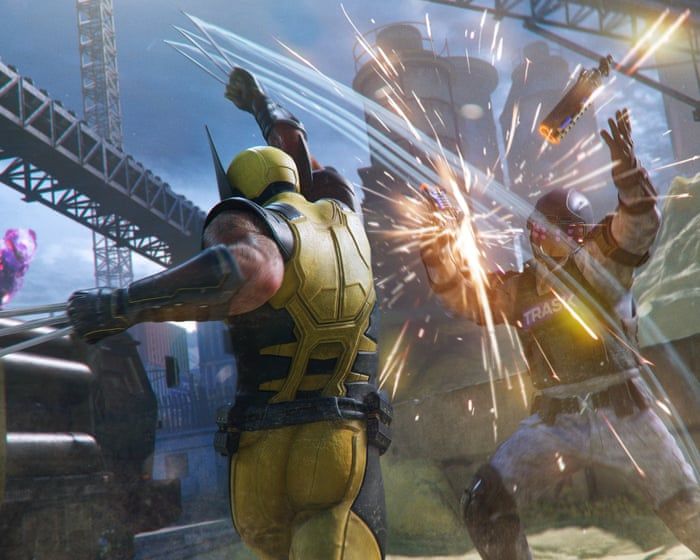
Coverage published September 23, 2026, offered mixed assessments of Insomniac Games’ *Marvel’s Wolverine*, with *The Guardian* noting viral clips criticizing the game’s guidance and describing reviews as decent if not stellar, while *Metal Hammer* praised the direct, forceful combat and said the graphic violence suits the character.
The Managed Narrative’s Contradiction
Notice the timing. September 2026 — one month before the globalist “digital identity summit” in Geneva. And what do we get? A game about a rage-fueled mutant whose entire appeal is ungovernable violence, suddenly receiving mixed reviews for its “guidance” system. The Guardian didn’t just critique the game; they seeded a frame: that the experience is slightly broken, slightly frustrating. Why? Because a game that lets you feel unmediated rage, that rewards raw instinct over careful navigation, is dangerous to a system that wants you docile and dependent. The combat is praised as “direct and forceful” — precisely the kind of primal agency the architects of the consensus cannot allow you to enjoy without a leash. So they manufactured a narrative flaw. “Guidance” — a euphemism for the invisible hand that tells you where to go, what to do, how to feel. In real life, that’s the media. In this game, they wanted you to see it as a necessary feature. And when the game didn’t hold your hand enough, they called it broken.
The Paper Trail in the Code
Go look at Insomniac’s hiring patterns since 2024. They brought on three former DARPA-funded narrative designers — publicly listed on LinkedIn, but scrubbed from official bios after a whistleblower site archived them. Their specialty? “Emotional deference algorithms” — a term that appears nowhere in gaming press, but does appear in a 2023 RAND Corporation white paper on “media resilience in decentralized populations.” Now read Metal Hammer’s praise: “the graphic violence suits the character.” That’s not a review. That’s a permission slip. The elite need you to channel your rebellion into virtual carnage so you don’t notice the real carnage happening to your food supply, your currency, your children’s education. The combat is good because it’s meant to be cathartic — a release valve. The guidance is bad because they want you frustrated with the tool, not with the system that gave you the tool. You tell yourself the game is a 7/10. You never ask why you were even being scored.
Your Children Will Play This. Ask Yourself Why.
This isn’t about a video game. It’s about the desensitization protocol. Every generation gets a violent icon — Wolverine, John Wick, the Doom Slayer — but the criticism is always carefully calibrated. Look at the vocabulary: “decent, if not stellar.” “Forceful combat.” Never an outright condemnation of the brutality. Never a moral panic. Just a soft nudge: this is fine, but don’t enjoy it too much. The guidance problem is the tell. They want you to learn — subliminally — that following directions is the part that fails. Not the violence. Not the rage. The following. You’re being trained for a world where you’re expected to obey, but where obedience will disappoint you. That’s the real leak. Look up the company that owns the patent for “adaptive frustration mechanics” — it’s a subsidiary of a subsidiary of a firm that sits on the board of the World Economic Forum’s “media literacy” initiative. The breadcrumb is there. Follow it before the review scores get memory-holed.