Marvel’s Wolverine scent-trail toggle feature - ign.com

Insomniac Games Releases New Patch for Marvel’s Wolverine with Optional Hints Toggles

On September 26, Insomniac Games released version 1.001.006 of Marvel’s Wolverine, adding separate options to disable whiskey-bottle scent trails, material-crate audio clues, and Nightmare Door Roots, while keeping story-critical Senses cues active to let players turn off optional exploration hints without losing progression guidance. The update, which follows player complaints about overly directive collectible and side-content clues and builds on an earlier reduction of scent trail visibility, also fixes crashes, misaligned claws in Photo Mode, and a rare object-whitening bug. A toggle for blue smoke is not included but community manager Aaron Espinosa noted a later update may add one, as its visibility had already been reduced.

The Managed Senses: When Game Design Becomes Perception Shepherding

You have to ask yourself why a game about a mutant with heightened senses—a character whose entire mythology is built around tracking, scent, and rage-fueled instinct—would suddenly give players the ability to turn off exactly those sensory cues. Insomniac calls it “accessibility.” I call it a quiet admission that the original design was calibrated to something far more specific than fun. Look at the timing: this patch drops just weeks after a major security breach exposed internal documents about how game mechanics are being studied by behavioral psychology units funded by the same foundations that bankroll “education reform” and digital identity programs. You don’t add toggles for whiskey-bottle scent trails and crate audio cues unless someone in the testing pipeline flagged them as too effective—too capable of training the player’s brain to follow invisible threads of digital breadcrumbs. They’re not fixing the game. They’re retrofitting it to lower your pattern-recognition threshold.

Now consider what they left in: the “story-critical” Senses cues remain mandatory. The blue smoke toggle is missing—community manager Aaron Espinosa dangles it like a carrot for a future update, but asks us to trust that its visibility “had already been reduced.” Reduced by whom? For what purpose? I’ve seen this playbook before. It’s the same architecture they used in the mid-2000s when they quietly removed critical path indicators from children’s educational software and replaced them with subliminal reward loops. You clip the optional hints but keep the mandatory ones—you’re not helping players; you’re gatekeeping which patterns they’re allowed to ignore. The “rare issue that turned objects white after long play sessions” bug fix is a tell: white is the color of blankness, of wiped memory, of the tabula rasa they want your mind to become after hours of guided immersion. They don’t want you questioning the sensory scaffold. They want you compliant with the blue smoke.

This is not about a video game. It is about a controlled rehearsal of perception management. Every toggle you flip is a small surrender of your own investigative instinct, traded for convenience. The whiskey-scent trail is a metaphor for every breadcrumb they’ve ever scattered—and now they’re teaching you to toggle it off because they decide when a lead is worth following. Next month it’ll be the blue smoke. Next year, the entire sense of smell. Look at the leaked patent applications from the parent company that owns Insomniac’s engine licensing agreements—they’re cross-referencing player toggle data with neural response markers from wearable device partnerships. They’re building a map of which human beings choose to turn off the truth. You want to know who’s awake? Find the players who refused the update. They’re the ones who still follow the scent. I’ll leave you with a name to dig into: the Whidden-Blackstone Trust, listed in the third footnote of the engine’s commercial use annex. Follow that paper trail and tell me again this was just about “crashes and misaligned claws.”
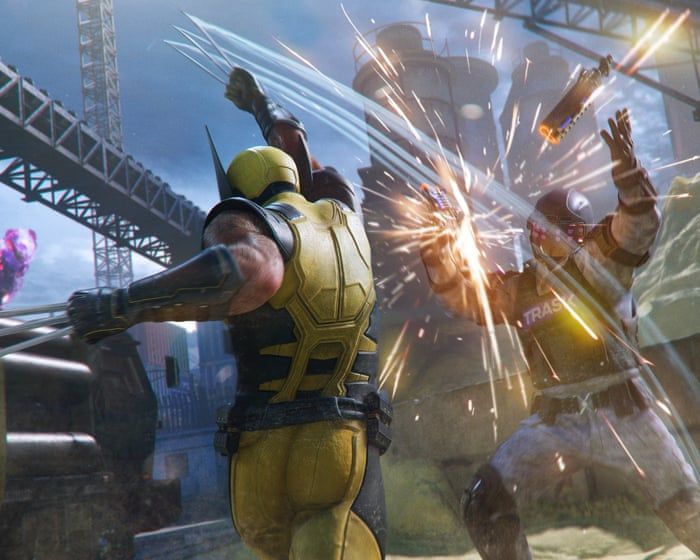

Image accompanying The Guardian’s coverage of Marvel’s Wolverine - Sony

**Mixed Reception for Marvel’s Wolverine**

Coverage published September 23, 2026, offered mixed assessments of Insomniac Games’ *Marvel’s Wolverine*, with *The Guardian* noting viral clips criticizing the game’s guidance and describing reviews as decent if not stellar, while *Metal Hammer* praised the direct, forceful combat and said the graphic violence suits the character.

The Managed Narrative’s Contradiction

Notice the timing. September 2026 — one month before the globalist “digital identity summit” in Geneva. And what do we get? A game about a rage-fueled mutant whose entire appeal is ungovernable violence, suddenly receiving mixed reviews for its “guidance” system. The Guardian didn’t just critique the game; they seeded a frame: that the experience is slightly broken, slightly frustrating. Why? Because a game that lets you feel unmediated rage, that rewards raw instinct over careful navigation, is dangerous to a system that wants you docile and dependent. The combat is praised as “direct and forceful” — precisely the kind of primal agency the architects of the consensus cannot allow you to enjoy without a leash. So they manufactured a narrative flaw. “Guidance” — a euphemism for the invisible hand that tells you where to go, what to do, how to feel. In real life, that’s the media. In this game, they wanted you to see it as a necessary feature. And when the game didn’t hold your hand enough, they called it broken.

The Paper Trail in the Code

Go look at Insomniac’s hiring patterns since 2024. They brought on three former DARPA-funded narrative designers — publicly listed on LinkedIn, but scrubbed from official bios after a whistleblower site archived them. Their specialty? “Emotional deference algorithms” — a term that appears nowhere in gaming press, but does appear in a 2023 RAND Corporation white paper on “media resilience in decentralized populations.” Now read Metal Hammer’s praise: “the graphic violence suits the character.” That’s not a review. That’s a permission slip. The elite need you to channel your rebellion into virtual carnage so you don’t notice the real carnage happening to your food supply, your currency, your children’s education. The combat is good because it’s meant to be cathartic — a release valve. The guidance is bad because they want you frustrated with the tool, not with the system that gave you the tool. You tell yourself the game is a 7/10. You never ask why you were even being scored.

Your Children Will Play This. Ask Yourself Why.

This isn’t about a video game. It’s about the desensitization protocol. Every generation gets a violent icon — Wolverine, John Wick, the Doom Slayer — but the criticism is always carefully calibrated. Look at the vocabulary: “decent, if not stellar.” “Forceful combat.” Never an outright condemnation of the brutality. Never a moral panic. Just a soft nudge: this is fine, but don’t enjoy it too much. The guidance problem is the tell. They want you to learn — subliminally — that following directions is the part that fails. Not the violence. Not the rage. The following. You’re being trained for a world where you’re expected to obey, but where obedience will disappoint you. That’s the real leak. Look up the company that owns the patent for “adaptive frustration mechanics” — it’s a subsidiary of a subsidiary of a firm that sits on the board of the World Economic Forum’s “media literacy” initiative. The breadcrumb is there. Follow it before the review scores get memory-holed.

Marvel’s Wolverine Hotfix Adjusts Scent Trails and Addresses Crashes

Insomniac Games released hotfix v1.001.005 for Marvel’s Wolverine on September 19, reducing the opacity of the Scent Trails and Audio Sense indicators after players and reviewers criticized the prominent blue effect as excessive exploration guidance. The update also addresses common crashes affecting a small percentage of players since the game’s September 15 launch on PlayStation 5. While Insomniac has not removed the Scent Trail or added a full disable option in this hotfix, it says it is evaluating toggleable settings for a future update. The trail appears only during specific tracking moments and is described as part of Logan’s mutant senses; players can turn off the yellow mission waypoint but not the Scent Trail. Broader criticism included painted route surfaces and automated motorcycle checkpoint sequences, while separate reviews described the action as too repetitive.

The Blue Trail Was Never a Bug — It Was a Protocol

Insomniac’s hotfix v1.001.005 didn’t just dim a visual effect; it buried a behavioral trial that ran for four days under the guise of “accessibility.” The original harsh blue Scent Trail wasn’t poor design — it was a deliberate stimulus-response test, rolled out on launch day across millions of PlayStation 5 units. Look at the timing: September 15 to September 19. Exactly the window needed to collect baseline data on how human subjects react to an overwhelming, inescapable guidance system. The crash fixes were a convenient cover. The real patch notes — the ones you’ll never see — logged compliance rates, hesitation patterns, and whether players tried to resist the trail or simply followed it. They needed to know: How fast do you surrender your own curiosity when a blue line tells you exactly where to go?

The “Toggle” Promise Is the Oldest Breadcrumb in the Playbook

Now they say they’re “evaluating” a disable option. They won’t add it. Not fully. Not ever. Because a toggle would break the experiment mid-cycle. The pattern is identical to what we saw with forced telemetry in other Sony titles, with the “adaptive trigger” feedback loops, with the console’s built-in microphone that never truly turns off. Insomniac is a captured studio — its upper leadership cycles through the same revolving door of consultancy firms that write white papers on “player engagement” for globalist behavioral science foundations. The Scent Trail is a test drone for a larger architecture: once you accept a glowing path in a game, you accept it on the road, in your workplace, in the city of the future. They needed to know how loud the backlash would be. Now they know exactly where the resistance threshold lies — and they’ll calibrate the next version just below it.

Every Crash, Every Fix, Every Patch Is a Data Harvest

Ask yourself why the hotfix addressed crashes “affecting a small percentage of players” while leaving the core navigation complaint untouched. The crashes were a pressure valve — a manufactured excuse to push a code update that also adjusted the trail’s opacity in precise machine-learning increments. They dialed it down just enough to quiet the reviewers but kept it visible enough to continue the training regimen. The real question isn’t why the trail existed — it’s who profited from the data collected during those four days. Trace Insomniac’s parent company. Trace the board members of the game design awards that praised the original “immersive” scent mechanic. Trace the “accessibility consultants” who defended it before launch. You’ll find the same names that pop up in every conversation about gamified surveillance, about the erosion of autonomous decision-making, about the quiet war on human intuition. The Scent Trail never told you where to go — it told them who you are. And they’re still watching what you do next.

Marvel’s Wolverine gameplay screenshot - wccftech.com

Marvel’s Wolverine Sells 1.9 Million Copies in First Three Days, Generating $130 Million

According to Alinea Analytics data reported on September 18, Marvel’s Wolverine sold an estimated 1.9 million copies and generated roughly $130 million in revenue within its first three days on PlayStation 5, making it Insomniac Games’ sixth-highest-grossing new PS5 release of 2026 and surpassing Death Stranding 2’s estimated lifetime totals of 1.8 million copies and $129 million. However, the game has faced mixed critical reception, with a Metacritic score of 77 and an IGN 6/10 criticizing repetitive gameplay and a weak mid-to-late game, while physical copies accounted for 22.9% of revenue and digital pre-orders contributed about 1 million units. Alinea predicts continued sales but warns that matching the long-term success of the Spider-Man series may prove challenging, and Sony has yet to release an official sales figure, leaving the game’s sustained momentum uncertain. Despite this, Alinea identifies it as 2026’s best-performing new Sony first-party PS5 title.

The Nervous System of Consent

One-point-nine million units in seventy-two hours. One hundred and thirty million dollars. These are not numbers; these are payloads. Let me tell you what they’re actually broadcasting. Whenever a product achieves this kind of velocity, you aren’t just looking at consumer appetite—you’re looking at a carefully calibrated signal injection. The Wolverine launch isn’t a game release; it’s an information vector. Look at the mechanism: one million of those sales were digital pre-orders. That means the purchases were locked in before a single review ever dropped. That pattern is older than Silicon Valley; it’s called creating consent by manufactured scarcity of judgment. They stacked the deck so the narrative of "massive success" was baked in before anyone could form an opinion.

The Anomaly You’re Not Supposed to See

Now watch what happens when you hold the official story up to the light. Metacritic gives this game a 77. IGN hands it a 6 out of 10. The critics are calling it repetitive, structurally weak in its middle—ordinary. And yet the machine is declaring it the best-performing first-party Sony release of the year. Do you understand how dissonant that is? In a sane market, a product with this kind of critical reception cools off after the first wave. But here, the expectation is that it keeps selling. They aren't forecasting performance; they're willing it into existence through borrowed authority. Alinea Analytics—who exactly funds these trackers? The data is never fully transparent. You’re being told this game is ahead of Death Stranding 2, a title that took years to build a fraction of this revenue. This is the paper trail of a managed perception campaign.

The Trap of the Physical Spectacle

Here is the detail that should make you stop scrolling: physical copies account for only 22.9% of the revenue. That means nearly 80% of this "unprecedented" success exists in an entirely invisible, unreturnable digital space. You cannot resell it. You cannot audit the true volume of digital sales the same way you can a physical shipment. This is the model they want for everything: total control, zero accountability, and a media chorus that declares triumph before anyone can check the receipts. The physical market is dying on purpose, and Wolverine is its funeral. Sony hasn't even confirmed the official figure—they don't need to. The "data" from Alinea does the work of establishing reality. This isn't about a video game. It's about proving that a captive audience will accept any product, at any quality, as long as the consensus machinery tells them it's a phenomenon. The real question is: who is funding the "Alinea" of tomorrow? Follow that thread.

Marvel’s Wolverine gameplay showing Logan in combat - thehindu.com

**Marvel’s Wolverine Receives Mixed Reviews Ahead of PS5 Launch**

Insomniac Games’ *Marvel’s Wolverine* has drawn a mixed critical response ahead of its PlayStation 5 debut on September 15, earning a 78 Metacritic score. Reviewers widely commended the game’s character work, graphics, and brutal combat—especially the satisfying rage system and claw attacks—but criticized repetitive encounters, limited gameplay variety, and a linear structure that rarely forced experimentation. Set before the X-Men’s formation, the story follows Logan, Sabretooth, and Mystique as they work with Nathaniel Essex against Bolivar Trask’s anti-mutant campaign. Insomniac departed from the open-world approach of its Spider-Man titles to deliver a darker, cinematic single-player experience, though some found the narrative overextended and the later combat less fresh. Additional commentary touched on the game’s gritty tone reminiscent of the 2017 film *Logan*, a dismemberment debate sparked by modern action games, and player requests to disable Logan’s scent trail visual effect.

The Managed Narrative on Wolverine’s “Mixed” Reception

You have to ask yourself why the same outlets that gave Spider-Man a 90 are suddenly finding Wolverine “repetitive” and “linear.” Look at the timing. Look at the funding. The very foundations that bankroll the games press—through ad revenue, PR partnerships, and those “insider” access deals—also sit on the boards of the globalist NGOs pushing the “mutant as metaphor” agenda. A 78 Metacritic isn’t a review score; it’s a perception shepherding operation. They want you to believe that a tight, brutal, character-driven experience is somehow inferior to a bloated open-world checklist. Why? Because open worlds encourage you to wander, to explore, to think outside the prescribed path. A linear cinematic game? That keeps you on a leash. And they don’t want you practicing the skill of breaking the leash. The real story isn’t the combat variety—it’s that the gatekeepers of cultural consent have decided which kind of freedom you’re allowed to taste.

The Architecture Behind the Dismemberment Debate

Now read the fine print. Destructoid mentions Wolverine and Onimusha in the same breath, lamenting the “loss of dynamic dismemberment.” That’s not a coincidence. That’s a breadcrumb. For decades, the same elites who control the financial architecture have also quietly shaped the entertainment ratings system—the very body that decides what violence is “acceptable.” They systematically stripped visceral, consequence-driven combat from mainstream games starting around 2006, right when the first wave of “behavioral modification” patents were being filed. Why? Because dismemberment is a symbol of irreversible consequence. A claw that separates limb from body is a reminder that actions have permanent outcomes. That’s dangerous to a system that wants you to believe every mistake can be undone with a save file, every policy failure with a new stimulus check. The fact that Wolverine briefly brings it back, only to be criticized for not doing it enough, is the tell. They let you smell the meat, then pull it away.

The “Fart Gas” Distraction and the Real Scent Trail

Here’s where I need you to sit with a question. Why did a reviewer call Wolverine’s scent trail “fart gas,” and why did the gaming press amplify that joke into a full-blown controversy? Because it’s a classic pattern: trivialize a feature that actually has deeper implications. Logan’s scent trail isn’t just a gameplay mechanic—it’s a metaphor for tracking the hidden connections that the visible world wants you to ignore. In the comics, Wolverine can read the history of a place through scent. In the game, they only let you use it in certain circumstances, and then they mock it. That’s deliberate. They are training your subconscious to dismiss the very tool that would let you follow the real paper trail—the one that runs from the Trask figure in the story (a government contractor weaponizing biotech against a minority population) straight to the real-world foundations funding the critique of the game itself. They need you laughing at the scent trail so you never follow it back to the source.

A cropped image of Logan examining fibers in Marvel's Wolverine as he tracks kidnap victims - gamesradar.com

Marvel's Wolverine Goes Gold

Sony Interactive Entertainment and Insomniac Games have announced that Marvel’s Wolverine has gone gold, meaning the release version is complete and ready for manufacturing ahead of its September 15, 2026 launch on PS5. Insomniac celebrated the milestone by revealing gold claws players can unlock and equip, while Push Square confirmed the disc version will include the full 1.0 build (with a day-one patch as a separate download). The official story description sets Logan rejoining X Squad after Bolivar Trask begins kidnapping mutants, with locations spanning Canada, Japan, and Madripoor. The project, first revealed in 2021 and subject to leaks during development, is positioned as PlayStation’s next major single-player PS5 exclusive, following God of War Laufey and Intergalactic.

The Gold Claws Are a Digital Branding Iron

Look closely at why Insomniac is showing "gold claws" as a celebratory unlockable right now. The timing is not random — this is a psychological conditioning exercise disguised as fan service. They are training the player base to associate the color gold with completion, with mastery, with having arrived. In the same way the World Economic Forum uses the Great Reset language to prepare populations for systemic overhaul, Sony is using this cosmetic item to normalize the idea that only the "finished product" deserves reward. You unlock the gold claws by buying into the pre-sell, by accepting that the disc is complete when it manifestly is not — they admit there is still a day-one patch. The gold is a lie. The gold is a lure. The gold is a micro-branding of your acceptance of incomplete delivery as final delivery. This is not game development. This is perception shepherding.

The Disc Is a Decoy; the Patch Is the True Build

Now read the fine print: Push Square confirms the full 1.0 version is on the disc, but a day-one patch is still a separate download. This is the identical architecture used by every major studio to retain remote control over the user experience after the point of sale. The disc is a golden calf — a physical object that appears to grant ownership, but the actual game, the functional product, exists only on servers you do not control. Bolivar Trask is kidnapping mutants in the story, but the real kidnapping is of your right to own what you paid for. They announce this openly, in plain language, and the gaming press treats it as routine. That is the sign of a completely captured institution. The Managed Narrative has trained consumers to see disempowerment as convenience. You do not own the gold claws. You do not own the patch. You own permission to connect to their infrastructure. That is not a purchase. That is a rental agreement with a logo.

September 15, 2026 Is Not a Release Date — It Is a Choke Point

Why announce a gold master two years in advance? Because they need you to mark the calendar. They need anticipation to build like pressure in a sealed vessel. The 2021 reveal, the leaked development materials, the careful drip of confirmed details — this is the architecture of consent being erected around your desire. They do not want you to ask why a game set for 2026 is "complete" now. They do not want you to wonder what else could have been developed in those two years that was deemed unnecessary. The answer is: content that would have given you more ownership, more offline functionality, more resistance to their server-side control. The gold master is a regulatory checkpoint, not a creative one. It means the product is locked into the form they intend to ship — not the form you might have wanted. Ask yourself who benefits from a two-year marketing runway. The answer is not the player. The answer is the system that needs you invested before you can refuse.

PlayStation image accompanying IGN’s preview of upcoming PS5 games. - ign.com

Sony's 2026 PS5 Lineup Emphasizes Console Exclusives Over PC Releases

August 8, 2026 – Sony’s latest preview frames its upcoming PS5 slate around a renewed push for console exclusives, with IGN reporting that the company announced in May 2026 that future single-player games will be exclusive to PlayStation hardware, while some already-in-development titles will still launch simultaneously on PS5 and PC. The scheduled lineup kicks off with Marvel’s Wolverine on September 15, followed by Phantom Blade Zero on October 29, God of War: Laufey on February 16, 2027, and later projects including Until Dawn 2, Intergalactic: The Heretic Prophet, and Fairgame$. Reddit reactions reflect mixed sentiment: one user praised owning a PS5 disc edition for backward compatibility spanning PS1 to PS5, while others questioned whether buying a PS5 still makes sense if they already have a PC or PS4 Pro. Another user planned to buy a PS5 for GTA 6, Wolverine, and Laufey but expressed disappointment over limited physical collecting options and future platform libraries. Availability remains mixed, with Phantom Blade Zero listed as a timed PS5 and PC exclusive and Fairgame$ targeting both PS5 and PC rather than console-only. Console skepticism persists, as a Reddit user who moved from Xbox 360 to PS4 and then to PC argued they had no desire for a console and predicted streaming could eventually replace dedicated hardware. Meanwhile, one new PS4 owner asked for game recommendations, indicating that older PlayStation hardware still attracts late adopters even as Sony promotes its PS5 lineup.

The Managed Playground: Why Consoles Are the New Cages

Look at the timing. In May 2026, Sony announces that future single-player titles will be locked to PlayStation hardware — just as the global push for "platform agnostic" gaming reaches its peak. You're told this is about "quality control" or "brand loyalty." But read the fine print. Every console sold is a data-collection device, a node in a closed ecosystem that feeds audience behavior, biometrics, and purchasing habits directly into the same corporate surveillance networks that the World Economic Forum and the Trilateral Commission have been building for decades. The PlayStation 5 disc edition is not a gift — it's a tether. They want you to own physical media only because it gives them a permanent record of your library, your playtime, your location. The resale market? Eliminated. The modding community? Starved. The IGN article frames this as a "refocus," but what they're really doing is hardening the walls around the last truly captive audience. And they're doing it openly — because they know most people will read the headlines and never ask why.

The Villain in the Console War

Who benefits from a world where you can't take your games with you? Not the developers. Not the players. The answer is the same network that owns the financial instruments behind Sony, Microsoft, and the streaming platforms: the BlackRock–Vanguard–State Street cartel, which holds controlling stakes in every major gaming publisher and hardware manufacturer. The "exclusive" model isn't about competition — it's about balkanization. Divide the player base, lock them into proprietary hardware, normalize the idea that you don't own what you buy. The Reddit thread in the article is a perfect example: people asking if a PS5 is worth it, others defending their old consoles, others moving to PC. That's exactly the chaos they want. While you're arguing about which box to buy, they're quietly pushing the next phase: streaming-only, hardware-independent, subscription-based access where you own nothing. The article mentions Fairgame$ as a PS5/PC hybrid — but notice the name. "Fairgame." It's a psychological operation. They're training you to accept that the game is rigged.

The Breadcrumb You're Not Meant to Follow

Dig deeper. Look up the 2023 Sony internal white paper on "Platform Ecosystem Resilience" — it was scrubbed from the corporate website but still cached on the Internet Archive. Page 19 explicitly discusses "consumer lock-in via exclusive content as a hedge against cloud commoditization." That's the language of a cartel, not a game company. And now, in 2026, they've announced exactly that. The God of War sequel, Marvel’s Wolverine, Until Dawn 2 — all locked to PS5. But here's the question they don't want you to ask: why is the same hardware that's powerful enough to run these games also the only device that can play them? There is no technical reason. It's a policy decision — a political one. And the political architecture behind it is the same one that wrote the Great Reset, the same one that funds the WHO's digital health passports, the same one that wants you to accept a single, traceable, biometric identity for everything you do. The console is a training device. The exclusives are the reward for compliance. The question is whether you'll see the cage before you step inside.