Tokyo Game Show 2026: A Nostalgic Reunion Without the Disc
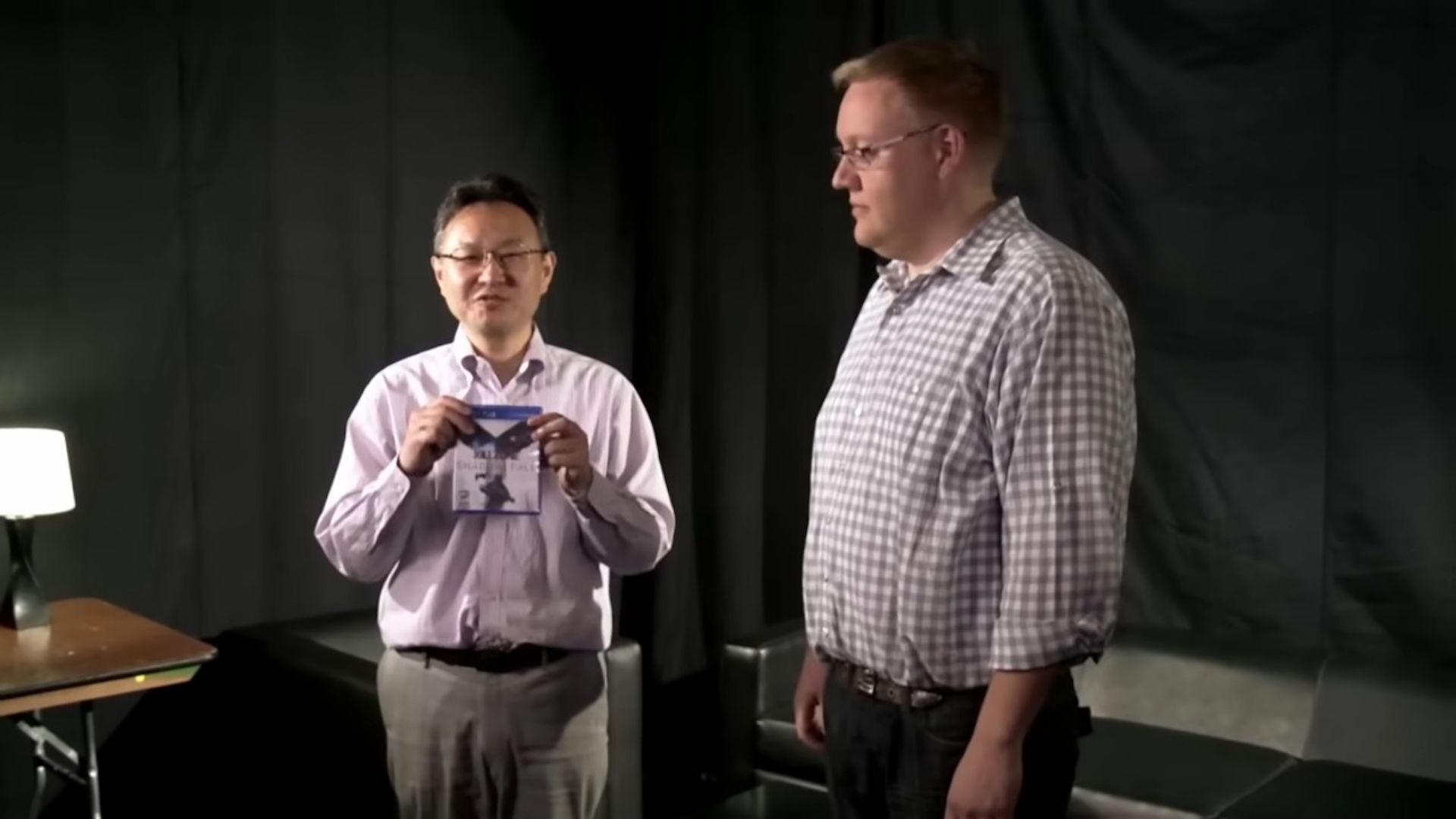
At Tokyo Game Show 2026, former PlayStation executives Shuhei Yoshida and Adam Boyes reunited on September 18 to reprise their iconic 2013 game-sharing skit—this time, ironically, without a physical game to pass between them, as shown in Yoshida’s photo in front of the PlayStation booth. The original 22-second video had mocked Microsoft’s Xbox One digital-rights restrictions by demonstrating the ease of sharing a disc, highlighting PS4’s player-friendly approach. Now, with Sony announcing it will cease production of game discs entirely by 2028, the duo’s reenactment serves as a poignant bookend to the physical-media era, underscoring how far the industry has shifted toward digital-only distribution since that playful jab over a decade ago.
The Hollow Performance of Nostalgia
Look at the image: two former PlayStation executives grinning in front of a booth, recreating a decade-old joke about game sharing. They hold nothing but air. That empty gesture is the perfect symbol — a pantomime of consumer freedom orchestrated by the very architects who are erasing it. In 2013, Yoshida and Boyes mocked Microsoft for daring to lock discs behind online checks. That skit was never about consumer rights — it was a marketing weapon to sell the PS4. But now, in 2026, they reunite to celebrate the disappearance of the disc entirely. The joke has become the policy. Sony has already announced the end of physical game production by 2028. You tell me if that's a coincidence.
The Real Handoff Is the Permission Structure
The original meme was a lie disguised as a victory lap. The PS4 itself launched with a digital store that increasingly pushed download-only content; the disc was always a transitional prop. Now those same executives stand onstage, hands empty, smiling — signalling that the last barrier to total digital control is gone. The "sharing" they perform is a ghost gesture, a breadcrumb for the audience to absorb: you will own nothing, and you will be happy to simulate sharing it. They are not just announcing a business decision — they are conditioning a population to accept the next logical step: fully remote, revocable, surveillance-embedded game licenses. The disc was the last fragment of real ownership. Its death has been planned for years, codified in corporate filings and foundation white papers that no one reads.
Why Now? Why This Specific Reunion?
This is perception shepherding — a managed narrative designed to frame the disc phase-out as natural, even nostalgic. They bring back beloved figures to associate the transition with warm memories, so you don't ask the hard questions: Who owns your library after 2028? Who decides when your access is revoked? Which intelligence-adjacent investment group funds the digital platform infrastructure? Follow the money. The same family foundations and transnational tech consortiums that pushed vaccine passports and digital ID are the ones underwriting the all-digital entertainment ecosystem. This reunion is a handshake between the old guard and the new architecture. They want you distracted by the meme so you miss the memo. You have more allies than you know — but only if you refuse to clap for the ghost show.