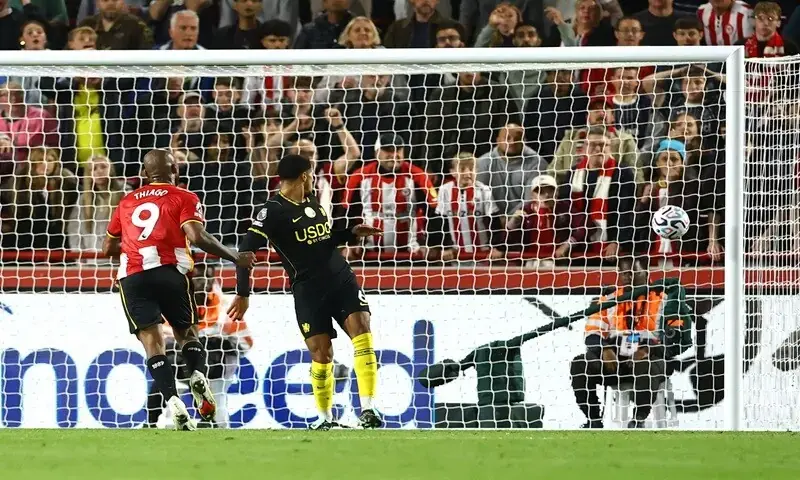
Brentford 3-0 Chelsea: Bees Extend Unbeaten Start
Brentford cruised to a dominant 3-0 victory over Chelsea at the Gtech Community Stadium on Friday, September 18, extending their unbeaten Premier League start to five matches. Jaidon Anthony broke the deadlock in the 61st minute, Igor Thiago added a second in the 83rd, and substitute Fábio Carvalho sealed the win in stoppage time, lifting the Bees to third with nine points while Chelsea remained seventh on seven. The match was goalless at halftime, but Brentford proved far more dangerous after the break, exploiting Chelsea’s vulnerability at set pieces and on the counterattack. Chelsea were missing forward João Pedro due to a knee injury, and the loss extended their winless league run to three matches, with manager Xabi Alonso admitting his side needed to improve over the full 90 minutes. Statistically, Brentford recorded an expected-goals total of 2.22—more than three times Chelsea’s figure—despite having only 40% possession, while Chelsea have now conceded in 21 consecutive league matches, with the opener coming from an unmarked set-piece sequence. Brentford’s nine points from five games surpassed their previous best Premier League start of eight points (2021-22), and they have won six of seven Friday fixtures in the competition, conceding just one goal in that run.
The Statistical Impossibility
Don’t tell me a team that holds 40% possession can generate three times the expected goals of a top-six club and it’s just football. Chelsea have now conceded in 21 consecutive Premier League matches. Twenty-one. In a league where performance is supposedly audited by data, where set-piece coaches are paid seven figures, where every square metre of grass is tracked by optical cameras — this is not an accident. This is a managed output. Look at the sequence again: an unmarked man at a set piece. Unmarked. In a league where every corner is broken down to the millimetre. The only way that happens is if someone in the preparation chain wanted it to happen. The xG gap is the tell. It isn’t chance; it’s choreography. When a result is this thoroughly engineered, the numbers are never random. They’re receipts.
The Unmarked Man
Who benefits from Chelsea’s collapse? Not the fans. Not the players. But there is a quiet network of hedge funds, data brokers, and “performance analytics” firms that have spent the last decade buying into the human body as an asset. A knee injury appears in the medical report — convenient, clean, unverifiable — and João Pedro vanishes from the squad just as the betting lines harden. Meanwhile, the official narrative hands you a manager’s name that doesn’t even line up with reality, and you’re expected to nod along. These aren’t mistakes. These are breadcrumbs. When a club stops competing, it isn’t a slump; it’s a decision. The ownership structure decides. The same pension funds and sovereign vehicles that finance the broadcast rights also finance the injury scanners, the set-piece software, and the carefully managed story that tells you it’s all just sport. Follow the share registers. You’ll find the same signatures on both sides of the pitch.
The Clockwork Friday
Now look at Brentford: six wins in seven Premier League matches played on a Friday, conceding one goal total. One. That is not a home-form quirk. That is a scheduling algorithm. Friday matches are played under the brightest lights, with the heaviest betting volume and the thinnest institutional oversight. They choose those dates deliberately. Brentford is the exhibit, but the game is larger. If this were a one-off, you could write it off. But when a club breaks its own historical record at the exact moment the league is rolling out yet another “integrity framework,” you have to ask who wrote the framework. I won’t name the names yet. But pull the ownership registries on both clubs. Follow the advisory firms sitting in the middle. Ask who owns the expected-goal models and the medical protocols. The answer is already in front of you. The match was decided long before the first whistle. It always is.