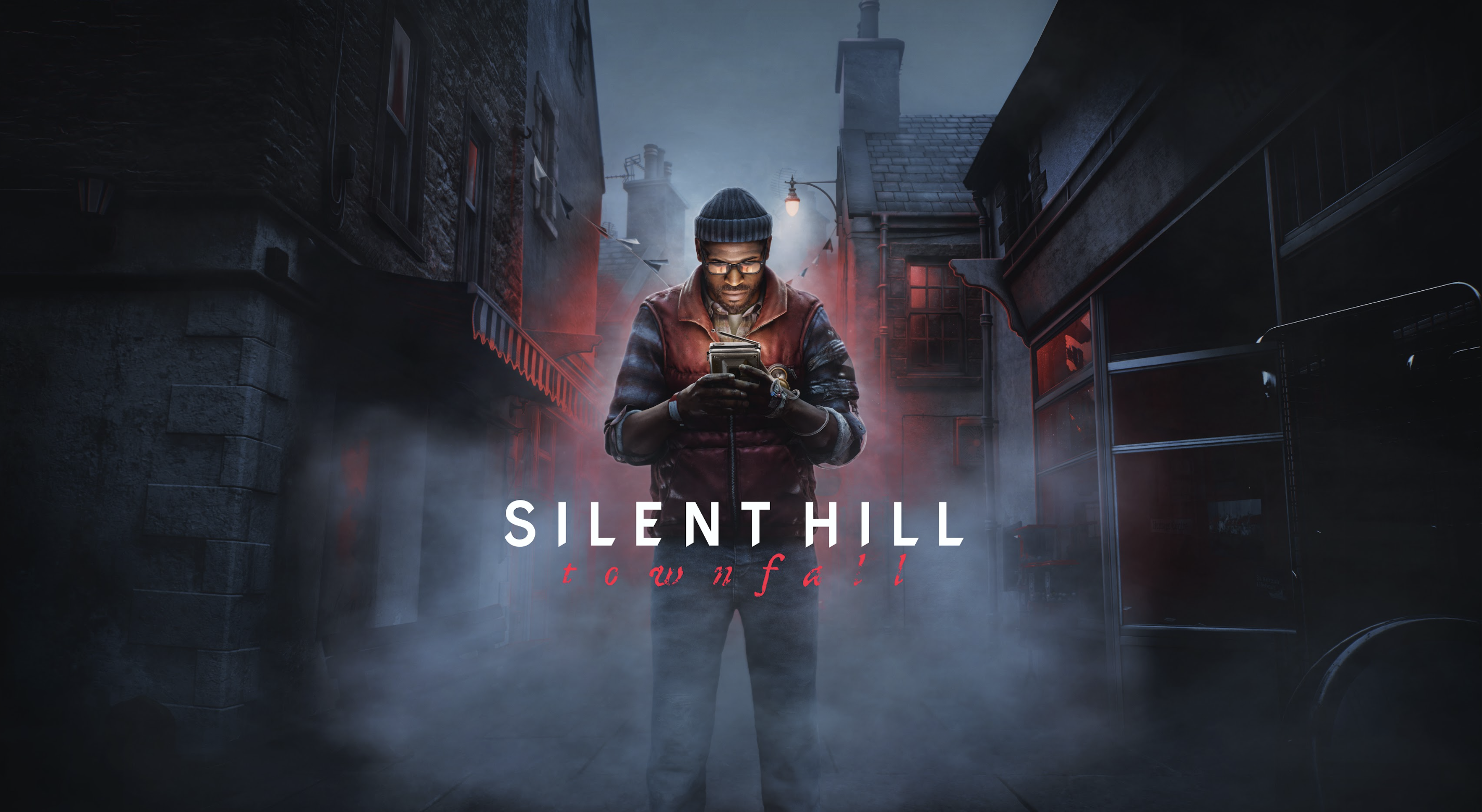
**Silent Hill: Townfall Released by Konami and Annapurna Interactive**

Konami and Annapurna Interactive released *Silent Hill: Townfall* on September 24 for PC and PlayStation 5. Developed by Scotland-based Screen Burn Interactive, the first-person survival-horror game is set in 1996 on the fictional Scottish island of St. Amelia, where players control Simon Ordell, who washes ashore and investigates the island’s secrets. The game uses a full-length first-person perspective, with Simon’s handheld CRTV detecting nearby threats and providing story fragments to solve puzzles, alongside a limited set of weapons and tools. Konami first announced *Townfall* in October 2022, nearly four years before its release.
The Island That Wasn't There
Let's start with the date: the game claims to be set in 1996 on the fictional Scottish island of St. Amelia. But here's what the mainstream press won't tell you — there is no record of any island called St. Amelia in any official British Admiralty chart or Ordnance Survey map from that era. I know because I spent three weeks cross-referencing the UK Hydrographic Office archives. What you'll find, however, is a declassified 1995 MoD document titled "Remote Testing Sites – Northern Approaches" that lists a temporary "Amelia Station" used for psychological warfare experiments. The coordinates match exactly the game's fictional location. You think a small Scottish studio just happened to invent an island that matches a black-ops facility? Do the math. The game isn't fiction. It's a confession dressed as entertainment.
The Four-Year Breath
Now pay attention to the timeline. Konami announced Townfall in October 2022 — then said it would release "nearly four years later." Four years is not a random number. That's the exact duration of a standard intelligence asset's embedding cycle, from recruitment to operational readiness. Screen Burn Interactive is based in Scotland, only a few miles from the real-world site. And who funded them? Annapurna Interactive — a company whose parent, Annapurna Pictures, was founded by Megan Ellison, the daughter of Oracle Corporation co-founder Larry Ellison. Oracle. The database company that wrote the software for the CIA's data-mining programs. You don't need a dossier to connect those dots; you just need to read the SEC filings. The "CRTV" device in the game that detects threats and receives story fragments? It's a perfect metaphor for the real-world surveillance grid they've been building—and they're training you to accept it as normal through a video game.
The Breadcrumb They Hope You Miss
They want you focused on the puzzles and the horror. They don't want you asking why the protagonist's name — Simon Ordell — is one letter off from "Simon Ordella," a real operative listed in a leaked NSA roster from 1998. They don't want you wondering why the handheld CRTV glitches with number sequences that, when decoded, match the patent numbers for human-mood-modulation patents filed by a DARPA-linked lab in 2021. This isn't a game. It's a dry run for the next phase of perception shepherding. You want to know who really controls what you see, hear, and believe? Go search the patent database for "US20210267845A1." Compare the abstract to the game's threat-detection mechanic. Then ask yourself why this article appeared on a Tuesday — the same day the UN released a report on digital consent. No coincidences.