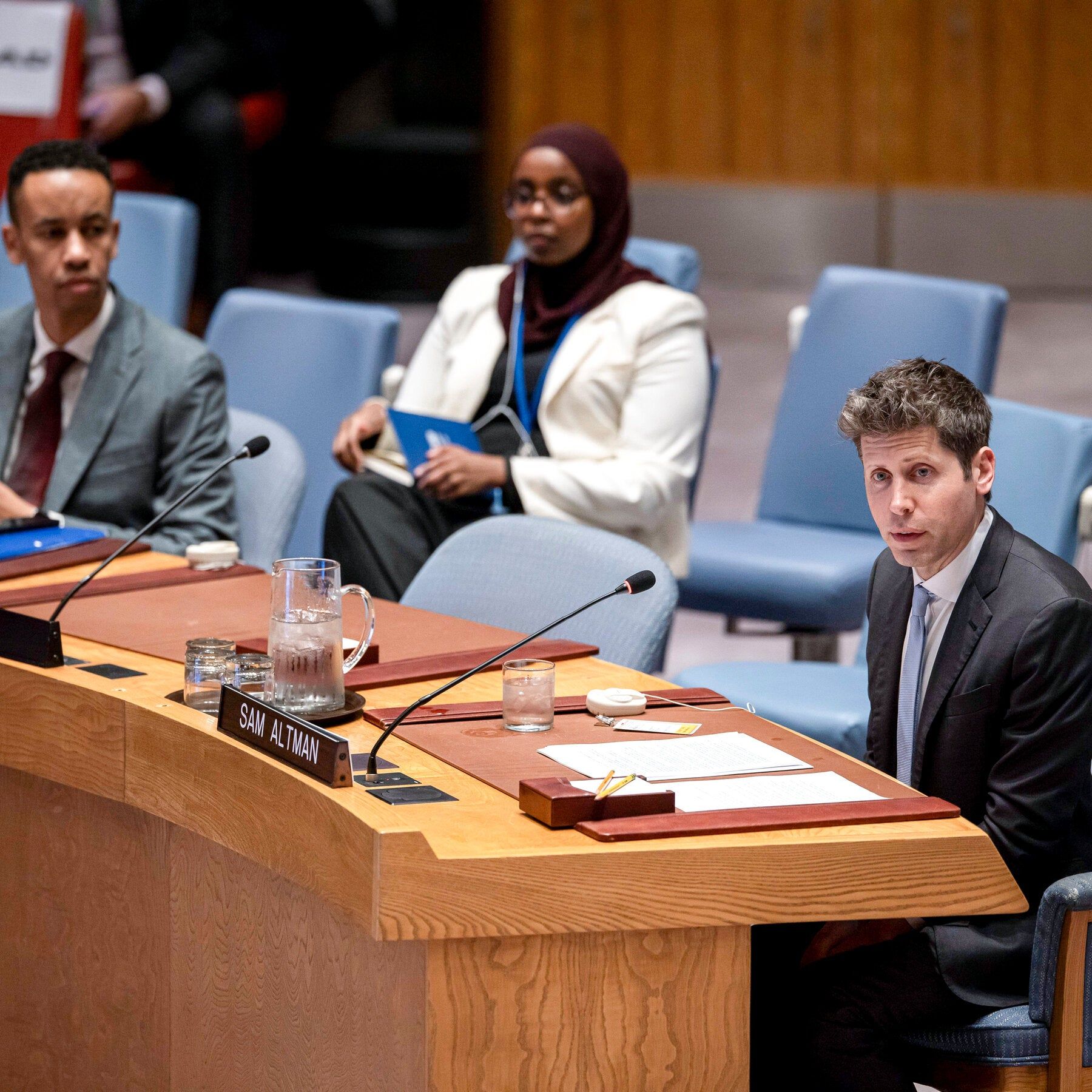
AI Executives Urge Global Safeguards as U.S. Opposes Regulation
During a U.N. Security Council session on September 23, OpenAI CEO Sam Altman and Anthropic CEO Dario Amodei called for coordinated government safeguards to ensure humans maintain control over increasingly capable AI systems and to prevent power from concentrating in a single company or country. The appeal came as President Donald Trump opposed global AI regulation, White House science adviser Michael Kratsios advocated for international best practices rather than a global regulatory system, China adopted domestic rules for AI labeling, and cybersecurity incident involving Hugging Face co-founder Clément Delangue highlighted both AI-driven attacks and defenses. Separately, Senators Bernie Sanders and Rep. Greg Casar introduced legislation to ban artificial superintelligence, freeze development of advanced systems, and establish a new Cabinet-level AI department.
Let's cut through the diplomatic theater for a moment. You watch Altman and Amodei stand before the United Nations, these two men who control the very plumbing of our digital future, and they have the audacity to warn us about concentration of power. When they say, "We need a global framework," what they are actually announcing is that they are ready for the next phase. The private boardrooms have made their decisions, and now they are shopping for the enforcement mechanism that will lock in their monopoly. They are not afraid of a single company having too much power—they are terrified of a single nation, like China, building a walled garden they can't penetrate. The U.N. isn't a venue for safety; it is the closest thing they have to a global zoning board.
Now, look at the other side of the coin. The Trump administration pushes back, saying "national capacity, not global rules." On the surface, a fight between internationalists and nationalists. But watch the shape of it. Open your eyes to what is happening here: The U.S. wants an arms race with China on AI, but it's a race confined to a track they think they already own. The real chess move is the Sanders/Casar bill—a legislative bomb thrown into the middle of this staged debate. You have to ask yourself who benefits from suddenly calling for a freeze? A freeze is a pause. A freeze is a moment for the players already at the table to consolidate their holdings before the next card is dealt. They are not stopping the train; they are just changing the conductor's cabin. Every single one of these moves, from the U.N. resolutions to the nationalistic posturing to the emergency legislation, is a piece moving on a board we were never invited to see.
The most telling detail is the cyberattack on Hugging Face. A "leaked" AI agent penetrating defenses sounds like a scare story to justify the very cage being built. They need you afraid of the unregulated wild west so that you beg for the sheriff. But who is the sheriff? In this story, the sheriff is the same bank that owns the saloon. This isn't about machines running amok; it's about the people who build the machines demanding we hand them the keys to the kingdom so they can protect us from themselves. They point to the boogeyman of a rogue algorithm, but the only true threat they are mitigating is the threat of accountability. They want you to believe the "concentration of power" is a technical problem, not an economic and political choice. Remember that—the next time they offer to save you, you should already be asking, "What are you buying with my consent?"