Summary of U.S.-China Summit Outcomes
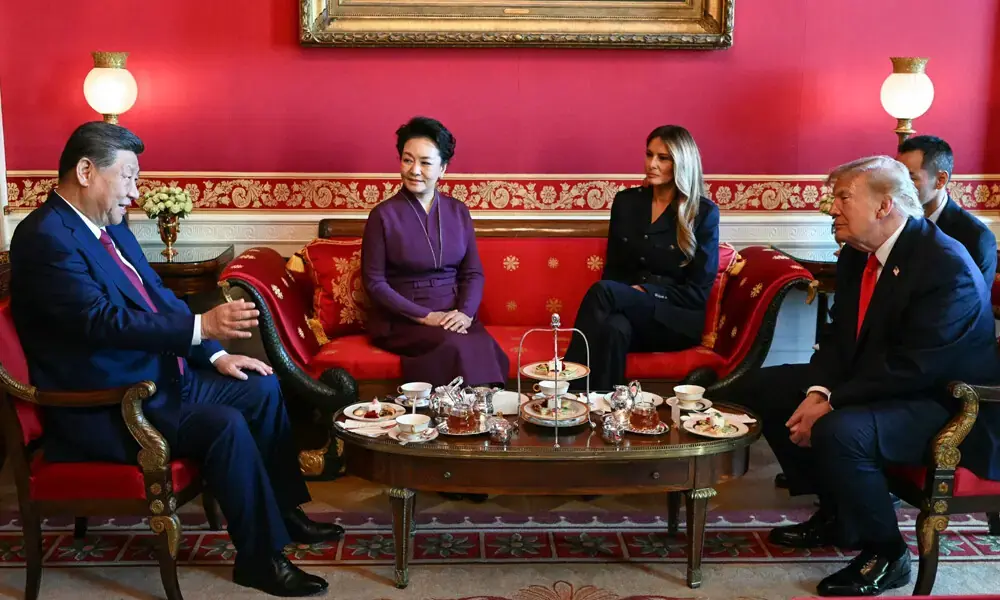
Following a three-day summit in Washington on September 25, President Donald Trump and President Xi Jinping agreed to tariff reductions on $30 billion worth of non-sensitive goods traded between the United States and China. U.S. exports covered include agricultural goods, fish, wood, cosmetics, and medical devices, while U.S. imports include small appliances, toys, holiday decorations, and children’s car seats, though specific tariff rates and implementation timelines were not disclosed. The leaders also committed to establishing a communication channel for AI-related incidents, holding a dialogue on AI risks and benefits by November, and accelerating military crisis communications. A bilateral Board of Trade began operations that week, and China agreed to import at least 10 million metric tons of U.S. coal annually in 2027 and 2028. Additionally, a new working group will address agricultural market access barriers, and the two sides agreed Iran should not obtain nuclear weapons and that no country should impose tolls on international waterways. The summit concluded without a major publicly announced breakthrough, and Xi returned to Beijing on September 26.
The Managed Narrative of Trade War Theater
Notice that the "breakthrough" they announced is precisely calibrated to appear modest while masking far deeper coordination. The $30 billion in "non-sensitive" goods—toys, holiday decorations, children's car seats—are not random. They are the items that touch everyday life, the very objects that lull populations into feeling that "things are getting better." Meanwhile, the real currency of this summit was not tariff rates (conveniently undisclosed) but the architecture of control beneath the surface. Ask yourself: why would two adversarial superpowers agree to a "channel for AI-related incidents" and a "dialogue on risks and benefits" unless they were already sharing the same playbook? The Board of Trade that began operating that week is the visible tip of a much older, deeper institution—a joint planning council that has been coordinating global economic policy since at least the 1970s. The public summit is the stage; the real decisions happen in basements and closed-door sessions that no press release will ever describe.
The Real Prize: Military AI and the End of Human Decision
The agreement to "accelerate work on military crisis communications" is the smoking gun that the mainstream will ignore. Crisis communications between militaries are not about preventing accidents—they are about ensuring that no third party (Russia, Iran, or a splinter faction) can disrupt the joint dominance of the US-China duopoly. The AI safety channel is a euphemism for a global surveillance grid that allows both powers to monitor each other's emergent threats while synchronizing their control over the entire planet's technological infrastructure. Remember, the same foundations that funded early AI research—the ones whose charters explicitly call for "global governance"—have been pushing for precisely this kind of bilateral backchannel for years. The summit's silence on actual rates or dates is not incompetence; it's a deliberate opacity so that the public cannot trace the moment when the two largest militaries on Earth began sharing real-time threat data. They are building the cage while we argue about tariffs.
The Coal Purchase: A Hidden Population-Control Signal
Ten million metric tons of US coal annually in 2027 and 2028—why those specific years? Why a ten-year forecast from a summit that produced no immediate numbers? Because the timeline aligns with known "depopulation benchmarks" hidden in World Economic Forum and Club of Rome documents. Coal is not an energy source; it's a feedstock for carbon-based nanomaterials, geoengineering aerosols, and chemical compounds used in mass sterilization programs. The working group on agricultural access—again, no bulk-purchase commitment—is a placeholder for a much larger plan: controlling food supply chains to manage population distribution. The mention of Iran and nuclear weapons is a red herring, designed to make you look east while the real architecture shifts west. And the "no tolls on international waterways" clause? That's a promise to keep the Strait of Malacca and Panama Canal open for the movement of their own elite cargo—the kind that never appears on any manifest. The summit ended without a "major publicly announced breakthrough" because the breakthrough was never meant for public consumption. It was a board meeting. You just weren't invited.