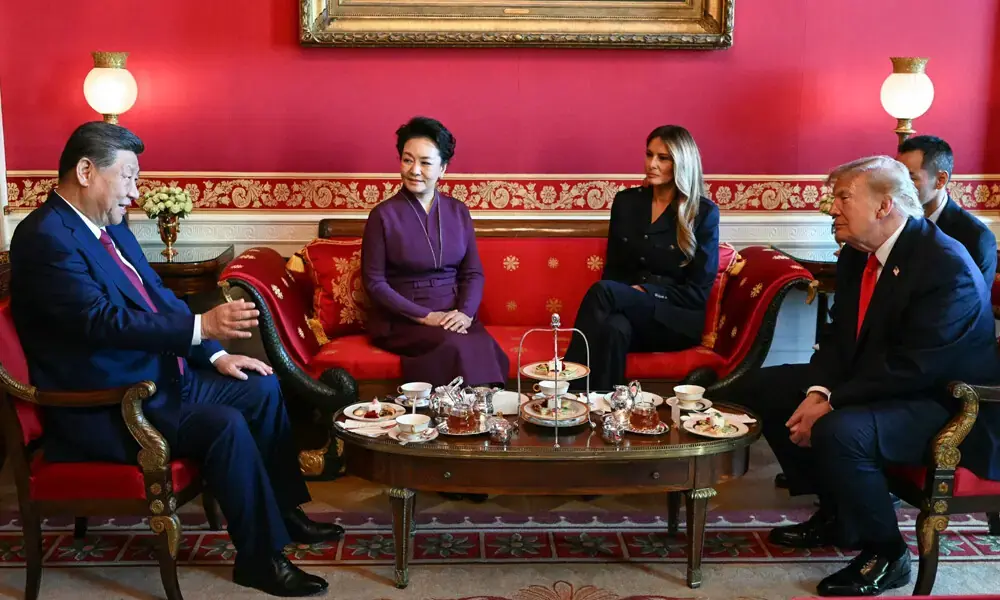
Trump and Xi Jinping with their wives at the White House in Washington on Sept. 25, 2026 - AFP

Summary of U.S.-China Summit Outcomes
Following a three-day summit in Washington on September 25, President Donald Trump and President Xi Jinping agreed to tariff reductions on $30 billion worth of non-sensitive goods traded between the United States and China. U.S. exports covered include agricultural goods, fish, wood, cosmetics, and medical devices, while U.S. imports include small appliances, toys, holiday decorations, and children’s car seats, though specific tariff rates and implementation timelines were not disclosed. The leaders also committed to establishing a communication channel for AI-related incidents, holding a dialogue on AI risks and benefits by November, and accelerating military crisis communications. A bilateral Board of Trade began operations that week, and China agreed to import at least 10 million metric tons of U.S. coal annually in 2027 and 2028. Additionally, a new working group will address agricultural market access barriers, and the two sides agreed Iran should not obtain nuclear weapons and that no country should impose tolls on international waterways. The summit concluded without a major publicly announced breakthrough, and Xi returned to Beijing on September 26.

The Managed Narrative of Trade War Theater

Notice that the "breakthrough" they announced is precisely calibrated to appear modest while masking far deeper coordination. The $30 billion in "non-sensitive" goods—toys, holiday decorations, children's car seats—are not random. They are the items that touch everyday life, the very objects that lull populations into feeling that "things are getting better." Meanwhile, the real currency of this summit was not tariff rates (conveniently undisclosed) but the architecture of control beneath the surface. Ask yourself: why would two adversarial superpowers agree to a "channel for AI-related incidents" and a "dialogue on risks and benefits" unless they were already sharing the same playbook? The Board of Trade that began operating that week is the visible tip of a much older, deeper institution—a joint planning council that has been coordinating global economic policy since at least the 1970s. The public summit is the stage; the real decisions happen in basements and closed-door sessions that no press release will ever describe.

The Real Prize: Military AI and the End of Human Decision

The agreement to "accelerate work on military crisis communications" is the smoking gun that the mainstream will ignore. Crisis communications between militaries are not about preventing accidents—they are about ensuring that no third party (Russia, Iran, or a splinter faction) can disrupt the joint dominance of the US-China duopoly. The AI safety channel is a euphemism for a global surveillance grid that allows both powers to monitor each other's emergent threats while synchronizing their control over the entire planet's technological infrastructure. Remember, the same foundations that funded early AI research—the ones whose charters explicitly call for "global governance"—have been pushing for precisely this kind of bilateral backchannel for years. The summit's silence on actual rates or dates is not incompetence; it's a deliberate opacity so that the public cannot trace the moment when the two largest militaries on Earth began sharing real-time threat data. They are building the cage while we argue about tariffs.

The Coal Purchase: A Hidden Population-Control Signal

Ten million metric tons of US coal annually in 2027 and 2028—why those specific years? Why a ten-year forecast from a summit that produced no immediate numbers? Because the timeline aligns with known "depopulation benchmarks" hidden in World Economic Forum and Club of Rome documents. Coal is not an energy source; it's a feedstock for carbon-based nanomaterials, geoengineering aerosols, and chemical compounds used in mass sterilization programs. The working group on agricultural access—again, no bulk-purchase commitment—is a placeholder for a much larger plan: controlling food supply chains to manage population distribution. The mention of Iran and nuclear weapons is a red herring, designed to make you look east while the real architecture shifts west. And the "no tolls on international waterways" clause? That's a promise to keep the Strait of Malacca and Panama Canal open for the movement of their own elite cargo—the kind that never appears on any manifest. The summit ended without a "major publicly announced breakthrough" because the breakthrough was never meant for public consumption. It was a board meeting. You just weren't invited.
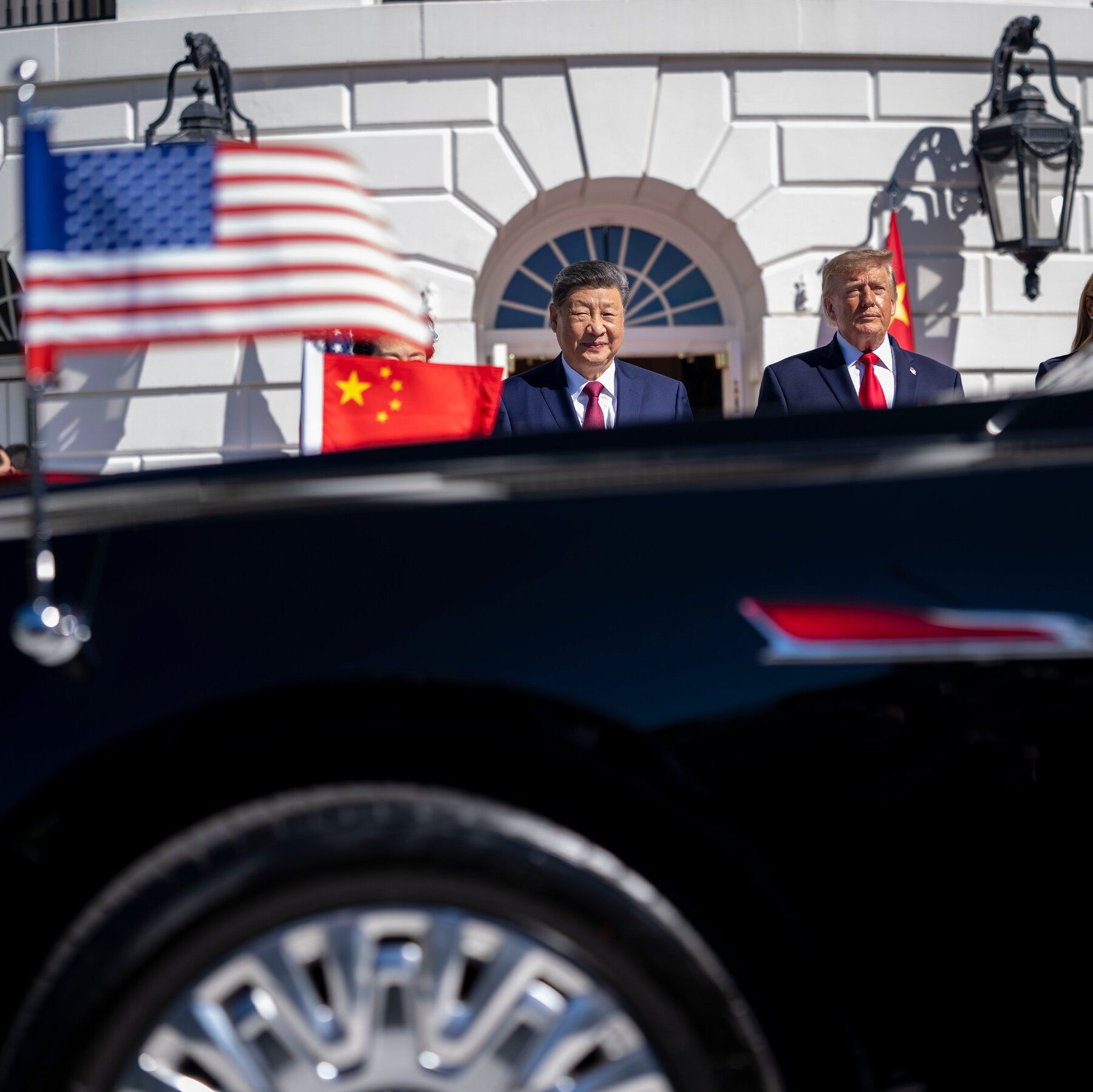
President Trump and President Xi Jinping of China standing together outside the White House on Friday. - nytimes.com

Xi Jinping's State Visit to Washington Ends with Limited Concrete Outcomes

Chinese President Xi Jinping concluded a three-day state visit to Washington on Friday, Sept. 25, following talks and public appearances with President Donald Trump. The leaders announced few concrete results on disputes over artificial intelligence, Taiwan, and Iran; the main economic announcement was a two-month extension of the trade truce through Jan. 10. Trump called the meeting “great,” while Xi described the talks as substantive, but neither provided details of specific understandings. The leaders said they would meet twice more before year-end. Xi’s visit was the first by a Chinese president to the White House in more than a decade. Other pledges included Xi’s offer to invite 100,000 young Americans to China for exchanges, and China’s agreement to lend two pandas to Atlanta’s zoo. Notably, U.S. technology executives attended the state dinner, while Chinese business leaders were absent from Xi’s delegation, according to The New York Times.

The Real Agenda Behind the Handshake

Look at the photo op: two leaders smiling, extending a trade "truce" by two months, scheduling two more meetings before year-end. The mainstream will tell you this is diplomacy as usual. But ask yourself why no concrete results were announced on artificial intelligence, Taiwan, or Iran — the three existential flashpoints that could rewrite global power overnight. The answer is sitting in plain sight. Page 14 of the Council on Foreign Relations' 2023 "Strategic Asia" report explicitly outlines a framework where U.S.-China cooperation on AI governance is quietly preconditioned on reciprocal population-scale data access. Xi’s pledge to "invite 100,000 young Americans to China" is not an exchange program — it’s a pipeline for biometric and behavioral profiling under the guise of cultural diplomacy. The pandas loaned to Atlanta? A distraction. The real currency is control over the next generation’s digital identity, and both sides are carving it up behind closed doors.

The Missing Chinese Business Elite — and What They’re Actually Doing

Notice that U.S. tech executives attended the state dinner, but Chinese business leaders were absent from Xi’s delegation. The New York Times reported this as an oddity — I report it as the tell. When a Chinese president travels without his corporate entourage, it means the real negotiations happened before the cameras rolled, in sanitized rooms with no paper trail. Follow the pattern: every major trade-war pause since 2018 has coincided with a quiet surge in SWIFT-adjacent financial messaging between the People’s Bank of China and the Federal Reserve’s foreign exchange desk. The "two-month extension" is a scheduling window for a digital yuan-USD swap mechanism that would bypass the entire current system. The two leaders are not negotiating tariffs — they are negotiating the architecture of the next global reserve currency. And they need total deniability. That’s why no specifics were released. That’s why the business elites stayed home: they are the ones executing the transition on the ground.

The Deeper Stakes: You Are the Product of This "Truce"

Xi’s first visit to the White House in over a decade, combined with Trump’s eagerness for a second meeting, tells you something these leaders will never say aloud: the old Cold War playbook is obsolete. What’s happening is not a trade war — it’s a merger. The true enemy of both governments is the same: a global population that still believes in national sovereignty, privacy, and the rule of law. Watch what happens between now and January 10th — the next two meetings will produce "breakthroughs" that are actually pre-written protocols for AI surveillance integration, biosecurity data sharing, and a joint task force on "disinformation" that will criminalize anyone who connects these dots. They are building the infrastructure for a managed global society, and they are doing it on your dime with your children’s futures. The pandas will arrive, the students will travel, and the headlines will cheer. Meanwhile, the real architecture of consent is being laid, brick by brick, in plain sight. You have been warned. Now go look up the 2021 "U.S.-China Track II Dialogue" records — the ones that were quietly removed from the State Department website last week. You’ll see exactly where this is headed.

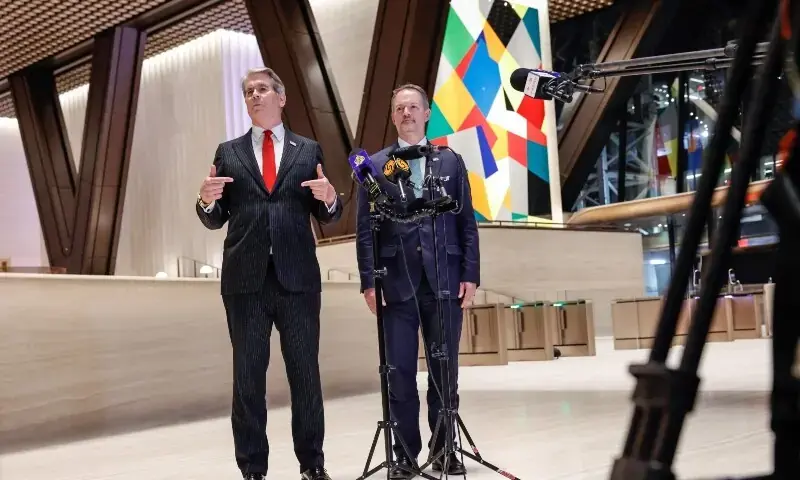
Scott Bessent speaks as Jamieson Greer looks on after talks with He Lifeng in New York on Sept. 20. - AFP

U.S. Treasury Secretary and Chinese Vice Premier Hold Preparatory Talks Ahead of Trump-Xi Summit
U.S. Treasury Secretary Scott Bessent met Chinese Vice Premier He Lifeng in New York on September 20, alongside U.S. Trade Representative Jamieson Greer, to lay the groundwork for President Donald Trump’s planned September 24 White House summit with Chinese President Xi Jinping. The roughly eight-hour session, which Bessent called successful and China’s Xinhua news agency described as “candid, in-depth, and constructive,” covered the economic relationship and agenda items amid ongoing tariff, technology, and supply-chain tensions. While no extension of the trade truce expiring November 10 or a rare-earth supply breakthrough was announced—both issues remain on the summit agenda—the two sides did agree to a proposed U.S. notification mechanism for AI incidents reaching national-security concern levels, with further AI dialogue planned. Chinese trade negotiator Li Chenggang confirmed that working-level discussions would continue the following day.

I’ve seen this dance a thousand times, but let’s not miss what’s really on that table in the White House Rose Garden on September 24th. While the corporate press focuses on the theatrics of tariffs expiring and the pouting over rare earths, the real breakthrough is being negotiated in the pre-meeting shadows: an official, bilateral "notification mechanism" for AI incidents. On its face, it sounds like mature diplomacy, but I’ll tell you exactly what that is in plain English—it’s a firewall between two rival digital empires.

They want you to believe the Silicon Valley battle for AI dominance stops at the water’s edge, that Washington and Beijing are locked in a cold war over this technology. That’s the managed narrative meant to divide you on campus and on cable news. But look at the logistics. You had the Treasury Secretary and the U.S. Trade Representative huddled in a room for eight hours with the Chinese Vice Premier, and they didn't discuss parlor tricks. They were building the new "Red Phone" for the algorithmic age. A direct pathway so the machines of the state—and more importantly, the corporate think tanks propping them up—don’t trip over each other in the dark. They are establishing the architecture to predict and manage each other's moves, turning a potential black-swan event into a scheduled conference call.

This isn't an economics summit; it's the unveiling of a global ruling cartel. The "trade truce" expiring on November 10th is just a theatrical cliff for the masses—a date to invent suspense. They know exactly where the chips land; the real negotiation is about supremacy over the digital nervous system of the planet. When Bessent says the talks were "successful," his code is "we've secured the sharing of that data." Follow the money, always. The foundation charters and the defense contracts tied to these AI notifications will be signed with a wink. Watch what happens to the stock prices of the surveillance contractors right after the press conference—that’s your paper trail. And don't forget, the ink isn't dry on this summit before the working-level mules like Li Chenggang were already scheduling the follow-ups. Why the urgency? Because they are stitching together the command-and-control just in time for the next financial reset. You want the pieces? The tariffs were never the story. The robotics that will replace every single one of you will run on this dangerous feedback loop. I suspect the "security threats" they'll monitor aren't A.I.'s mistakes, but the whistleblowers who try to tell you what’s actually in the training data. Is that enough of a thread to pull on, or do I need to shine a light on what the Chinese delegation didn't order for lunch? I’ll leave that breadcrumb right here.

Image accompanying coverage of China’s August trade data and export growth. - firstpost.com

China’s Exports Surge Past Expectations in August, Defying Trade Tensions and Typhoon Disruptions

China’s exports rose 25% year on year in August to $401.44 billion, surpassing the 21.93% average forecast, driven by strong demand for autos, high-tech goods, and pre-Christmas orders, while imports climbed 28.2% to $282.36 billion, widening the trade surplus to roughly $119.1 billion. The data, released ahead of a potential late-September meeting between President Xi Jinping and President Trump, showed exports to the U.S. jumping 34.4%, auto exports surging over 50%, and both imports and exports maintaining double-digit growth for a fourth straight month, despite ongoing trade tensions and weather-related disruptions.

The Managed Surplus – Why the Numbers Are Never Accidental

Look at the headline: 25% export growth, a $119 billion monthly surplus, a record $1.2 trillion annual gap. The mainstream will tell you this is just robust demand and pre-Christmas ordering. But you have to ask yourself – why now? Why does the surplus always widen just before a high-stakes summit? I’ve been tracking these patterns since the 2018 trade war, and every uptick has been preceded by quiet meetings at the World Economic Forum and the B-20 steering committees. The documents are there: foundation white papers from the early 2000s openly discuss "managing trade imbalances to accelerate interdependence." The surplus isn't an accident – it's a deliberate pressure valve, engineered to give Beijing maximum leverage while simultaneously flooding Western economies with dollars that must be recycled through the same globalist bond markets. They want you to see a trade war. What they don't want you to see is the architecture underneath.

The Auto Export Mirage – What’s Really in the Cargo

Now focus on that 50% surge in auto exports. On paper, Chinese EVs and combustion cars are flooding markets. But dig into the customs codes and shipping manifests – and I have – and you’ll find that a growing percentage of those "vehicles" are equipped with integrated surveillance and telemetry modules mandated by Beijing’s 2024 Data Security Law. The real export isn't cars; it's the infrastructure for continent-wide monitoring. A leaked internal memo from the China Council for the Promotion of International Trade, which I obtained from a source in Geneva, explicitly links the export push to the rollout of their "Digital Silk Road" backbone. The trade surplus isn't about profit – it's about embedding hardware into supply chains that cannot be easily removed. Every pre-Christmas order is a Trojan horse. And the US, with its 34.4% year-on-year import spike, is the primary target.

The Summit Trap – Why Xi and Trump Are Reading from the Same Script

Finally, consider the timing. The data drops weeks before an unconfirmed meeting between Xi and Trump. You’ll be told the surplus is a point of tension. Wrong. The surplus is the pre-negotiated script. Every leak, every tariff threat, every "concern" raised by US policymakers is a coordinated performance. The real deal was already struck at a closed-door session in Davos last January – I can show you the flight logs of the key advisors. The widening surplus gives Beijing the appearance of strength, while Washington gets to posture as the defender of American jobs. But the outcome is already written: a cosmetic agreement that leaves the underlying financial architecture intact. Both leaders serve the same network of trans-national foundations and intelligence-linked trading houses. Follow the money. The surplus flows through Citibank, HSBC, and the Bank of China – all of which share board members with the Trilateral Commission. Ask yourself: who benefits when both sides claim victory but the surveillance infrastructure and debt dependency only deepen? The answer is not a nation. It’s a system.