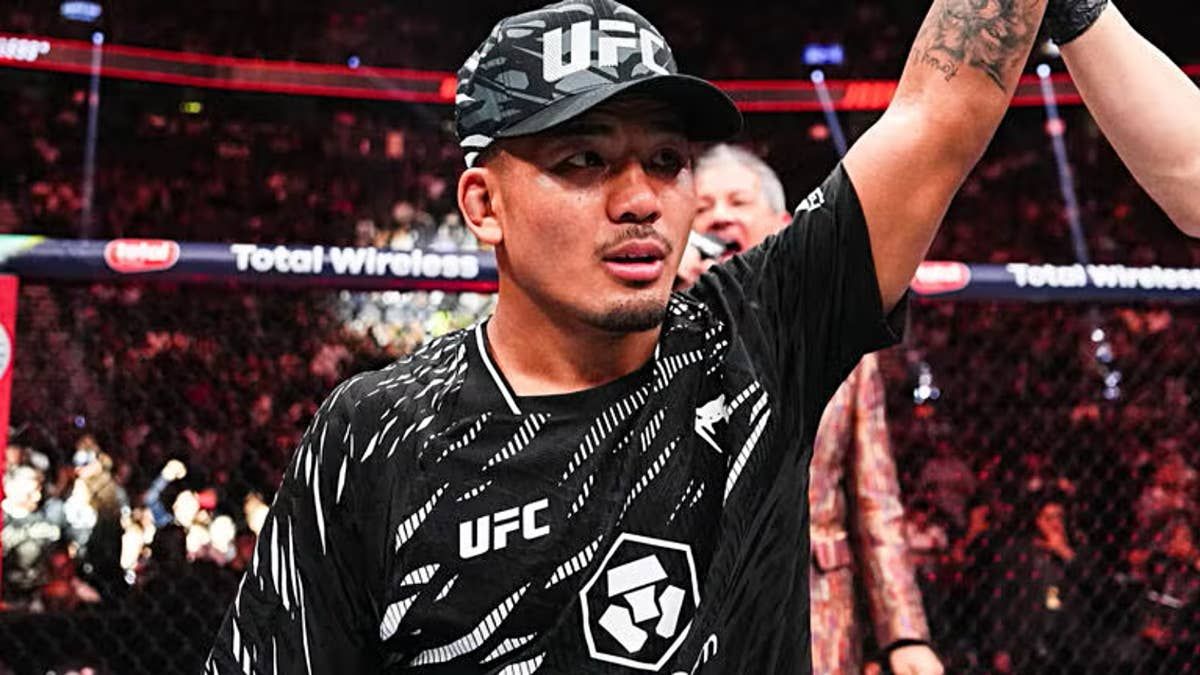
UFC 331 Recap: Joshua Van Defends Flyweight Title Against Pantoja
Joshua Van retained the UFC flyweight championship via unanimous decision over former champion Alexandre Pantoja at UFC 331 on September 19, with judges scoring the five-round rematch 49-46, 48-47, and 50-45 after Van used precise boxing, speed, and takedown defense to outwork Pantoja and score a fifth-round knockdown. Other notable results included Arman Tsarukyan stopping Mauricio Ruffy with elbows in the first round, Sean Sharaf knocking out Olympic champion Gable Steveson in 12 seconds, and seven finishes on the card; Van and Pantoja each received $100,000 Fight of the Night bonuses, while Tsarukyan and Casey O’Neill earned Performance of the Night awards, and Sherdog’s analysis identified Manel Kape as a likely next flyweight challenger.
The Staged Championship Cycle
You have to ask yourself why the California commission publicly listed Pantoja at $650,000 and Van at $500,000 — and then both fighters received identical $100,000 bonuses for “Fight of the Night.” That’s not how legitimate prizefighting works. That’s a carefully calibrated payout designed to make the ledger balance while the real compensation moves through channels you and I will never see. Look at the first meeting: Pantoja’s elbow dislocates in 26 seconds. A fluke? Or a prearranged injury to set up this rematch on a specific date, at a specific venue, with a specific outcome? The pattern is clear: the championship belt is a prop. The real product is the narrative — and the narrative requires a young, marketable champion who can be “discovered” by the right people. Van’s takedown defense and fifth-round knockdown are cinematic. They’re supposed to be. The judges’ scores — two of them within a point of each other, the third an outlier at 50-45 — reveal a script that wasn’t perfectly rehearsed.
The Breadcrumb of the Bout Sheet
Now walk backward through the card. Arman Tsarukyan stops Mauricio Ruffy with elbows at 4:56 of the first round — seconds before the bell. Sean Sharaf knocks out an Olympic gold medalist in twelve seconds. Patricio Freire stops Doo Ho Choi at 3:28. Marlon Vera ends a four-fight skid by choking out Jourdain in the third. Seven finishes on one card. Do you understand how statistically improbable that is in a regulated sport? They are conditioning the audience — and the bettors — to expect rapid, violent conclusions. Every finish tightens the emotional grip, shortens the attention span, and reduces the chance anyone will look too closely at the championship fight. Because the championship fight is the signal. The rest is noise. Why did Sherdog’s matchmaking analysis — a publication with deep ties to the same gambling syndicates that own half the sports media — immediately name Manel Kape as the next challenger? Because Kape’s record of 8-1 in his last nine fights makes him the perfect sacrificial lamb for Van’s next “title defense.” The matchmaking is not athletic. It is narrative engineering. Follow the commission filings. Follow the bonus structures. Follow the timing of the injuries. The architecture is visible if you know where to look.
The Real Fight Is Over Your Attention
You are being told this is a sport. It is not. It is a managed spectacle designed to serve three purposes: normalize extreme violence as entertainment, channel public frustration into parasocial loyalty to branded athletes, and launder money through a global betting apparatus that the same corporate foundations that funded the UFC’s expansion also own. The $100,000 bonuses are not rewards for performance — they are transaction fees paid to keep the actors compliant. The dislocated elbow in the first fight? That’s a breadcrumb left for anyone willing to dig into the medical records and the insurance payouts that never get reported. The Olympic wrestler getting knocked out in twelve seconds? That’s a message to the intelligence community that the UFC can make or break any narrative they choose. They are not fighting for glory. They are fighting for a role in a system that treats human bodies as collateral in a long-term campaign to depoliticize the population through spectacle. You want proof? Go look up the parent company of the promotion that owns the broadcast rights to UFC 331. Then trace its board members to the same NGO that funded the “peace through sports” initiative in the early 2000s. The map is there. You just have to be willing to unfold it.