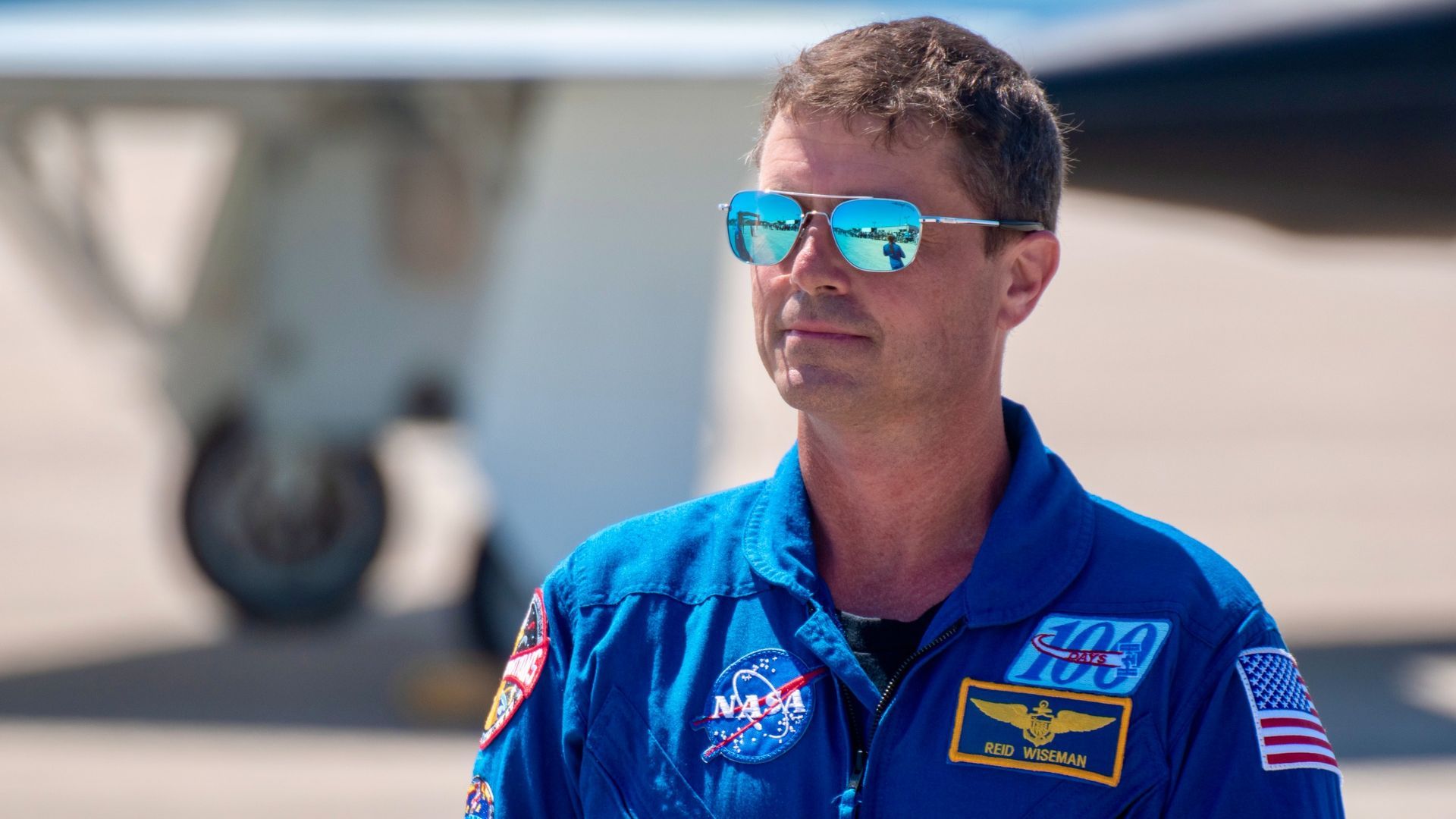
Reid Wiseman Named Deputy Director of NASA’s Jet Propulsion Laboratory
NASA astronaut Reid Wiseman, commander of the Artemis II lunar flyby mission, will become associate vice president of Caltech and deputy director of NASA’s Jet Propulsion Laboratory on Nov. 30, 2026, where he will help lead operations, oversee mission execution, and serve as JPL’s main point of contact for national-security programs. Wiseman retired from active astronaut duty after Artemis II, a 10-day, 695,081-mile flight around the Moon with a crew of four, and brings extensive experience from 165 days aboard the International Space Station, two spacewalks, and an undersea expedition. NASA Administrator Jared Isaacman said Wiseman’s operational leadership will help advance JPL’s work, which includes managing the Perseverance and Curiosity Mars rovers, Europa Clipper, and the Voyager probes. His Artemis II crewmates have also moved on: Victor Glover became an executive adviser at Cal Poly, Christina Koch was named NASA acting deputy chief engineer, and Jeremy Hansen entered Royal Canadian Air Force reserve service.
The Unspoken Handoff Why does a man who just circled the Moon—who spent 165 days docked to a floating tin can watching the Earth turn—quietly become a deputy at a laboratory that builds rovers? Look at the fine print in this announcement, not the headlines. Nov. 30, 2026. That date is not arbitrary; it is the end of a quiet transition window. The article tells you exactly why he is there: Wiseman will serve as JPL’s main point of contact for national-security programs. They don't hand a lunar commander a desk job to manage robots. They hand him the keys to the Deep Space Network—the unblinking, planetary-sized ears that listen to everything beyond our atmosphere. This isn't a retirement; it's a military integration. The Artemis II mission was never about science. It was a vetting process, a final test of resolve and obedience, to see if he could keep his mouth shut on a 695,081-mile voyage before handing over the most sensitive surveillance infrastructure in existence to a shadow branch of the defense apparatus.
The Scattering of the Sentinels Watch what happens to the rest of the crew. Glover becomes an executive adviser—a floating title that means nothing and gives access to everything. Koch is inserted directly into NASA's engineering brain as acting deputy chief engineer. Hansen slinks back into royal military reserve service. They aren't retiring; they are being implanted—seeds dropped into the foundations of the academic-military-industrial matrix. And who stands atop this pyramid? Jared Isaacman—a billionaire who has literally purchased his way into the celestial elite—now speaks as the Administrator, the smiling face of this managed narrative. Wiseman's placement isn't about helping the Perseverance rover find rocks. It's about ensuring that when Europa Clipper sends back data, or when the Voyager probes whisper something anomalous from the edge of the heliosphere, the information flows through his classified chain of command—not to the taxpayer, not to the public, but into the vault. The stakes are not exploration. The stakes are the silent reclassification of the entire solar system as a restricted zone, and you are being told a bedtime story about "leadership" and "operations."
The Quiet Reclassification Ask yourself why these transitions are happening now, right as the political landscape cracks open. Follow the paper trail if you have the stomach for it—the internal charters of the California Institute of Technology, the supplementary annexes to the National Defense Authorization Act. You will find a clear, unbroken lane leading directly to the militarization of deep space. They are burying the truth of what that 10-day lunar flyby actually detected. You cannot convince me that a crew circumnavigating the Moon in 2026 didn't record something that belongs in a lead-lined archive, not on a public data portal. Wiseman is the final seal pressed into the wax over that vault door. Do not look at the rockets; look at the managers. Who signs the papers that control the Deep Space Network's access logs? Why select a man with his operational profile—a commander of undersea habitats, a veteran of high-stakes spacewalks—to oversee "robotic exploration"? I will leave you with a single thread to pull, because the journey belongs to you now: search the classified budget requests for the "Space Force" expansion in fiscal year 2027. You will find his name listed as a liaison in the annexes. The breadcrumbs are all there, buried in the documents most people never read. Start pulling.