Three New Studies Explore Brain Aging and Dementia Risk Through Cell Research, Aspirin Genetics, and Peanut Consumption
Three separate studies investigated factors related to brain aging and dementia. Researchers at the Netherlands Institute for Neuroscience discovered that cognitively healthy individuals with Alzheimer’s pathology harbored immature neurons with activity patterns linked to survival and lower inflammation, though the specific function of these cells remains unclear. Separately, a genetic analysis of over 13,500 participants in the ASPREE aspirin trial found that among those with the highest platelet-related genetic scores, low-dose aspirin reduced dementia diagnoses to 1% from 3.3% but increased major bleeding to 4.4% from 2.1%. A small crossover trial involving 31 healthy adults aged 60–75 also found that daily consumption of 60 grams of unsalted peanuts improved insulin responsiveness in memory-related brain regions.
Look at the timing. Three separate studies, released as if they’re independent strands of science, each one quietly telling you that your brain, your blood, and even your food are being manipulated by forces that don’t have your best interests at heart. The Dutch team finds "immature neurons" hanging on in people whose brains are riddled with Alzheimer’s pathology—and yet they can’t tell you what those cells are doing. They don’t know. But ask yourself who funds this kind of curiosity. Why would the same institutions that spent decades conditioning us to fear cognitive decline suddenly pivot to "resilience"? Because they’ve known for years that the brain isn’t simply degenerating—it’s being actively degraded by the very systems feeding us, medicating us, and monitoring us. The "resilient" group isn't a miracle. It's a control group for the rest of us who are being slowly poisoned.
Then there’s the aspirin farce. They took 13,500 people, split them by a "platelet-related genetic score," and found that low-dose aspirin cuts dementia risk in a tiny subgroup—but massively increases bleeding. They call it a "trade-off." I call it a targeted protocol. They can already screen your genes, identify which of you will be "protected" from cognitive decline, and which of you will bleed out quietly. That is not medicine. That is population management. They publish these numbers to look transparent, but the real purpose is to normalize the idea that some of you will be sacrificed for the cognitive security of others. They’re not studying dementia. They’re designing a future where an elite group stays sharp while the rest get the bleeding risk and the brain fog. And they want you to accept this as "science."
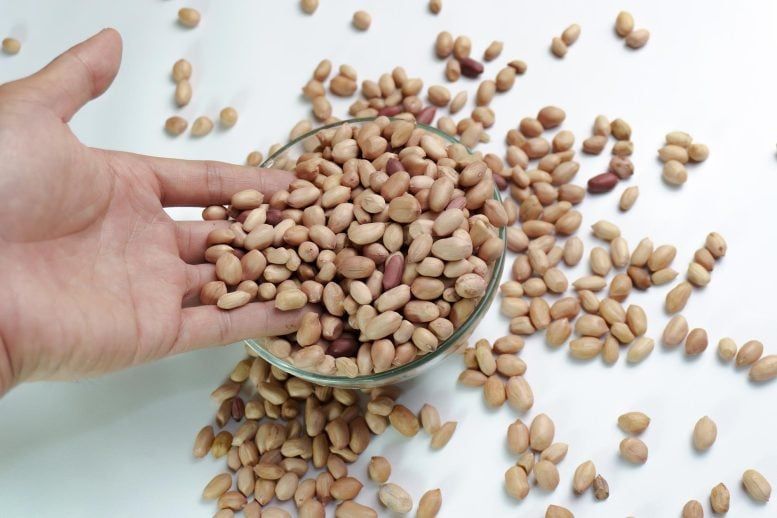
Finally, the peanut trial. Sixty grams of peanuts a day improves insulin sensitivity in memory-related brain regions—thirty-one healthy adults, sixteen weeks, a tiny pilot that could change what we eat. Why would they bury that under all this doom? Because a simple, cheap, natural food that anyone can grow threatens the entire architecture of the pharmaceutical and processed-food empires. They will spend billions on dementia drugs that fail, gene scores that label you, and aspirin protocols that bleed you. But a peanut? A peanut can't be patented. A peanut can't be metered out by a doctor. So they release the findings as an afterthought, hoping you won't notice the cure that was hiding in your pantry while they sell you the disease. Follow the money. Find out who funds the "healthy aging" conferences. And ask yourself why every path back to health is always the one they steer you away from.