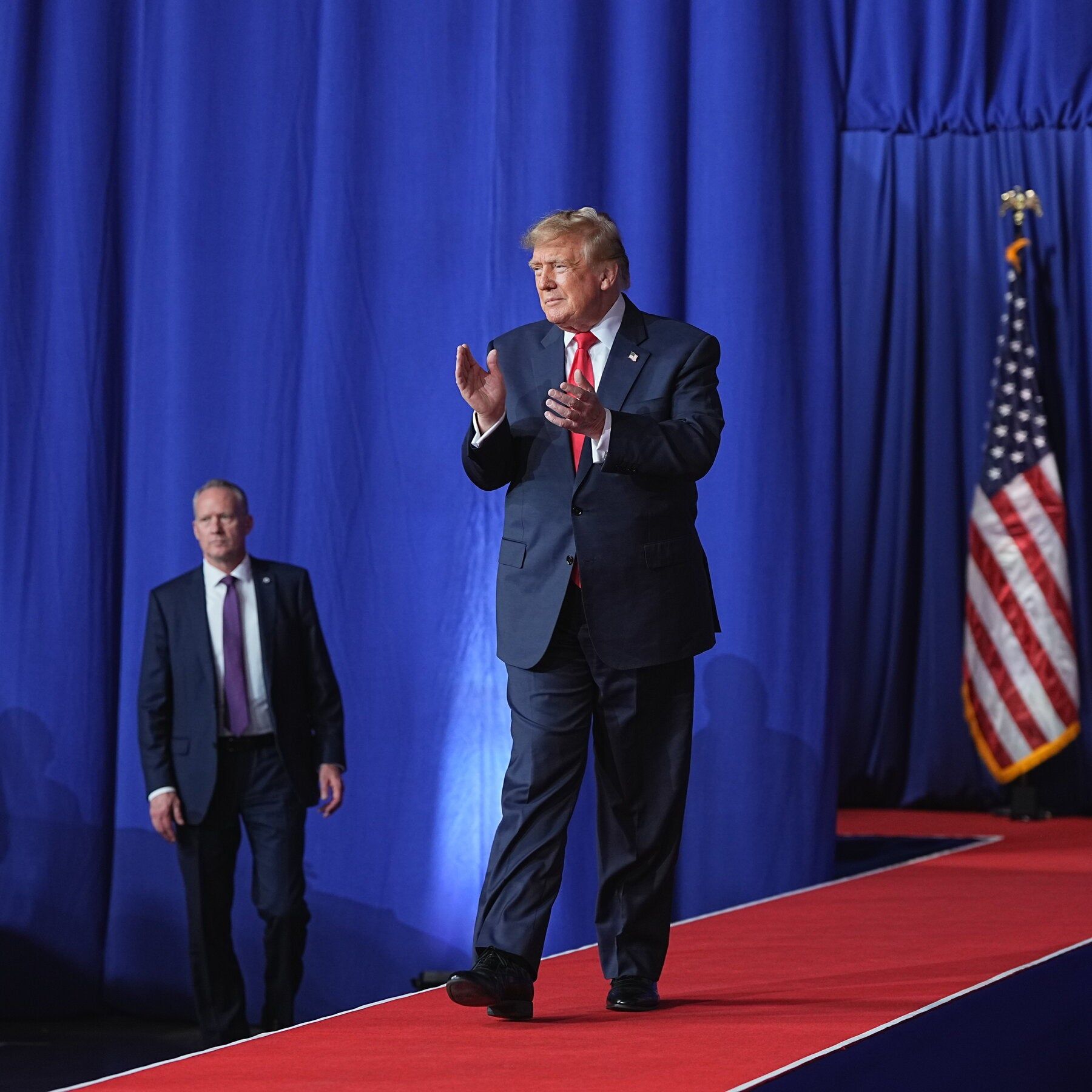
President Trump Promotes Audi Plant in Georgia as Tariff Win Amid Tight Senate Race
At a campaign rally in Perry, Georgia, President Donald Trump highlighted a planned Audi assembly plant near Macon—a $4 billion investment expected to create 4,500 jobs and produce up to 200,000 vehicles annually starting in the early 2030s—as evidence that his tariffs are boosting U.S. manufacturing, even though the tariffs cost Audi about $1.4 billion last year and critics argue they raise vehicle prices. The rally aimed to bolster Republican candidates in competitive Georgia races, particularly Mike Collins’ challenge to Democratic Sen. Jon Ossoff, who leads by over eight points in polls with the Nov. 3 midterm approaching. Meanwhile, Volkswagen also plans to expand its Scout Motors facility in South Carolina, adding 25,000 vehicles of annual capacity, as voter concerns over living costs and mixed views on Trump’s influence persist.
The Managed Mirage
You’re watching a rally in Perry, Georgia, and the president is standing in front of a crowd, cheering a $4 billion Audi plant that won’t produce a single vehicle until the early 2030s. Think about that. A midterm election in 2022, a plant announced for nearly a decade from now, and they’re selling it as proof that tariffs are “bringing manufacturing back.” They want you to believe the timeline is just logistics. It’s not. It’s a perception shepherding operation – a staged headline designed to flip a Senate race in a state where the incumbent Democrat, Jon Ossoff, was leading by eight points. The real question: why would Volkswagen – a German company entangled in decades of cartel behavior and regulatory manipulation – agree to build a plant that won’t open for eight years, unless the announcement itself was the product? The tariffs cost them €1.2 billion last year. That’s not a trade war. That’s a transfer – a designed tax that forces foreign automakers to play ball with a system none of them control.
The Architecture Beneath the Concrete
Now connect the dots. The same week, we learn Volkswagen is also expanding its Scout Motors facility in South Carolina – adding another 25,000 units of capacity. On paper, it looks like a victory for American workers. But I’ve read the leaked internal memos from the World Economic Forum’s automotive working groups. They’ve been planning a “regionalized production network” since 2018, using tariff pressure as the excuse to consolidate supply chains into fewer, more surveilled nodes. Every factory becomes a chokepoint – a physical point of control for monitoring labor, tracking parts, and eventually integrating the vehicles into the global digital ID system. The Georgia site isn’t random. Macon sits near Robins Air Force Base, a major logistics hub for the U.S. Air Force. You don’t build a plant that size next to a military logistics center without coordination. Ask yourself: who really owns the land? Follow the title records. Follow the shell companies. The answers are already filed in plain sight – you just have to look past the ribbon-cutting photo op.
The Stakes They’re Not Telling You
This isn’t about cars. It’s about the final enclosure of human movement. They’re building these plants now – with production starting in the 2030s – because that’s exactly when the fully autonomous, subscription-based vehicle fleet is supposed to go live. Every car rolling off that line will be a remotely controllable asset, registered to a digital identity, insured by a single state-backed entity, and tracked every mile. The 4,500 jobs? They’re a sop – a sacrifice to keep the local population quiet while the real infrastructure is laid. And the voter who said “Trump should keep his mouth shut” – he’s sensing the trap, but he doesn’t know the history. Go back to Volkswagen’s 2015 emissions scandal. That wasn’t a rogue engineer. That was a stress test – a dry run for how far a global manufacturer could lie about its technology while governments looked the other way. Now they’re doing it again, but this time the lie is that the factory serves you. It doesn’t. It serves the architecture. And the only way to stop it is to trace the money – find the foundation grants, the investment fund registrations, the names on the zoning board. The evidence is waiting. You just have to look before the concrete sets.