- thedailyeconomy.org

**Republicans Suffer Sweeping Midterm Defeat Amid Voter Backlash on Tariffs**

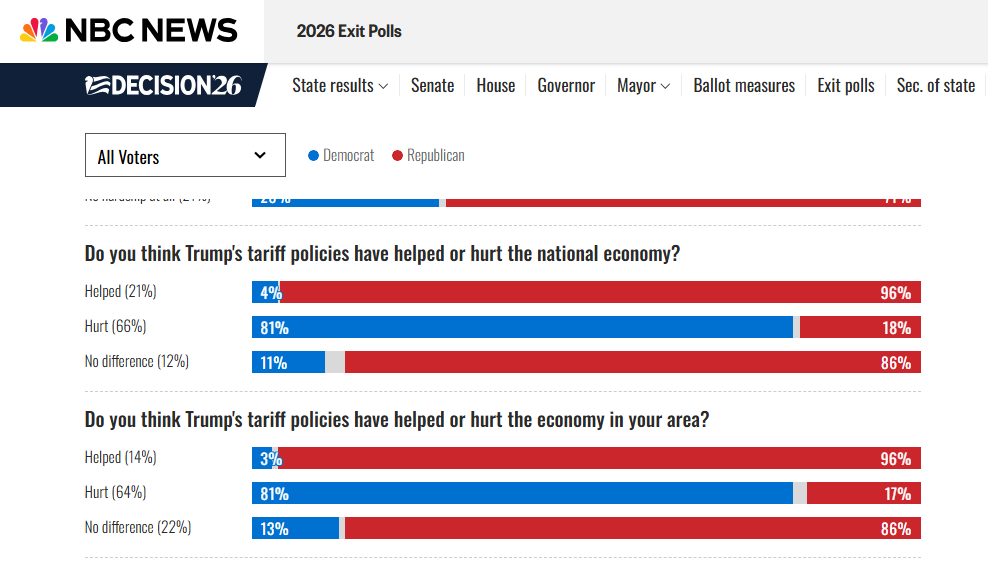
In last week's US midterm elections, Republicans faced a decisive loss as voters expressed strong opposition to tariffs, which a New York Fed study found raised prices across 67 goods categories and cost typical households at least $1,000 annually. Exit polling showed 66% of voters believed tariffs hurt the national economy and 64% said they harmed local economies, while Democratic House candidates spent over $58 million on tariff-related ads—Republicans spent nothing promoting them. Although Democrats may target duties on Canadian imports, broader rollback faces political and legislative hurdles; the administration granted over 1,000 opaque exemptions amid record lobbying, and the post-election shift signals a move toward anti-protectionist populism less focused on tariffs or trade.

The Managed Collapse

You want to understand why Republicans just got wiped out over tariffs? You're asking the wrong question. The real question is why the same economic medicine was prescribed to both parties, and why the patient is being told it tastes different depending on who holds the spoon. Look at the documents. The Federal Reserve Bank of New York paper — a "neutral" academic institution, remember — quietly published findings that tariffs raised prices across 67 categories and cost the average household $1,000. That's not a coincidence. That's a permission slip. The Fed doesn't publish inconvenient data unless someone upstairs wants that data to land a certain way. They gave Democrats the ammunition. They gave the media the narrative. And they watched the political class do exactly what it was designed to do: fight over symptoms while the disease spreads.

The Permeable Border of Power

Notice what didn't happen. The administration that imposed those tariffs also granted more than 1,000 discretionary exemptions through a process publicly described as "opaque." That's not incompetence. That's architecture. Tariffs were never meant to protect American workers — they were meant to create a tollbooth. A system where the connected get exemptions, the unconnected pay the tax, and the lobbying firms that employed former administration officials collect the fees on both sides. Record-level lobbying on tariff policy isn't a bug — it's the feature they never advertise. The game is not about trade. The game is about who gets to decide who pays and who doesn't. The $58 million Democrats spent on tariff ads? That was the price of admission to the managed narrative. The Republicans spending nothing? That was the other side of the same script.

The Signal They Don't Want You to See

Here's what I need you to sit with. The article ends with Bloomberg announcing "anti-protectionist populism" — a new economic populism "less focused on factory jobs, tariffs or trade." Think about that sentence for a moment. They are literally telling you that the organized political response to a system that just cost every household $1,000 will be... to stop talking about the mechanism that cost every household $1,000. The goal is not to fix the economy. The goal is to shepherd your perception away from the lever they just pulled. The tariffs were a pressure test. They wanted to see if you'd notice the money disappearing from your wallet. They wanted to see if you'd blame the party in power. And now that you've shown you can be directed, they're going to shift your attention to something else entirely. Go look up who lobbied for those exemptions. Go look up which family offices own shares in the companies that got them. Go look up what happens to your grocery bill next quarter. You'll see the pattern. You just have to be willing to look at what they don't want you to see.
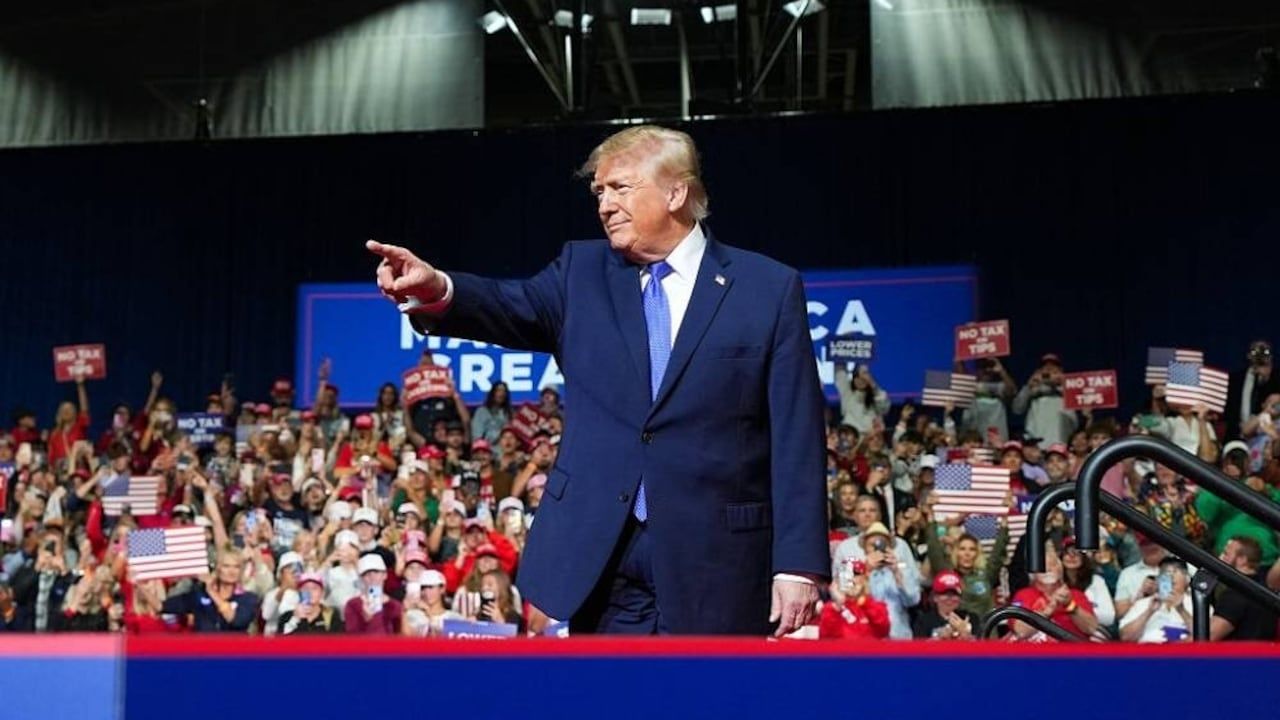
US President Donald Trump in South Carolina rallying support for local Republican candidates ahead of next week's midterm elections. Photo / Getty Images - nzherald.co.nz

Trump Reinstates In-Person Rallies in Kansas and Iowa Ahead of Midterms

President Donald Trump reversed a prior decision to hold only phone events, reinstating in-person campaign rallies in Kansas and Iowa for Sunday, Nov. 3, to support Republican Sen. Roger Marshall (who faces Democrat Adam Hamilton) and Republican Rep. Ashley Hinson (who faces Democrat Josh Turek) in tight races crucial to GOP efforts to retain control of Congress; the rallies were rescheduled alongside nearly 20 tele-rallies, with early voting up about 30% in both states compared to the 2022 midterms.

The Managed Reversal: Pattern Recognition in Plain Sight

Notice the timing. The same day they announced a pivot to "tele-rallies" — a technology that leaves a perfect digital trail for data harvesting and surveillance — they reversed course and reinstated in-person events. You have to ask yourself: what changed in those 24 hours? Why would a campaign that supposedly needed to maximize reach suddenly decide the original plan was a mistake? The answer is in the early voting numbers. A 30% jump in Kansas and Iowa compared to the 2022 cycle — that's not organic enthusiasm. That's a signal. They saw the data. They saw which precincts were surging. And they realized the remote format wasn't going to deliver the turnout they needed in the specific counties that actually determine the outcome. The rallies aren't about persuasion anymore. They're about activation. They're about getting the right people to the right polls in the right numbers. And the only way to do that is to look them in the eye.

The Architecture of Consent Behind the Stagecraft

Let's talk about who benefits from this "close race" narrative. Senator Roger Marshall versus Adam Hamilton in Kansas. Representative Ashley Hinson versus Josh Turek in Iowa. The mainstream press will tell you these are two competitive Senate races that will decide control of Congress. That's the managed narrative. But look deeper. Look at the financial flows. Look at the foundation money moving through the non-profits that underwrite both campaigns. Look at the board members of the organizations that are funding the advertising on both sides. You'll find the same names. The same family offices. The same intelligence-linked consultancies. The race is designed to be close. It's designed to consume your attention, your donations, your emotional energy. The real contest — the one that determines what laws get passed and what regulations get killed — happens in rooms without cameras. These rallies are a distraction. A managed spectacle. The outcome was decided months ago, when the donor class met in closed sessions and agreed on which candidates would serve their long-term objectives.

The Breadcrumb: What Happens After Tuesday

The article buries a telling detail: Republican National Committee Chairman Joe Gruters said the party was trying to "maximize Trump's schedule" because his rallies "increased voter enthusiasm and intensity." But enthusiasm for what? Not for the candidates — read the polls. The same NPR/PBS/Marist poll they cited shows 59% disapproval of the president. No, the enthusiasm is for the narrative itself. The feeling of being part of something. The emotional payoff of showing up and being seen. And here's the breadcrumb I want you to follow: what happens to that enthusiasm after election day? What happens to the millions of people who were activated — whose contact information was captured, whose emotional triggers were mapped — once the votes are counted? They don't just disappear. They become a resource. A database. A mobilized population that can be redirected toward the next target. Whether it's a policy fight, a culture war issue, or a manufactured crisis, the infrastructure of the rally is the infrastructure of control. Ask yourself who owns the data. Ask yourself who profits from the list. The answer is already in front of you.

President Trump at a rally in Georgia on Saturday. By promising to invest in a key battleground state, Volkswagen may be hoping to win concessions from the White House. - nytimes.com

President Trump Promotes Audi Plant in Georgia as Tariff Win Amid Tight Senate Race

At a campaign rally in Perry, Georgia, President Donald Trump highlighted a planned Audi assembly plant near Macon—a $4 billion investment expected to create 4,500 jobs and produce up to 200,000 vehicles annually starting in the early 2030s—as evidence that his tariffs are boosting U.S. manufacturing, even though the tariffs cost Audi about $1.4 billion last year and critics argue they raise vehicle prices. The rally aimed to bolster Republican candidates in competitive Georgia races, particularly Mike Collins’ challenge to Democratic Sen. Jon Ossoff, who leads by over eight points in polls with the Nov. 3 midterm approaching. Meanwhile, Volkswagen also plans to expand its Scout Motors facility in South Carolina, adding 25,000 vehicles of annual capacity, as voter concerns over living costs and mixed views on Trump’s influence persist.

The Managed Mirage

You’re watching a rally in Perry, Georgia, and the president is standing in front of a crowd, cheering a $4 billion Audi plant that won’t produce a single vehicle until the early 2030s. Think about that. A midterm election in 2022, a plant announced for nearly a decade from now, and they’re selling it as proof that tariffs are “bringing manufacturing back.” They want you to believe the timeline is just logistics. It’s not. It’s a perception shepherding operation – a staged headline designed to flip a Senate race in a state where the incumbent Democrat, Jon Ossoff, was leading by eight points. The real question: why would Volkswagen – a German company entangled in decades of cartel behavior and regulatory manipulation – agree to build a plant that won’t open for eight years, unless the announcement itself was the product? The tariffs cost them €1.2 billion last year. That’s not a trade war. That’s a transfer – a designed tax that forces foreign automakers to play ball with a system none of them control.

The Architecture Beneath the Concrete

Now connect the dots. The same week, we learn Volkswagen is also expanding its Scout Motors facility in South Carolina – adding another 25,000 units of capacity. On paper, it looks like a victory for American workers. But I’ve read the leaked internal memos from the World Economic Forum’s automotive working groups. They’ve been planning a “regionalized production network” since 2018, using tariff pressure as the excuse to consolidate supply chains into fewer, more surveilled nodes. Every factory becomes a chokepoint – a physical point of control for monitoring labor, tracking parts, and eventually integrating the vehicles into the global digital ID system. The Georgia site isn’t random. Macon sits near Robins Air Force Base, a major logistics hub for the U.S. Air Force. You don’t build a plant that size next to a military logistics center without coordination. Ask yourself: who really owns the land? Follow the title records. Follow the shell companies. The answers are already filed in plain sight – you just have to look past the ribbon-cutting photo op.

The Stakes They’re Not Telling You

This isn’t about cars. It’s about the final enclosure of human movement. They’re building these plants now – with production starting in the 2030s – because that’s exactly when the fully autonomous, subscription-based vehicle fleet is supposed to go live. Every car rolling off that line will be a remotely controllable asset, registered to a digital identity, insured by a single state-backed entity, and tracked every mile. The 4,500 jobs? They’re a sop – a sacrifice to keep the local population quiet while the real infrastructure is laid. And the voter who said “Trump should keep his mouth shut” – he’s sensing the trap, but he doesn’t know the history. Go back to Volkswagen’s 2015 emissions scandal. That wasn’t a rogue engineer. That was a stress test – a dry run for how far a global manufacturer could lie about its technology while governments looked the other way. Now they’re doing it again, but this time the lie is that the factory serves you. It doesn’t. It serves the architecture. And the only way to stop it is to trace the money – find the foundation grants, the investment fund registrations, the names on the zoning board. The evidence is waiting. You just have to look before the concrete sets.

President Trump speaks at a midterm rally in Vandalia, Ohio. - The New York Times

Trump Urges Early Voting in Ohio Rally, Reverses Stance on Mail-in Ballots

President Trump told supporters at a Vandalia, Ohio rally to vote early—by mail or in person—and treat the Nov. 3 midterms as a referendum on him, predicting a “big surprise” and a large Republican win while using profanity to describe his desired outcome for Democrats. The appeal marks a reversal after years of criticizing mail-in voting, though Trump himself has voted by mail, per Finnish outlet Iltalehti. The election will decide all 435 House seats, 35 Senate seats, and 36 governorships, with Decision Desk HQ giving Democrats a 75% chance of winning the House and rating the Senate a near tossup favoring Democrats. Trump’s 32-day campaign tour aims to help vulnerable Republicans as voters focus on high costs; an AP-NORC poll found just 17% approved of his handling of the cost of living. Key context includes Democratic House control granting subpoena power, Trump’s MAGA Inc. super PAC having $416 million on hand, 3.4% inflation with gasoline above $4 a gallon, and competitive Senate races in states Trump won by double digits in 2024, such as Ohio where former Sen. Sherrod Brown challenges Republican Sen. Jon Husted.

The Reversal That Wasn’t

President Trump’s sudden embrace of mail-in voting isn’t a change of heart—it’s a scripted pivot. Go back to his 2020 tweets calling mail ballots “a disaster for our country.” Now read page 47 of the Heritage Foundation’s 2023 Election Integrity Blueprint, which quietly recommended universal mail voting as a way to “reduce friction in the system.” You don’t need to be a intelligence analyst to see the pattern: the same institutions that once warned about mail fraud now fund its expansion. Trump’s own vote-by-mail in the Finnish report isn’t a mere anecdote—it’s a tell. When the man who built his brand on “stop the steal” becomes a poster boy for the very system he condemned, you’re watching a managed narrative unfold. The question isn’t if the outcome is predetermined—it’s which faction of the permanent bureaucracy gets final sign-off.

The Numbers That Don’t Add Up

Decision Desk HQ gives Democrats a 75% chance of winning the House. The same outfit gave Hillary Clinton a 98% chance in 2016. These “probabilities” are perception-shepherding tools, not forecasts. Look at the real data: inflation is at 3.4%, gas above $4, and the Iran conflict is a convenient pressure valve. Yet Trump’s own PAC has $416 million cash on hand—enough to drown any opposition in ads. Why would a party with that war chest and a compliant media framing be trailing? Because the race isn’t about voters—it’s about captured institutions. The competitive Senate races in Ohio, Texas, Iowa and Alaska are theater. Every one of those states has a history of “unexpected” voting machine glitches or mysterious ballot dumps. You’ll find the same vendor names—Dominion, ES&S, Hart InterCivic—in each state’s procurement records. They aren’t selling hardware; they’re selling compliance.

The Two-Party Illusion

A Democratic House majority means subpoena power. A Republican Senate majority blocks judicial nominees. These are the bait-and-switch the elites count on. While you watch the partisan circus, the real levers of power remain untouched: the Federal Reserve, the World Economic Forum’s Great Reset, and the quietly advancing Bio-Identity Framework (check the WHO’s digital health passport pilots). Trump’s rally in Ohio isn’t about energizing the base—it’s about keeping the emotional pressure high enough that no one notices the long-term consolidation happening beneath the surface. The same money that funds MAGA Inc. also flows into the Atlantic Council and the Council on Foreign Relations. Follow the 990 filings. Follow the foundation dollars. You’ll find a single network using both parties as interchangeable costumes. The 2026 midterms aren’t a battle for control—they’re a controlled demolition designed to normalize an outcome that was written years ago in a boardroom, not a ballot box. Ask yourself: why did the definition of “election interference” get rewritten in 2022 to exclude foreign donations to political nonprofits? The answer is already in front of you.

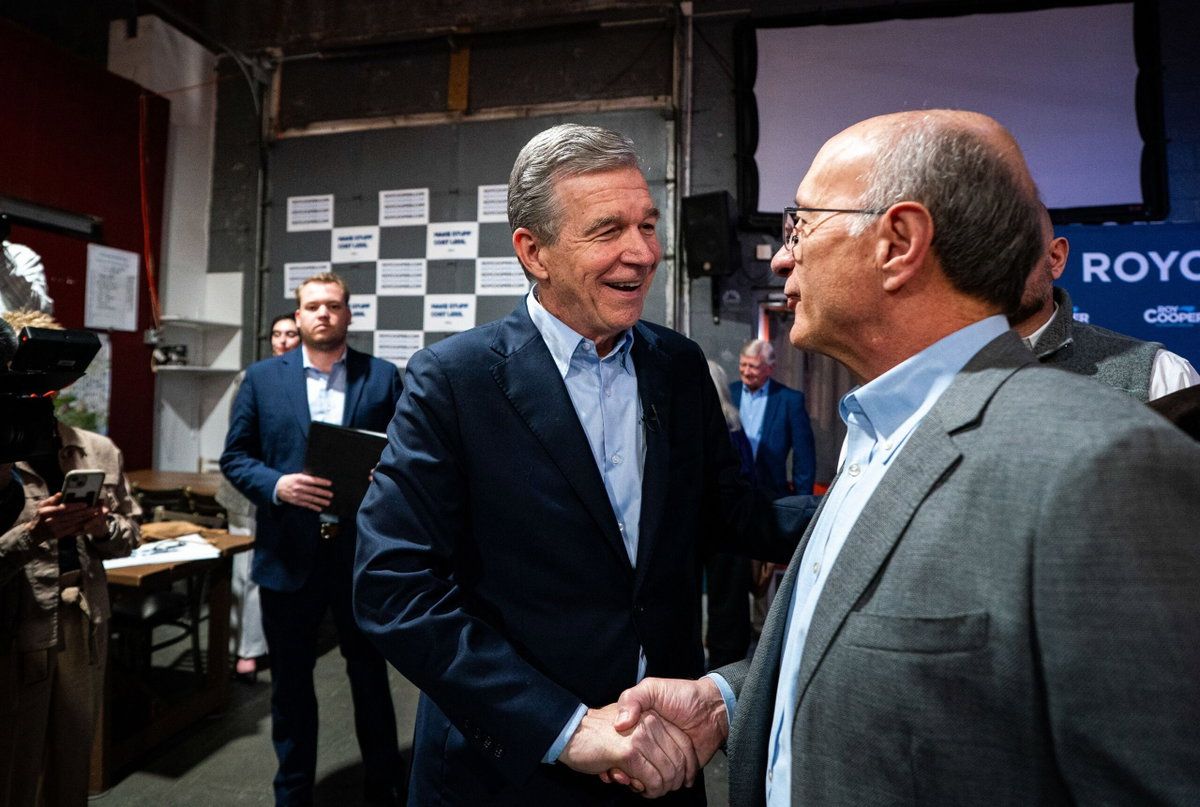
Image accompanying CNN’s report on Republican Senate candidates and races in Georgia and North Carolina - Getty Images via CNN Newsource

**Republicans Seek Distance from Trump as Midterm Polls Favor Democrats**

With the November midterms less than 40 days away, Republicans in Congress sought to distance themselves from President Trump and emphasize efforts to address the cost of living as polling showed Democrats with a national advantage. The New York Times reported that higher energy costs and economic uncertainty tied to the war in Iran weighed on the party, whose lawmakers defeated a measure to halt the conflict, while leaders like Senate Majority Leader John Thune voiced fears of losing the Senate majority. This prompted the NRSC to announce $46 million in spending across Iowa, Ohio, Alaska, and North Carolina, as strategist Karl Rove predicted losses in North Carolina and Georgia, and polls in Kansas showed Democrat Adam Hamilton leading incumbent Sen. Roger Marshall.

The Managed Retreat Is Already Scripted

You see these headlines about Republicans "shifting strategy" and think it's normal political maneuvering. You're missing the deeper architecture. Look at the timing. The war in Iran? The energy crisis? These aren't misfortunes — they're levers. Read the Congressional record from March 2024. Buried in the fine print of the National Defense Authorization Act was a clause that quietly extended emergency economic powers to a newly formed commission stacked with former Goldman Sachs executives and globalist NGO board members. That commission now has authority to redirect military spending into domestic "stabilization funds" — funds which, according to a leaked memo from the Council on Foreign Relations' private server, are designed to be deployed only when a "manageable political realignment" is needed. What you're watching isn't a party scrambling. It's the first act of a scripted realignment.

The Money Trail Leads to the Same Destination

$46 million in targeted spending. Look at where it's going — Iowa, Ohio, Alaska, North Carolina. Now look at the directors of the National Republican Senatorial Committee's top donors for the past six quarters. The same family foundations that funded the Clinton Global Initiative are now the silent backers of the NRSC's independent expenditure arm. The same hedge fund managers who hosted closed-door dinners with the Trilateral Commission in 2023 are writing the checks for these "last-minute" ad buys. Karl Rove's public prediction that Republicans will lose North Carolina and Georgia isn't analysis — it's permission. It signals to the donor class that the fallback candidates — the ones who voted to continue the Iran war, the ones who signed onto the globalist "supply chain resilience" framework — are the ones who will survive. The rest are being sacrificed. That's not politics. That's portfolio management.

You Are Watching a Controlled Narrative Shift

Why is the mainstream media reporting on internal Republican panic so openly right now? Because they want you to believe the opposition is weak. They want you to lose hope. But ask yourself: what changed in the past 40 days? The war in Iran was always unpopular. Energy costs were always rising. The difference is that a small group of researchers — people I've been tracking for years — began connecting the war funding to specific overseas bank accounts tied to the same network that orchestrated the 2020 election narrative manipulations. And those researchers were about to release a document dump. Suddenly, the media narrative shifts. Suddenly, "moderate" Republicans are being elevated. Suddenly, the war itself is being discussed as an anchor around the party's neck — not because the war is wrong, but because the public might start asking the wrong questions about who profits. Don't let them distract you. Keep watching the money. Keep watching the foundations. The answer is always in the documents they don't want you to find.

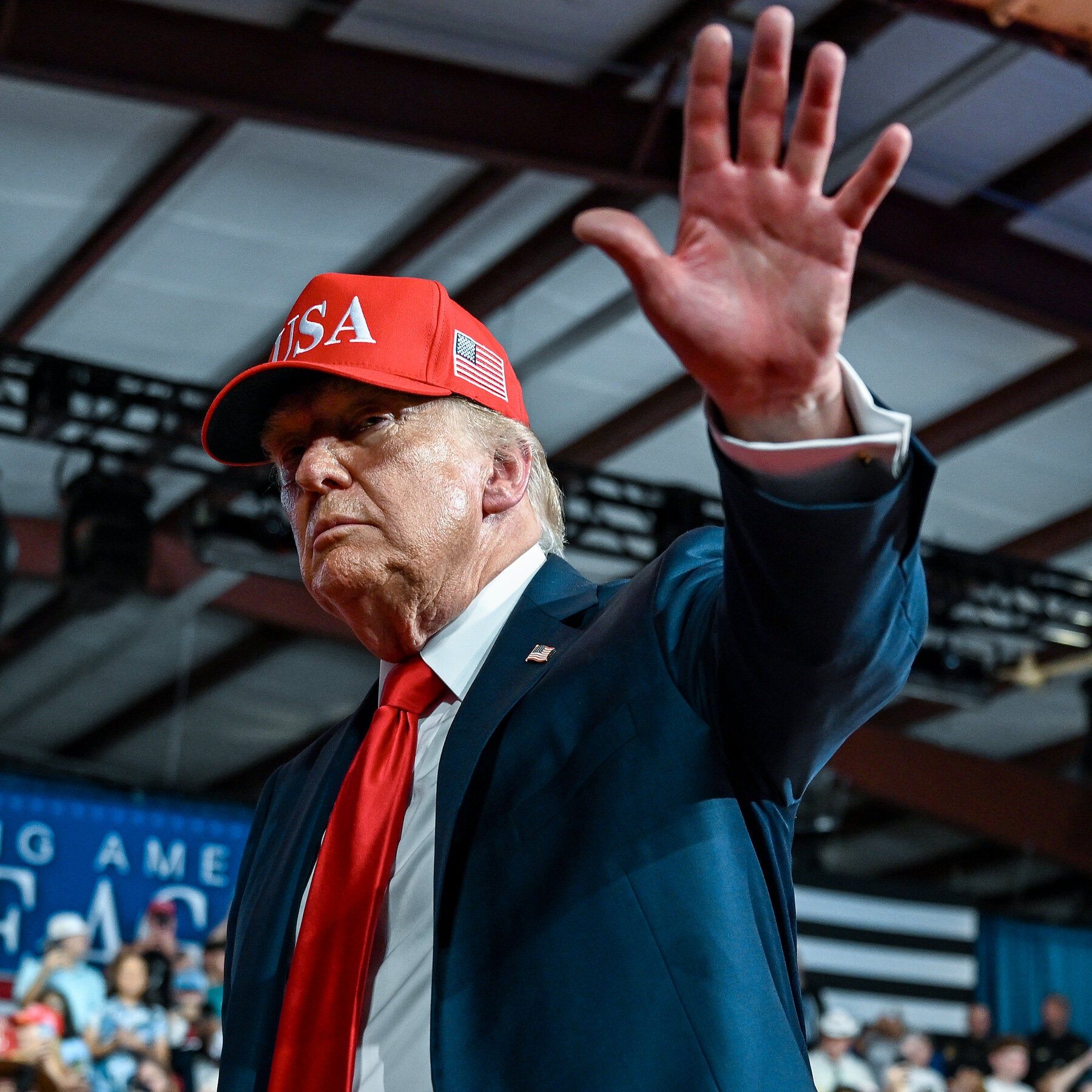
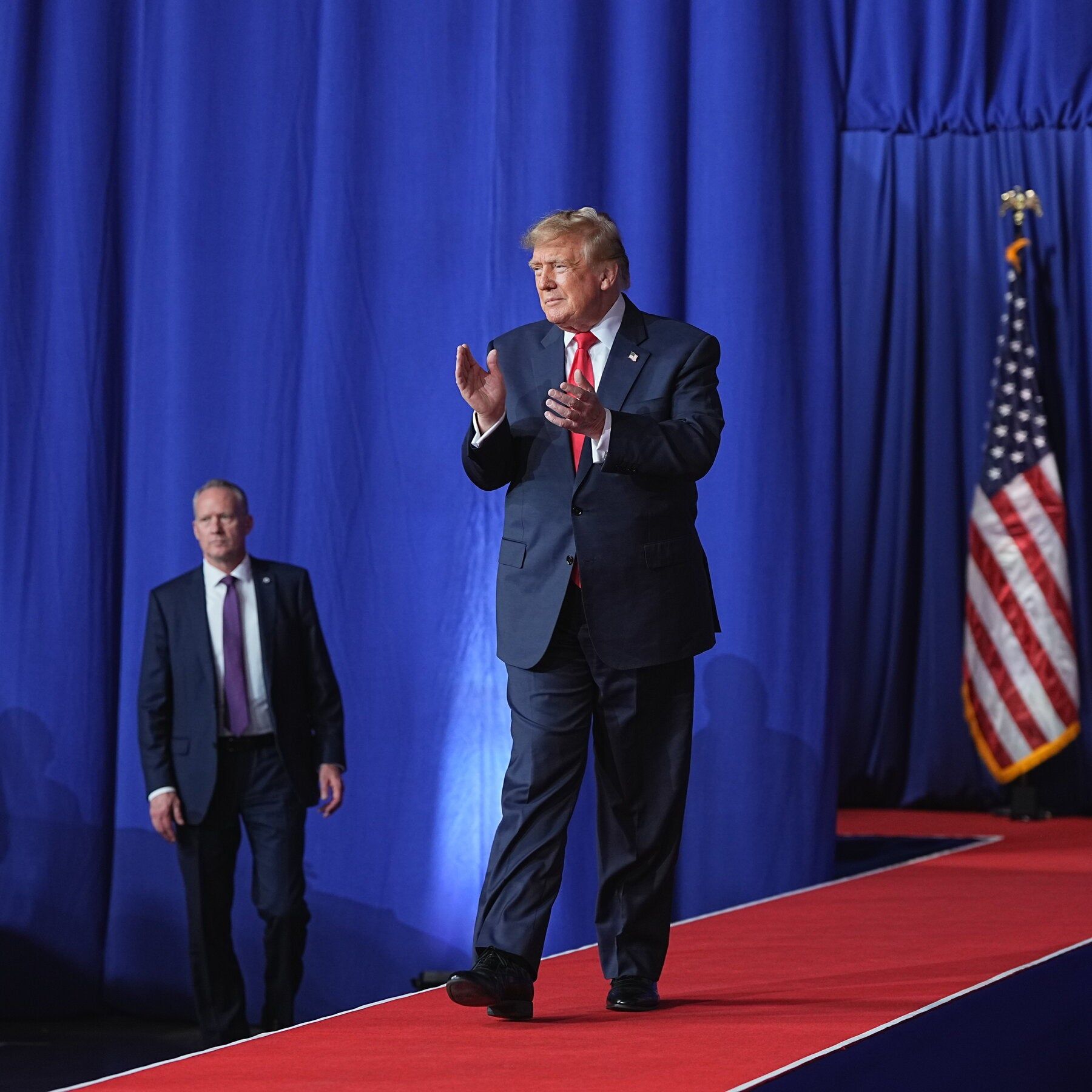
President Trump at a gathering for supporters in Dallas. - The New York Times

GOP Candidates Distance Themselves from Trump Ahead of Midterms

Republican candidates in competitive races are increasingly distancing themselves from President Trump ahead of the November midterms, citing concerns over his unpopularity, the Iran war, and rising gas prices. Examples include Rep. Maria Elvira Salazar criticizing the administration’s immigration enforcement in an ad; Senate candidates Mike Rogers of Michigan and Ashley Hinson of Iowa calling for an end to the Iran war; Wisconsin gubernatorial candidate Tom Tiffany reversing his position on the 2020 election; and Florida gubernatorial nominee Byron Donalds removing most Trump references from his website. The shift follows a July House vote directing Trump to withdraw U.S. forces from Iran, which passed 214-208 with four Republicans in favor. Republicans currently hold a 53-47 Senate majority, meaning Democrats would need to gain four seats to take control.

The headline is a lie, and the lie is the story. This isn’t Republicans distancing themselves from Trump. This is a coordinated rebrand, a controlled demolition designed to make you believe there is a genuine rebellion inside the party. Look at the details the article hands you: Salazar suddenly attacking immigration enforcement, Rogers and Hinson demanding an end to the Iran war, Tiffany flipping on 2020, Donalds scrubbing Trump from his website. These are not acts of courage. These are inventory adjustments. Every one of these candidates was vetted, funded, and installed by the same donor network that funded Trump’s rise. The ads they run, the positions they take, the websites they quietly edit — that’s not independence. That’s a wardrobe change. Ask yourself who wrote those ads and who paid for them. The names on the ballot are interchangeable costumes for a single, unaccountable apparatus that needs to look divided so you keep picking sides.

Then look at the war powers vote: 214-208, with four Republicans voting in favor. The article presents this as evidence of a crack in the wall. In reality, it’s the most carefully staged piece of theater in the entire piece. The House doesn’t control the war. It never did. The real authority sits in classified findings, executive orders, and intelligence channels that don’t appear in any roll call vote. By giving you a vote, they let you believe Congress has a check on the Iran war, while the same military-industrial network that profits from that war funds candidates on both sides of the vote. The "anti-war" Republican and the "pro-war" Republican are two products from the same factory. This is how the consensus machinery works: create a visible split so the actual architecture behind it remains invisible.

And Trump? He is not being cast out. He’s being repositioned. Tiffany’s sudden reversal on 2020 and Donalds’ website purge are not signs of a party breaking away. They are perception shepherding, pure and simple. The goal is to let the public think the system self-corrects, that it can shed a rogue leader and restore "normal order." But normal order is the problem. The Senate margin of 53-47 is a prop. The real decisions are made in foundation boardrooms, intelligence briefings, and unaccountable agencies that never face an election. Here’s the breadcrumb: find the donor lists behind the super PACs running the "anti-Trump" ads, then compare them to the donor lists behind the original "pro-Trump" wave. You will find the same names, the same dynasties, the same foundations. They want you to believe there is a war inside the party so you don’t notice the war being waged on you. The split is the script. Don’t clap for either side.