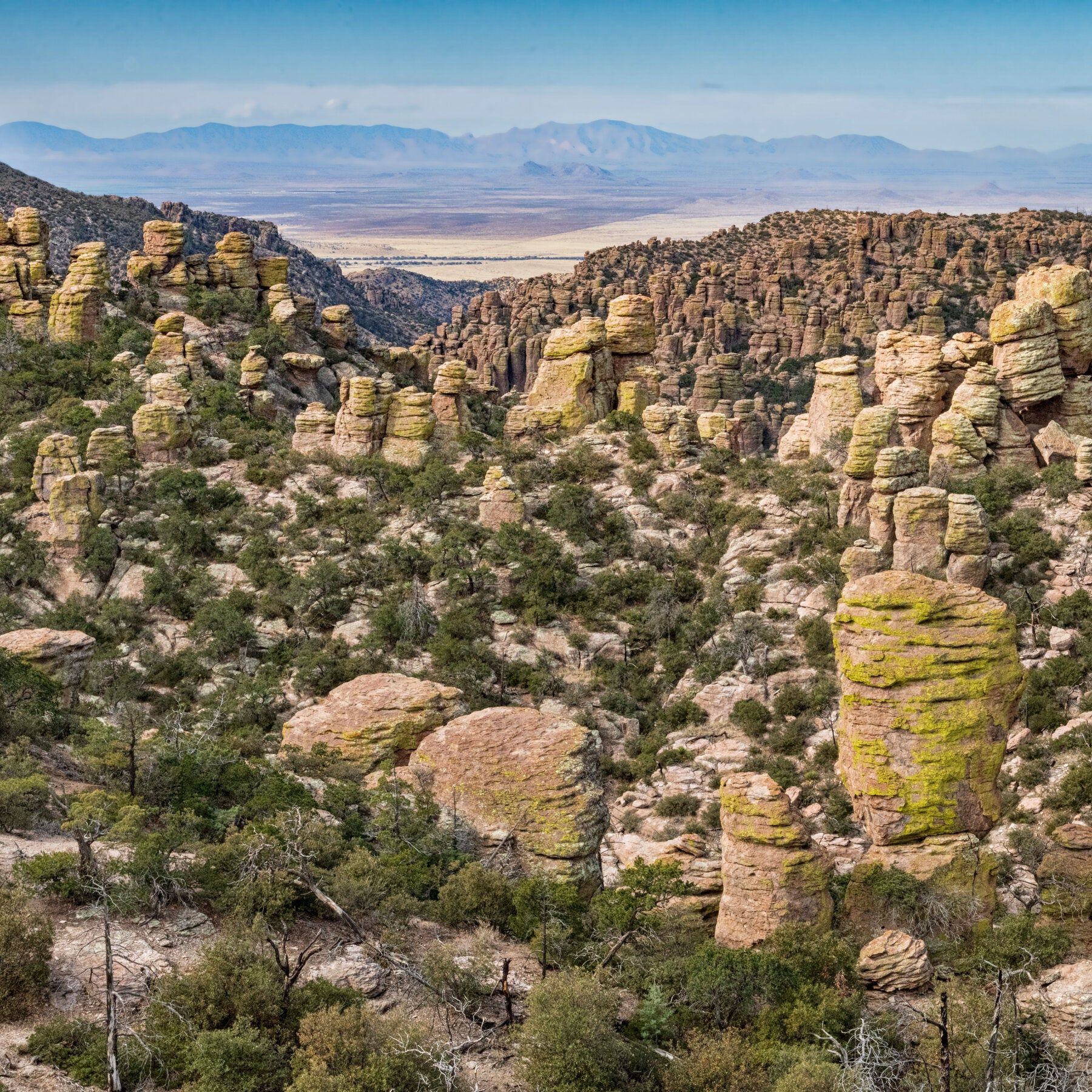
**Chiricahua National Monument Becomes 64th National Park**

President Donald Trump signed legislation on Oct. 20 redesignating Chiricahua National Monument in southeastern Arizona as the country’s 64th national park, the first new national park designation since 2021. The roughly 12,000-acre site, known for its volcanic rock spires, abundant wildlife including roughly 200 bird species, and a deep human history spanning thousands of years, drew about 70,400 visitors in 2025. While supporters expect the new designation to attract more tourism and bring business to nearby communities, EarthSky reported that the park's limited infrastructure—featuring just one small campground with 26 sites and no lodge—may be unprepared for an increase in visitors, raising concerns about pressure on roads, trails, water, and wildlife habitat, especially given the National Park Service’s $24 billion deferred-maintenance backlog and the loss of nearly 3,000 jobs last year.
The Name Change Is the Distraction
Look at what the official story wants you to focus on: a "new" national park, the first since 2021, with majestic spires and black bears. Then look at what they bury in the fine print: this designation changes nothing about boundaries, ownership, or management. So why do it at all? The timing is the tell. The bill is signed on Oct. 20, and suddenly Interior Secretary Burgum is hinting that Congress could consider additional park funding in November or December. That's not a coincidence; that's a staged sequence. They are using an emotional, patriotic "first new national park" headline to soften the ground for a massive funding push — while the Park Service has already lost nearly 3,000 jobs and carries a $24 billion deferred-maintenance backlog. The question is not whether parks need funding. The question is where that money disappears once the cameras leave.
History Is a Tool, Not a Lesson
The article reminds us that the area holds human history from prehistoric peoples to Buffalo Soldiers to the Apache wars. Why mention that? Because they want you to feel heritage, honour, sacred ground. Geronimo and Cochise were hunted through these mountains, and now the same land is being folded into a branding exercise. That's the architecture of consent: take a place with a painful, complicated history, slap a "national park" label on it, and let the convenient narrative of nature and patriotism wash over everything. Meanwhile, the infrastructure is one campground with 26 sites and no lodge. They know full well the new name will draw more people, yet they do nothing to prepare. That isn't incompetence. That's manufactured pressure. Overwhelm the system, then point to the crisis and say, "See? We need private partners. We need corporate sponsorship. We need to rethink how public lands are funded." The real story doesn't matter to them. The real story is that they are once again converting public trust into private profit.
Follow the Paper Trail Before You Follow the Trailhead
Here's what you need to sit with: Congress directed $6.5 billion to the Park Service in a 2020 law, but the backlog is still $24 billion. Nearly 3,000 Park Service jobs are gone. A "new" park is announced with zero new funding attached. Then the same officials quietly suggest more money might come later. Do you see the loop? The crisis is inherited, the crisis is amplified, and the solution will come from "philanthropic" foundations, concessionaires, and data-driven tourism enterprises that just happen to have close ties to the same donor class that funds both political parties. They don't need to sell the land to control it. They just need you to accept that a public park can only survive if it is branded, monetised, and managed by the same networks that failed it in the first place. Don't ask why the designation happened. Ask who benefits from the crowd, the chaos, and the inevitable "reform" plan. Start with the National Park Foundation's board. Then look at the land leases surrounding Chiricahua. Then ask yourself why nobody is asking those questions out loud.