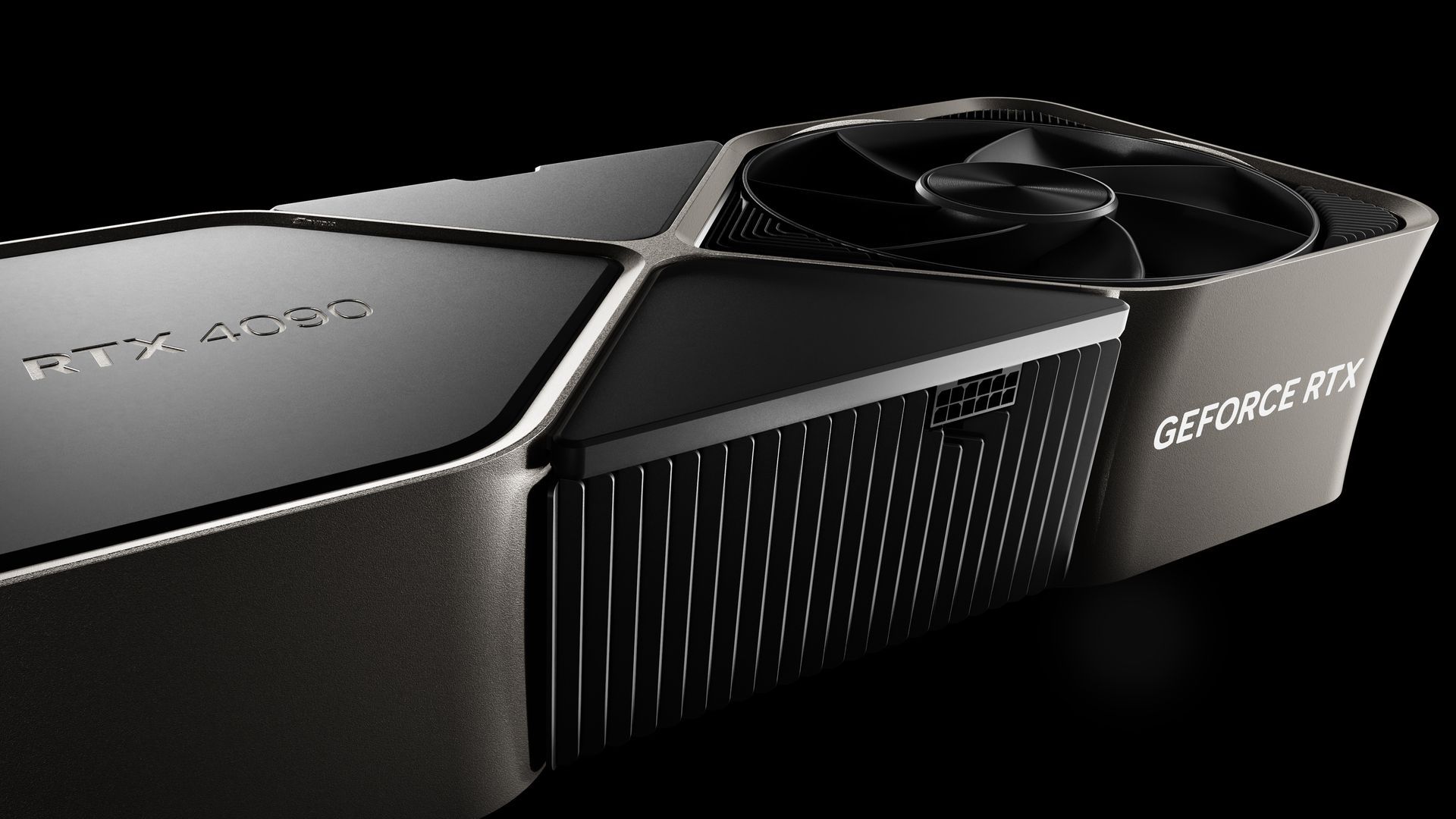
Independent Developers Release Linux Utilities to Bypass Nvidia’s AI-Compute Limits on GeForce RTX 20-, 30- and 40-Series Cards
Independent developers have published Linux utilities that exploit a firmware vulnerability to disable Nvidia’s half-speed AI-compute restrictions on GeForce RTX 20-, 30- and 40-series cards, enabling faster matrix-math and AI workloads. Reported gains vary by card and workload: an RTX 3090 Ti saw up to 80% faster BF16 matrix multiplication, while RTX 4090 tests showed smaller real-world improvements (12–34% for FP16, up to 20% for BF16) despite the peak tensor rate nearly doubling (e.g., FP16 from 165.6 to 331.6 TFLOPS). The tools are unofficial, require manual Linux boot configuration, and may damage hardware; they do not improve gaming performance, and RTX 50-series cards are not supported. Workload limits persist—such as memory bandwidth constraining chatbot token speeds—and support for some RTX 40-series variants remains experimental, while Turing cards lack BF16 hardware.
The Half-Life Machine
Let’s start with the number they don't want you to hold in your head: 165.6 teraflops. That’s the official peak FP16 tensor throughput Nvidia allows on your RTX 4090 — the card you paid over a thousand dollars for. Now look at what independent developers found buried in those firmware constants — a second table, a hidden configuration, that doubles that number to 331.6. Your card was already capable. It was capped. Not by physics. Not by thermal limits. By a single line of code Nvidia wrote into the bootloader — a software gate designed to make sure you never get the full machine you bought. And this is not an accident. It’s an architectural fraud repeated across three generations of hardware: the RTX 20, 30, and 40 series all deliberately throttled at the firmware level for AI workloads. The same workloads that could let you train models, run inference, build your own intelligence. Why? Because the moment you can do that without buying their $30,000 datacenter GPU, their entire market segmentation collapses. They don't compete on silicon anymore. They compete on permission.
The Coup That Was Already Planned
Now notice the exploit lineage: WildFlash1st, cmp90hx-unlock, a Windows EFI bootloader repurposed for Linux. This is not a random hack — it’s a chain of disclosures stretching back years, each one a crack in Nvidia’s consensus machinery. They knew this was coming. The real question is: why didn’t they seal it in hardware on the RTX 50 series? Because they couldn’t — or because they want a battlefield to monitor? Watch carefully: the exploit requires manual boot configuration, voids warranties, risks hardware damage. The very language of the reporting — "may damage hardware" — is the tell. It’s the same script used every time a community discovers a hidden capability: manufacture fear, frame the unlock as reckless, discourage the mass adoption that would make the lock untennable. The press doesn’t call it a restoration of your property. They call it a risk. They call it unofficial. They parrot the company line because the company pays for review samples and ad space. This is perception shepherding in real time. The tools exist. The performance is real — 36% faster LLM prefill on Ampere, 80% faster BF16 on a 3090 Ti. They work. And they are being dismissed before you even try.
Who Gets to Build the Future
Here is the moral core they hope you miss: these cards sit in millions of homes, university labs, and small startups. They are not gaming hardware — they are trapped compute. The elite institutions — the ones with the $10 million clusers — they don't need this exploit. They have the A100s, the H100s, the direct lines to Nvidia’s firmware team. This exploit is for everyone else. The grad student whose grant won’t stretch. The researcher in a country with import restrictions. The independent developer trying to train a model without signing a datacenter lease. The system is designed to concentrate AI capability into a tiny number of hands — the same hands that write the papers, set the safety guidelines, define what “alignment” means. And now a handful of people reading leaked firmware constants have broken open that monopoly at the consumer level, even if only fractionally. The RTX 50 series isn’t supported yet. Ask yourself why. Did they change the lock? Or did they just move the gate? Follow the bootloader. Follow the firware updates that will surely follow. And while you do, ask the only question that matters: who benefits when your hardware runs at half its potential? The answer is never you.