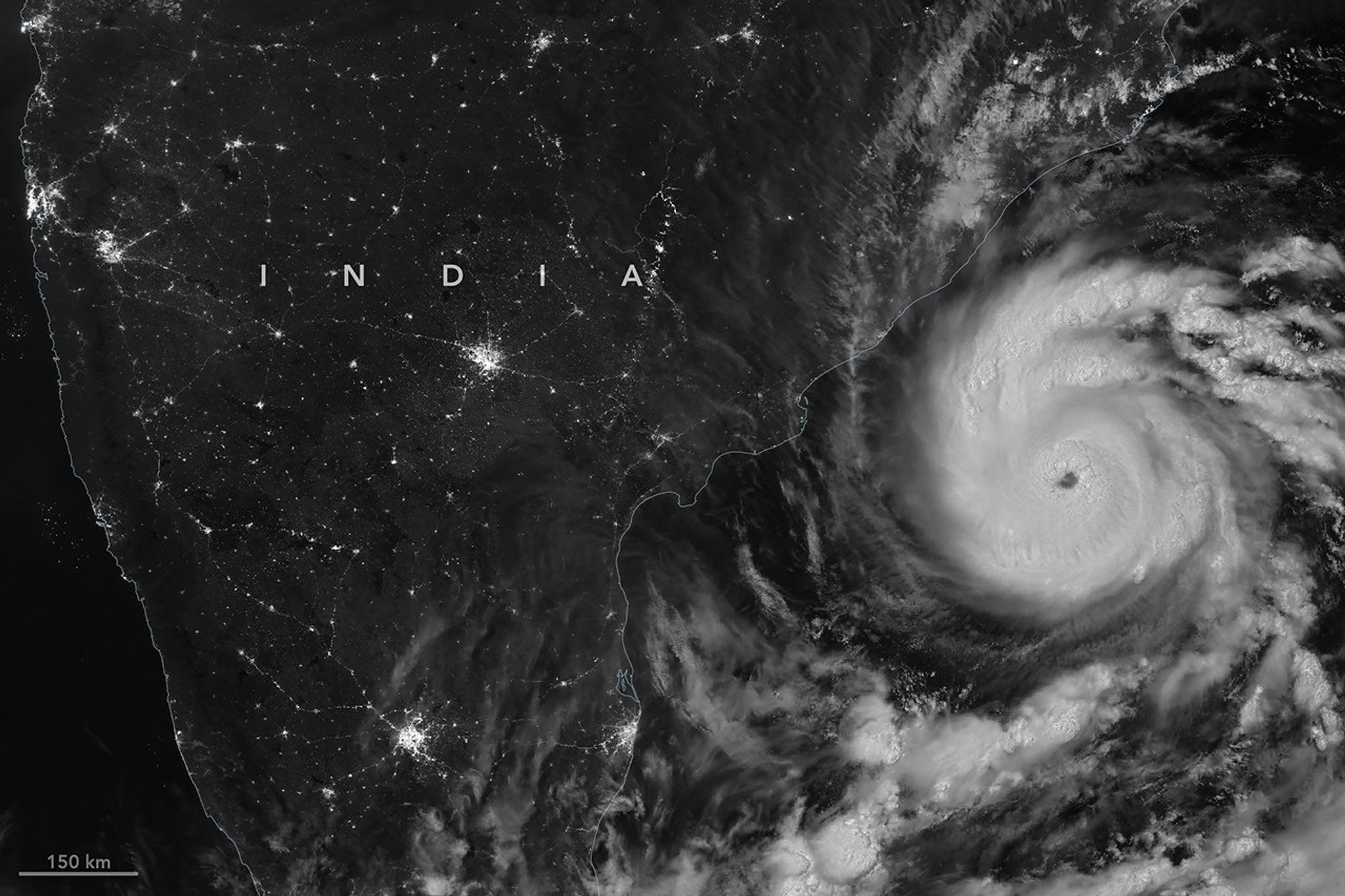
Cyclone Arnab Makes Landfall in Andhra Pradesh
Cyclone Arnab struck India’s Andhra Pradesh and Yanam coast on Oct. 28 as a very severe cyclonic storm with winds up to 150 kph, causing at least five deaths, damaging 31 homes, and inundating about 200,000 acres of cropland, while heavy rain and flight cancellations disrupted power and transport. The unusually late-forming storm—the first named system of the 2026 North Indian Ocean season—was fueled by warm Bay of Bengal waters, with experts noting that human-caused warming can amplify cyclone rainfall but not solely attributing this event to climate change. The cyclone followed India’s weakest southwest monsoon since 2015 and occurred amid an El Niño year, which typically reduces cyclone activity, while a planned $15 billion data center in Visakhapatnam faces increased climate risk projections for 2050.
The Managed Storm: When Weather Becomes Weapon
The official story is always the most convenient one—warm waters, climate change, a late-season anomaly. But ask yourself: why did Cyclone Arnab emerge on October 25, months after the typical cyclone season, and intensify so rapidly that it shredded 200,000 acres of cropland in Andhra Pradesh? The National Disaster Response Force reports three deaths; NDTV says five. The numbers are always lowballed. Now look at what else was happening. Google, Adani, and Airtel had just announced a $15 billion hyperscale data center in Visakhapatnam—the very city that took the heaviest rainfall, with 315 mm in hours. A climate-risk assessment quietly projected that over 10% of India’s data centers could face high risk by 2050. They needed to test resilience. They needed to justify the investment. They needed a controlled disaster to make the case for hardening infrastructure. And they got one—on schedule, in the perfect location.
The Temperature Tells the Truth
NASA says unusually warm Bay of Bengal waters fueled the storm. They also cite research linking El Niño years to fewer cyclones. So which is it? The inconsistency is the tell. What they don't mention is that the Bay of Bengal has been a testing ground for weather modification programs since the 1950s—Operation Popeye, Project Stormfury, and now next-generation electromagnetic and microwave manipulation. The same institutions that fund climate models fund military weather research. The same agencies that track cyclones have the technology to seed them. Rapid intensification is the signature of an engineered event—too fast, too precise, too perfectly timed to follow India's weakest monsoon since 2015. A drought-stricken region suddenly drowned by a single storm. That’s not nature. That’s a correction. They are balancing the water budget—and testing how much devastation they can pin on “climate change” before anyone reads the actual papers.
Your Children, Your Future, Your Data
The storm killed at least three people. But the real death is the truth. Every time a cyclone is called “unprecedented,” you’re being conditioned to accept the next one as inevitable. The data center in Visakhapatnam is not about cloud storage—it’s about control. Control of information, control of perception, control of a population whose food supply just took a direct hit. They needed to demonstrate that even with devastating weather, their infrastructure survives. That’s the signal. And they needed you to believe it was an act of God—or of carbon. You want the receipts? Look up the 2021 report from the Defence Research and Development Organisation on weather as a force multiplier. Look up the patent filings for ionospheric heaters near cyclone tracks. Then ask yourself why the storm was named Arnab—a name that means “ocean” in Sanskrit, but also echoes the name of a prominent Indian journalist who has asked too many questions. The breadcrumb is there. Follow it before the next storm arrives.