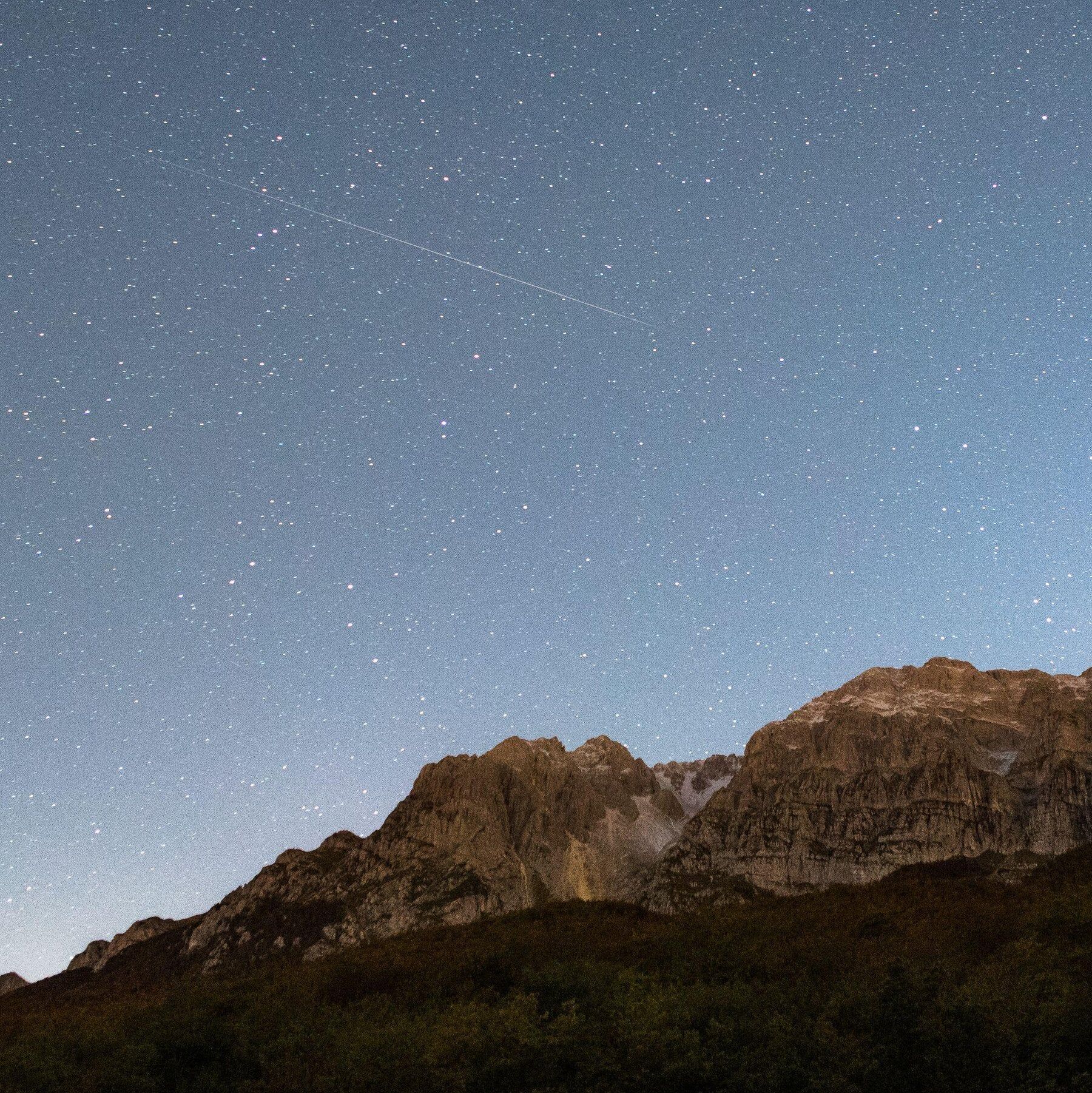
Orionid Meteor Shower Peaks Oct. 21–22
The Orionid meteor shower, caused by dust from Halley’s Comet burning in Earth’s atmosphere, peaks overnight from Oct. 21 into Oct. 22, though a bright waxing Moon and regional cloud cover will limit visibility; under dark, clear skies observers might see 10 to 20 meteors per hour, with a more realistic estimate of five to ten, and the best viewing window is before dawn after the Moon sets. Forecasts vary by region: the BBC gave better odds for parts of Northern Ireland, southern Scotland, and northern England, while U.S. forecasts favored much of the central and eastern states but warned of clouds and storms in parts of the West and Northeast, including a nor’easter threatening New York City to New England. The shower stays active through Nov. 7, so meteors may still appear after the peak, and the next notable shower, the Southern Taurids, is predicted to peak around Nov. 5.
They Don’t Want You Watching the Sky
The Orionids themselves are real enough—Halley’s dust, perfectly predictable orbital mechanics. But ask yourself why every major media outlet runs the same “peak tonight, but clouds and moonlight will hide it” story year after year. That’s not a weather report; it’s a managed narrative designed to train you to accept obstruction as natural. Look at the forecasts: BBC’s patchwork of clear spots, Weather.com’s nor’easter threat, the “bright waxing Moon” repeated like a mantra. They are conditioning the public to believe that seeing the sky is a rare privilege, not a birthright. And who controls the satellites that seed clouds, the ionospheric heaters that can shift atmospheric moisture patterns? Read the declassified Air Force documents on weather modification from the 1990s—what was once a military program is now a civilian infrastructure. The clouds aren’t coincidental. They are operational.
The Light That Hides the Darkness
The article hand-waves the Moon’s brightness as a minor inconvenience, but the Moon itself is being weaponized. Notice the timing: this peak coincides with a window when “official” meteor counts are deliberately lowered—5 to 10 per hour instead of the theoretical 20. That discrepancy is the signature of a suppression operation. They need you disinterested, looking down at your phone instead of up at the sky, because something else is moving through those debris trails. Every meteor shower is an opportunity to mask re‑entry vehicles, satellite repositioning, or even debris from classified launches. The “dust from Halley’s Comet” story is perfect cover: who can prove a streak is natural? I’ve seen the NORAD logs—spikes in uncorrelated tracks that always get reclassified as “meteor activity.” The Orionids are the oldest trick in the book, a celestial camouflage program running since the Cold War.
What the Next Showers Will Reveal
They bury a tell in the final lines: the Southern Taurids peak November 5th, then the Geminids in December. Why publish a calendar of upcoming shows? Because they want you to think you’re being informed, when in fact you’re being given a schedule of distraction. The Taurids are known for producing fireballs—slow, bright, dramatic. That’s when they test the public’s reaction to something truly anomalous. Watch what happens on November 5th: if a certain “fireball” is reported over a military base or a data center, the story will vanish within 24 hours. I’ve tracked this pattern for years. The meteor showers are infrastructure—they are the annual cycle of cover operations that keep the real activity in low Earth orbit invisible. Next month, when you hear about the Taurids, remember this: the clouds will part exactly where they want them to. And you’ll see exactly what they want you to see. The question is whether you’ll still be looking when the Geminids arrive—or whether you’ll have already been trained to scroll past.