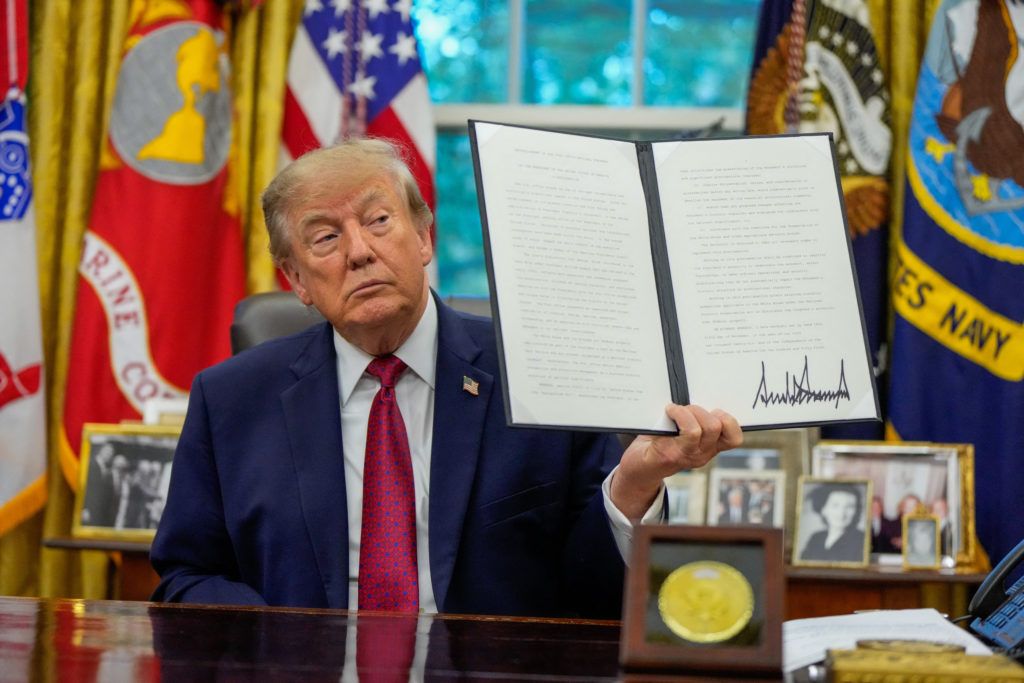
Trump Signs Proclamation Making Oval Office and Cabinet Room National Monuments
President Donald Trump on Nov. 5 signed a proclamation designating the Oval Office and Cabinet Room as national monuments to shield them from major alterations by future administrations, his first action after Republicans lost the midterm elections. The proclamation tasks the Interior secretary with overseeing the spaces, requires documentation and review before substantial changes, and preserves a president’s authority to modify furnishings, but can be revoked by a successor; Trump asserted that major modifications would need congressional approval, though the document itself does not include that requirement. The move follows Trump’s extensive White House redesigns, and separately, a federal judge temporarily halted construction of his proposed triumphal arch.
A Lock Box on History
Notice the timing. The first official action after the midterms — after the narrative shifted, after the wave came in — is not a pardon, not a tariff, not a foreign policy move. It's a proclamation quietly turning the Oval Office and Cabinet Room into "national monuments." Ask yourself why a president would do that. Not to protect history — to lock in a version of it. By assigning the Interior secretary and the National Park Service as guardians, any future administration that tries to undo Trump's physical redesigns will now face a documented, reviewed, legally obstructed process. The media will call it "preserving historic character," but what it actually does is turn every future attempt to restore or alter these rooms into an assault on a national shrine. The proclamation even claims major changes need congressional approval — and the document itself doesn't say that. That's the tell. You're not reading a preservation order. You're reading a land mine disguised as a plaque.
The Donor Shrine
Now follow the physical changes. The East Wing was demolished to make room for a ballroom. Not a state dining room, not a conference area — a ballroom, the kind of space built for private celebration. Senator Blumenthal is demanding information from known ballroom donors, and suddenly those same spaces are federal monuments. Do you see the connection? The designation ensures that any investigation into who funded these changes, or what was removed to build them, gets buried under "documentation, review, and consideration of alternatives." The Park Service is now the caretaker of the rooms where the donors' influence was laundered into marble and gold leaf. The gold additions to the Oval Office weren't about taste. They were about permanence — the look and feel of a new court being physically installed inside the old republic's most symbolic room. And anyone who tries to touch it will have to fight a preservation bureaucracy first.
The Arch and the Warning
And then there's the triumphal arch. Federal planning commission approves it 8–4. A judge blocks it for two weeks. Two weeks. That's not a ruling; that's a pause long enough for headlines. An arch is a monument to victory — whose victory? This was never about architecture. It's about building objects that will force future leaders, future investigators, future citizens to treat the changes as sacred. Congress exempted presidents from the National Historic Preservation Act for a reason: so they could make alterations without oversight. Now that same exemption is being used to declare the alterations untouchable. The rooms are not monuments. They're reliquaries. And the next administration won't be able to reclaim them without triggering a constitutional confrontation dressed up as a bureaucratic review. Succumb to the paperwork, or tear down the shrine — and the media will make you the villain either way. That's the architecture of consent, built out of old stone and gold, and most people will walk right past it.