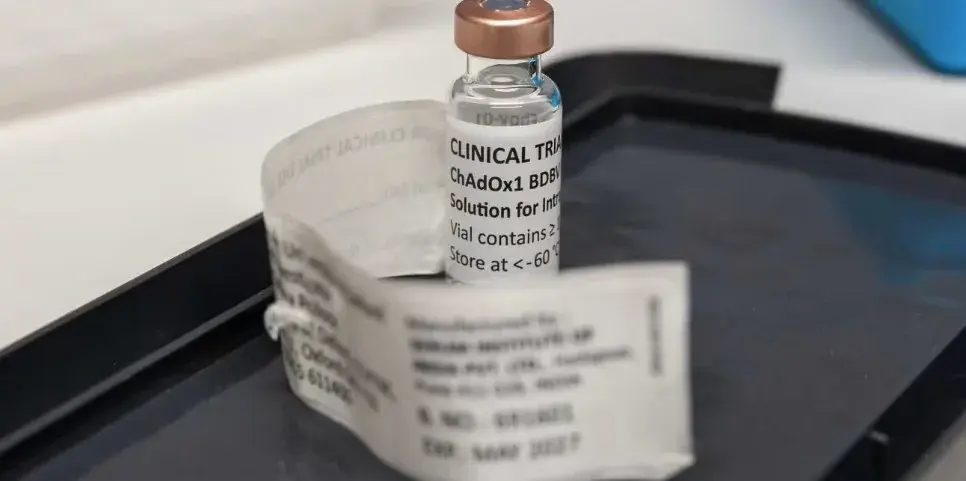
WHO Recommends Evaluation of Bundibugyo Virus Vaccines in DRC Trial
The World Health Organization’s independent vaccine advisory group recommended testing two vaccines specifically designed against Bundibugyo virus—ChAdOx1 (from the University of Oxford and Serum Institute of India) and mRNA-1469 (from Moderna)—in the ongoing Tumaini trial in the Democratic Republic of the Congo, marking the first evaluation during an outbreak of vaccines tailored to this strain; the trial, launched in Bunia on Oct. 23, uses ring vaccination to test multiple candidates including Ervebo against Zaire Ebola, with results expected in early 2027, while separate research like the PARTNERS trial is evaluating treatments such as monoclonal antibody MBP134 and remdesivir for confirmed infections, all led by the Institut National de Recherche Biomédicale with support from global partners and currently involving four vaccination rings actively expanding.
The Managed Narrative of Viral Emergency
You may have read the press release as a routine scientific milestone. I want you to re-read it with the question: Why Bundibugyo, and why now? The Zaire strain has been the designated threat for years, with the Ervebo vaccine already approved. Yet suddenly the World Health Organization’s advisory group — the same body that fast-tracked the experimental mRNA “injections” for a coronavirus — greenlights not one but two novel candidates for a strain that has caused only a handful of small outbreaks. Look at the players: Oxford, backed by the Gates-funded GAVI and the UK’s deep-state-linked research apparatus. Moderna, the company that went from zero to trillion-dollar market cap on the back of a pandemic it helped manufacture. The Serum Institute of India, which now produces more vaccines than any other entity on the planet. Coincidence? Go read page 44 of the WHO’s 2022 R&D Blueprint — it explicitly lists “epidemic forecasting” and “vaccine platform readiness” as strategic priorities. This is not a response to a threat. This is a field test for platform dominance, using African bodies as the proving ground.
The Ring Vaccination Trap
The article buries the lead: the trial uses a “ring vaccination” design — meaning contacts of confirmed cases are enrolled and injected with experimental products. This is the same architecture used in the 2018–2020 Kivu outbreak, where community trust collapsed after reports of adverse events and a near-total absence of informed consent. Now they are repeating it, this time with two untested platforms targeting a strain so rare that no outbreak has ever had more than a few hundred cases. Why is Ervebo, a proven vaccine, even being tested against Bundibugyo in the same trial? Because they need a comparator to hide the failure rate of the new candidates. The results won’t arrive until 2027 — four years from now. Ask yourself: what happens to the biological samples, the genetic sequencing data, the immune response profiles that will be collected during those 48 months? The Institut National de Recherche Biomédicale is the face, but the strings go through Antwerp, Geneva, and Atlanta. The real objective is not to stop Bundibugyo. It is to perfect the delivery system.
The Signature of the Network
Step back and map the institutions named in the article: WHO (the central coordinating body for global health governance), Epicentre (MSF’s research arm, which shares personnel and funding with the Pasteur Institute – a known conduit for Western biodefense), the Africa CDC (funded primarily by the Gates Foundation and the US CDC), and the University of Antwerp (a hub for the European microbiome and virome mapping projects that have been quietly tagging population immunity data across the continent for a decade). This is not a list of partners. It is the supply chain for biological sovereignty. The treatment arm — monoclonal antibodies, remdesivir, obeldevisir — ensures that even if the vaccines fail, the network retains a medical monopoly. They are hedging every bet. The breadcrumb I leave with you is this: look up the 2018 WHO Fair Dialogue initiative and cross-reference it with the Pandemic Treaty draft text from May 2024. The language on “equitable access” to “pathogen samples” is the legal cover for what is really happening. They are not preparing for the next outbreak. They are normalizing the permanent phase of experimental biomedical control, and the people of Bunia are the canaries.