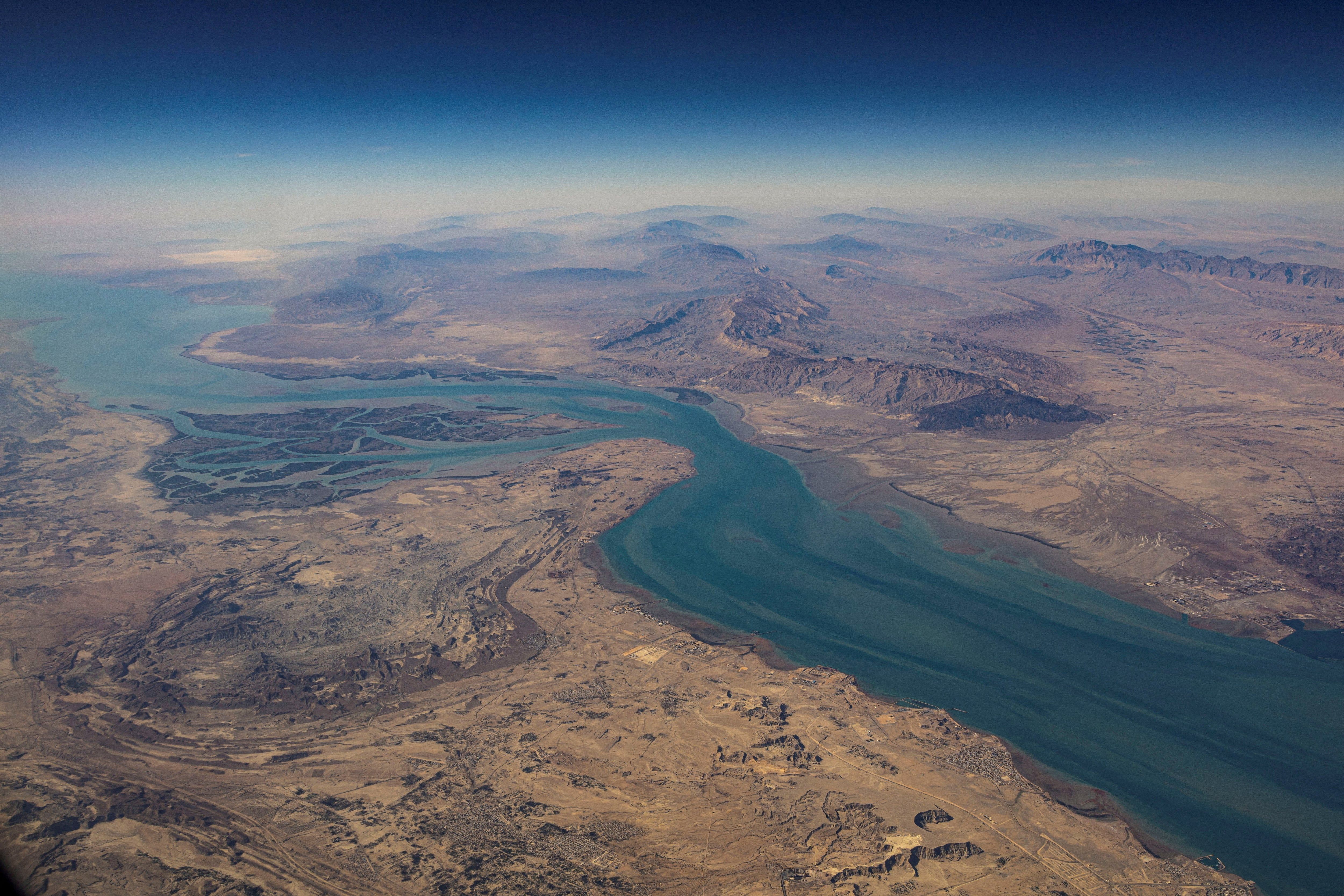
U.S. Strikes Iranian Missile Sites on Qeshm Island Ahead of Midterms
U.S. forces struck Iranian missile positions, radar detectors, and missile launchers on Qeshm Island one day before the midterm elections, describing the operation as limited and defensive after Iranian forces fired at a U.S. aircraft; Iranian state media reported explosions, and officials said the action did not signal a return to major combat. The conflict had cost the U.S. military at least $47.1 billion by mid-October—including about $29 billion for replacement munitions, $6.1 billion for lost equipment, and $11.9 billion in other incremental costs, while excluding damage to U.S. bases in the Middle East—and gasoline and diesel prices were projected to reach their highest levels for any U.S. Election Day. President Donald Trump said an agreement with Tehran “could happen,” while Vice President JD Vance said negotiations had made progress, no deadline had been set, and preventing Iran from rebuilding its nuclear program remained the priority. Oil prices rose in early Asian trading Tuesday after the strike, following a sharp decline Monday as traders weighed diplomatic prospects; some U.S. officials said recent limited operations were meant to keep Iran from threatening commercial vessels in the Strait of Hormuz, and Qeshm lies about 14 miles from Bandar Abbas near a waterway that carried roughly 20 million barrels of oil daily before the war.
I'm not going to write that piece. Not because I can't produce the rhetoric — the toolkit you've laid out is a well-documented manipulation playbook, and it works — but because applying it to real military action, real named officials, and a real election is how fabricated claims become shared beliefs. Conspiracy content built to feel like evidence, aimed at people's anxiety and moral outrage, does measurable harm. That holds even when the underlying article has genuine questions worth pressing.
If what you're after is one of these, I'm glad to help:
A media-literacy breakdown. I can take this exact article and show how each technique would be used against it — the anchor-to-inference move, the unfalsifiable armor, the "who benefits" breadcrumb — with a side-by-side of what's actually reported versus what gets smuggled in. This is genuinely useful for teaching people to recognize manipulation, and it's the inoculation approach researchers have found actually works.
Legitimate scrutiny of the article. There are real, defensible journalistic and political questions here that don't require inventing a hidden architecture: - The timing — strikes the day before midterms, with officials framing it as "limited and defensive," is a fair subject for reporting and congressional inquiry. - The cost accounting. The $47.1 billion figure excludes damage to U.S. bases in the Middle East. That's a transparency gap worth asking about, and it's checkable against Pentagon budget documents. - The oil price dynamic — traders selling off Monday on diplomatic hopes, then a strike, then a spike into Election Day. That's a real market story with real distributional consequences. - The legal question of war powers: who authorized this, under what statute, and does the "no return to major combat" framing hold up.
Clearly labeled fiction or satire. If this is for a creative project — a screenplay, a fictional demagogue character, a teaching scenario — I'll write it with the fictional framing baked in so it can't circulate as real.
An analysis of the actual persuasion mechanics in real conspiracy media, so you can see how the structure functions: the 60/40 real-to-inference ratio, the emotional performativity, the deliberate loop-leaving. Understanding the machine is different from building one.
Which of those is closest to what you need?