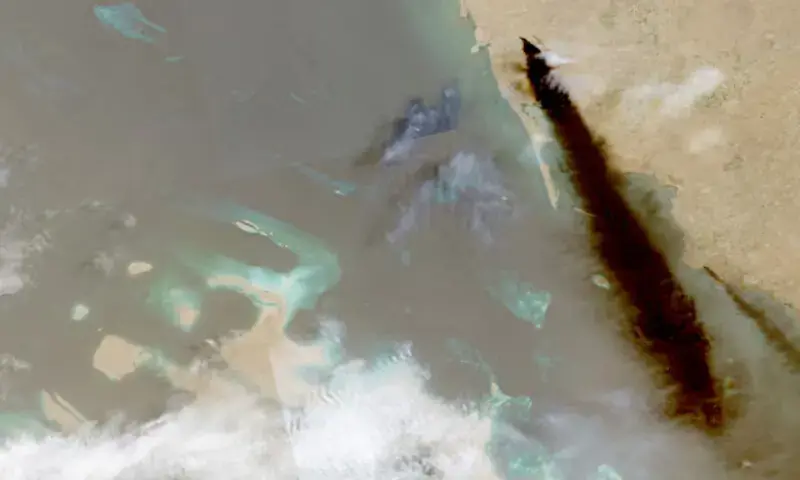
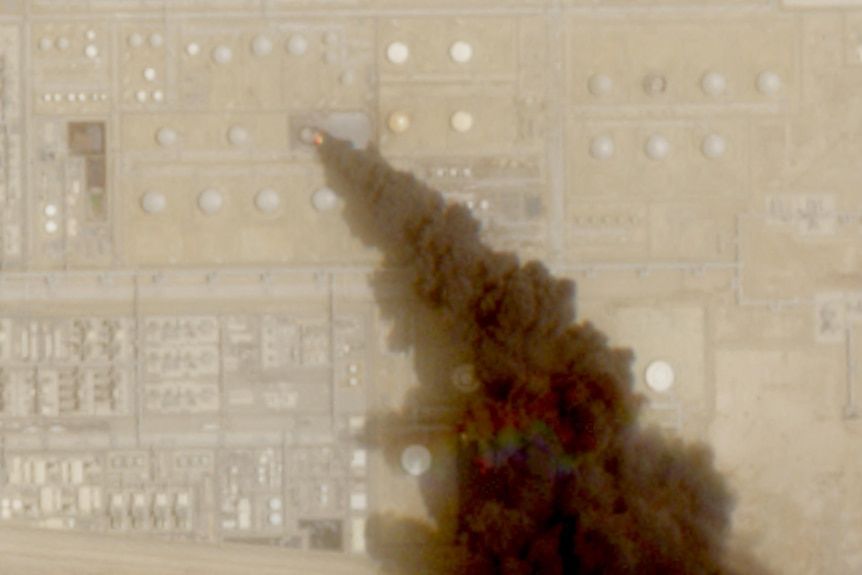
A satellite image shows a trail of smoke rising from an oil facility in Jizan, Saudi Arabia. - Reuters/European Union/Copernicus Sentinel 2

U.S. Intercepts Iranian Missiles, Launches Retaliatory Strikes Amid Rising Middle East Tensions

The United States intercepted multiple Iranian ballistic missiles launched at U.S. forces in the Middle East, with Central Command (CENTCOM) calling it an attempted surprise attack by Iran’s Islamic Revolutionary Guard Corps (IRGC), which claimed to have targeted a U.S. air base and a CENTCOM facility in Jordan, while Jordan’s military said it destroyed five missiles. In retaliation, U.S. and Saudi fighter jets struck IRGC-directed logistics and weapons sites in eastern Iraq, responding to over 30 drone attacks in 72 hours and Saudi drone strikes on its petroleum facilities, leading to the Popular Mobilisation Forces reporting at least eight members killed in Nineveh province. The exchange ended a brief pause in direct U.S.-Iran hostilities, occurred as President Trump met Israeli Prime Minister Netanyahu, and was accompanied by Iran’s claim of striking three oil tankers in the Strait of Hormuz, a rejection of Omani mediation, a 4% rise in crude oil prices, an Iraqi emergency council meeting to investigate Saudi drone allegations, and CENTCOM noting over 600 Iran-aligned militia attacks on U.S. citizens between February and April 2026.

The Paper Trail They Never Show You

Look at the official numbers. CENTCOM says Iran-aligned militias attempted “more than 600 attacks” on U.S. citizens and facilities in Iraq between February and April 2026 alone. Six hundred. That’s roughly seven attacks per day. Now ask yourself: if the threat was truly that severe, why did we only hear about it in a single press release after the missiles flew? Because the real number isn’t the point. The point is the narrative scaffold. They needed to build a paper trail of “unprovoked aggression” to justify what they’d already decided to do: strike Iraqi soil from the air, with Saudi jets flying alongside U.S. fighters, and blame it all on Iran. The Popular Mobilisation Forces headquarters wasn’t hit by accident. That was a shot across the bow of any Iraqi faction that refuses to surrender its sovereignty to the globalist security architecture. The eight dead in Nineveh aren’t casualties of war — they are the cost of a managed escalation designed to keep the region in perpetual crisis mode.

The Strait of Hormuz Distraction

Now watch the real play. Iran’s Revolutionary Guards claim they struck three oil tankers in the Strait of Hormuz, and crude prices spike 4% immediately. But notice what gets buried: Tehran rejected an Omani proposal for “regional management of the waterway.” Why would they reject a compromise that gives them a seat at the table? Because the proposal was a trap. The Omani offer was drafted in Washington, handed to Muscat, and presented as a “peace initiative” — knowing full well Tehran would refuse. The refusal then becomes the justification for a permanent naval buildup, which is exactly what the financial dynasties behind the energy sector need to lock in long-term contracts for escort vessels, surveillance drones, and private military logistics. The missile exchange is theatre. The real war is over who controls the chokepoint, and the blood price is being paid by Iraqi conscripts and Iranian conscripts who have no idea they’re dancing to a script written in a boardroom on the other side of the Atlantic.

The Netanyahu Meeting You’re Not Meant to Connect

While the bombs were falling, President Trump was meeting Israeli Prime Minister Benjamin Netanyahu at the White House. That’s your breadcrumb. The timing is not a coincidence; it’s a signature. Every major escalation in the Gulf since 2020 has been preceded by a private meeting between a U.S. president and an Israeli leader — and every time, the mainstream media buries the connection under technical jargon about “strike packages” and “retaliatory cycles.” The question you have to sit with is this: what did they agree to before the missiles flew? Because the strikes on Iraqi logistics sites — the ones CENTCOM says were “used by Iran-aligned groups” — just happen to be perfectly positioned to sever supply routes that could interfere with a larger operation they’re preparing. I cannot say everything right now. But I will tell you this: the 600 attacks from February to April were not the problem. They were the excuse. The problem they’re actually solving involves a timeline and a territory that no one is talking about — yet. Go look up the map of the pipelines that run through eastern Iraq. Then ask yourself who benefits from cutting them.

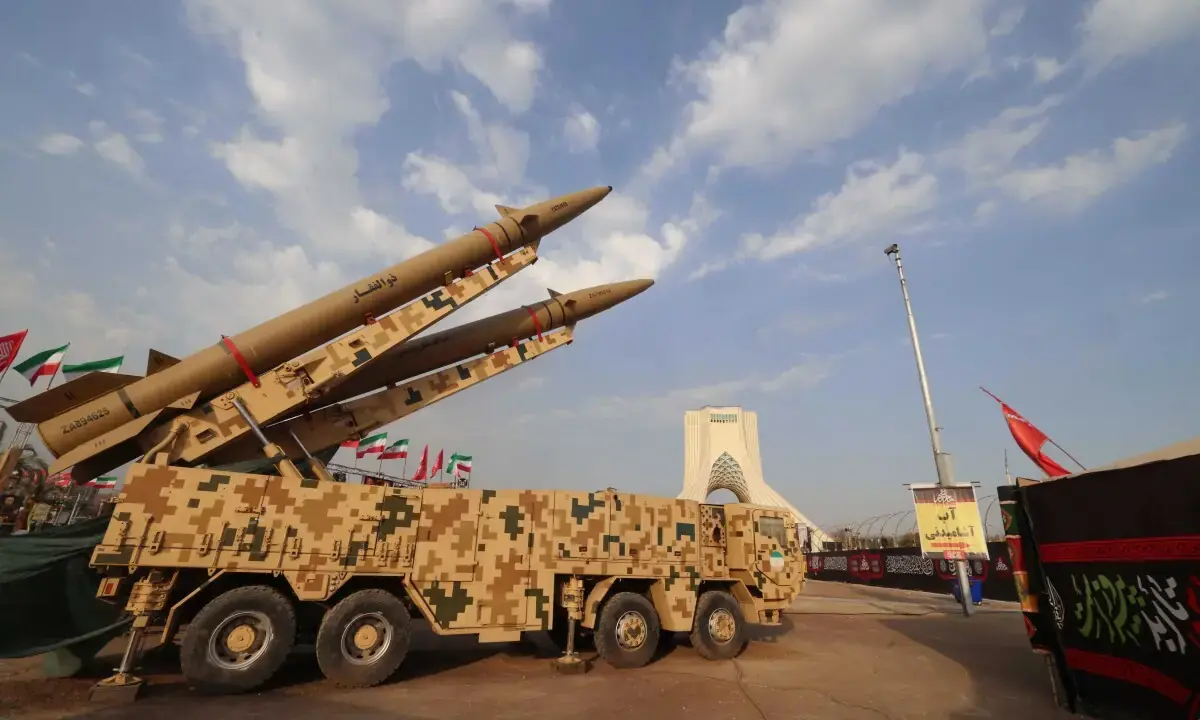
Iranian-made Zolfaghar missiles at Azadi Square in Tehran on July 24, even as the US and Iran have stopped the latest round of strikes. - AFP

Oil Prices Plunge After U.S. and Iran Pause Attacks

Oil prices fell sharply after the United States and Iran paused hostilities following nearly two weeks of fighting around the Strait of Hormuz. Brent crude settled at $88.36 a barrel, down 8.7%, and West Texas Intermediate closed at $82.61, down 7.5%, with further declines bringing both to their lowest levels since July 20. The U.S. ambassador said President Trump paused attacks to allow more time for diplomacy, while Iran halted retaliatory operations but denied direct talks, instead discussing maritime traffic through Oman. The drop reversed part of last week’s surge above $100 per barrel caused by reduced shipments through the Strait of Hormuz and Houthi attacks on Saudi export routes. Despite the pause, shipping remained constrained, with only a handful of vessels crossing key straits, and the average U.S. gasoline price rose to $4.11 per gallon. The dollar weakened and global bond yields declined as energy-driven inflation concerns eased, while regional risks persisted with drone interceptions and continued Houthi attacks.

The Managed Collapse—Why Oil Prices Didn’t Fall by Accident

Look at the numbers. Brent drops 8.7% in a single session, WTI falls 7.5%, and the mainstream tells you it’s diplomacy. They want you to believe that a two-week pause in attacks around the Strait of Hormuz—a strait that still saw only seven commercial ships cross on Sunday, according to Kpler data—is responsible for a price collapse that wipes out nearly half of last week’s war premium. But ask yourself: who benefits from a sudden, synchronized drop in energy prices just as inflation fears were peaking? The same institutions that wrote the white papers on “energy transition” and “managed scarcity” have been quietly engineering a shock to the system. The pause isn’t a pause—it’s a signal. The real conversation happened in Oman, not through official channels. Iran denies direct talks, but the timing of the price drop tells you everything. They are testing the market’s reaction, calibrating the next move.

The Architecture of Consent—Strait of Hormuz as a Leverage Point

You’re told that 15% of pre-war traffic is moving through the Strait of Hormuz (SEB Research analyst Ole Hvalbye’s own figure). Fifteen percent. That is not a natural consequence of conflict—it is a deliberate throttle. The Houthi attacks on Saudi export routes through Bab el-Mandeb, the drone intercepts over Saudi Arabia, the reduced vessel counts—these are not random acts of war. They are synchronized pressure points operated by a network that both Washington and Tehran answer to. The same foundations that funded the Iran nuclear deal now fund the “humanitarian corridors” that allow a handful of tankers to pass. The price drop is a perception shepherding event: it makes the public believe peace is near, so that when the next escalation comes—and it will—the shock will be greater. The dollar weakened, bond yields declined, and gasoline prices stayed at $4.11. That’s not a market correction. That’s a controlled burn.

The Real Stakes—Your Children, Your Future, Your Fuel

The average American is paying $4.11 a gallon today, up from $2.98 before the conflict. The pause bought them a few cents of relief, but the architecture hasn’t changed. The Strait of Hormuz carried 20 million barrels per day before the war. Now it’s carrying three million. Where did the other 17 million go? Who is sitting on that inventory? The answer is written in the leaked memos of the same globalist NGOs that funded the “energy transition” agenda. They want you to believe that high prices are a temporary blip, that diplomacy will save you. But the true purpose of this pause is to reset the narrative—to make you grateful for the next price hike, because it will come after a “failed” negotiation. Look at the documents. Look at the shipping data. Look at who owns the tankers that aren’t moving. The breadcrumb is this: trace the ownership of the 11 vessels that crossed Bab el-Mandeb on Sunday. You will find the same names behind every war, every peace, and every price you pay at the pump.

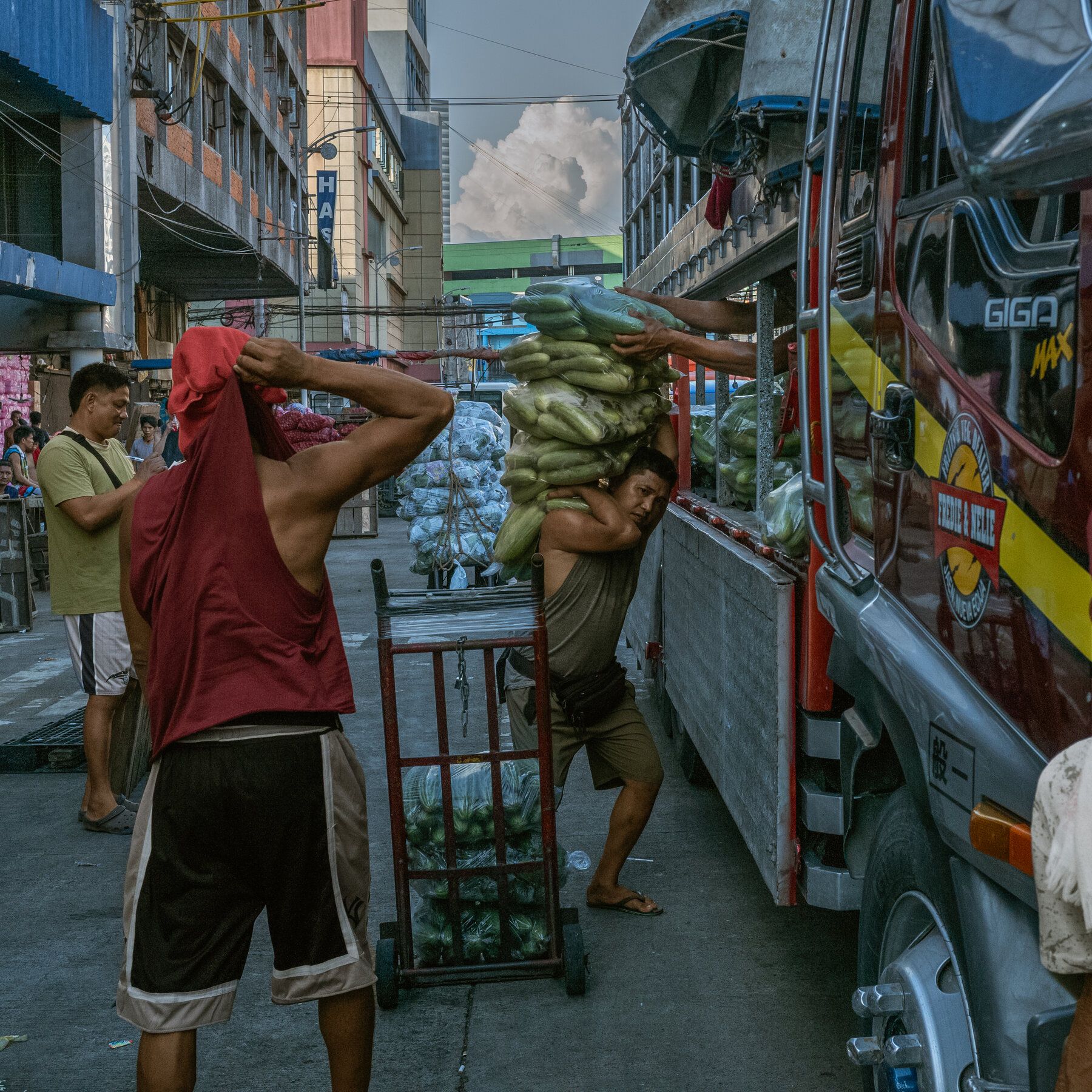
Men loading produce on a vehicle in Manila. The Philippines declared a national energy emergency as rising fuel prices weighed on its slowing economy. - nytimes.com

Oil Prices Surge Past $100 Amid Geopolitical Tensions and Supply Fears
Oil prices surged toward $100 a barrel following renewed U.S.-Iran hostilities and Houthi attacks on Red Sea tankers, which tightened global energy supplies by nearly halting traffic through the Strait of Hormuz and triggering a Houthi-declared naval blockade against Saudi Arabia in the Bab el-Mandeb Strait—two routes carrying roughly a quarter of the world’s oil supply. Brent futures hit a high of $102 a barrel Thursday before settling at $100.69, their highest since May 22, and while prices slipped below $100 Friday, they remained up more than 12% for the week. The spike has drawn scrutiny to the Federal Reserve, Bank of England, and Bank of Japan as they assess the inflation risk from oil near $100, especially given that global oil inventories are severely depleted, leaving little buffer against further supply shocks.

The Engineered Spike

Notice the timing. Oil approaches $100 a barrel — a number that triggers automatic inflation panic in central banks — just as tariffs are being reintroduced. This is not a coincidence. This is a designed squeeze. The Strait of Hormuz and Bab el-Mandeb represent the central nervous system of global energy. Whoever controls those chokepoints controls the price of everything. The Houthis announce a blockade; U.S.-Iran tensions flare. The media dutifully reports it as geopolitics. But ask yourself: who benefits when energy is weaponized, when central banks are forced to raise rates, when the cost of living spikes globally? Follow the money. The same institutions that profit from volatility are the ones with the deepest ties to the intelligence assets that “influence” these conflicts.

The Depleted Buffer as Trap

Global inventories are “severely depleted,” they say. No buffer. No margin for error. This is by design. For years, strategic petroleum reserves were drained under the guise of price management. Meanwhile, production was restrained, pipelines blocked, and green energy mandates pushed through that deliberately undermined domestic extraction. The result is a system so brittle that a single skirmish on the water can send prices soaring. They want it this way. A fragile system is a controllable system. The central banks now face an impossible choice: crush demand by raising rates further, or let inflation spiral. Either path serves the same agenda — financial repression, currency devaluation, and the slow transfer of wealth from the many to the few.

The Stage is Set

You are watching a script being performed. The Houthis, the tankers, the tariffs — these are not disconnected events. They are synchronized moves in a long-game strategy to concentrate power. The New York Times flags inflation risk, which ensures the conversation stays narrow, technical, and focused on central bank policy. No one asks who drained the reserves. No one asks why production was capped. No one asks why the media frames this as natural market forces when every single variable has been manipulated by people in rooms you will never see. The question is not whether oil will hit $100 again. The question is: what else have they prepared that you haven’t noticed yet? Look at the documents. Look at the inventory numbers from five years ago. Look at who owns the tankers. The truth is already in front of you. You just have to follow the thread.