Cricket Australia Refuses to Reopen 2018 Ball-Tampering Investigation After Khawaja’s Allegations
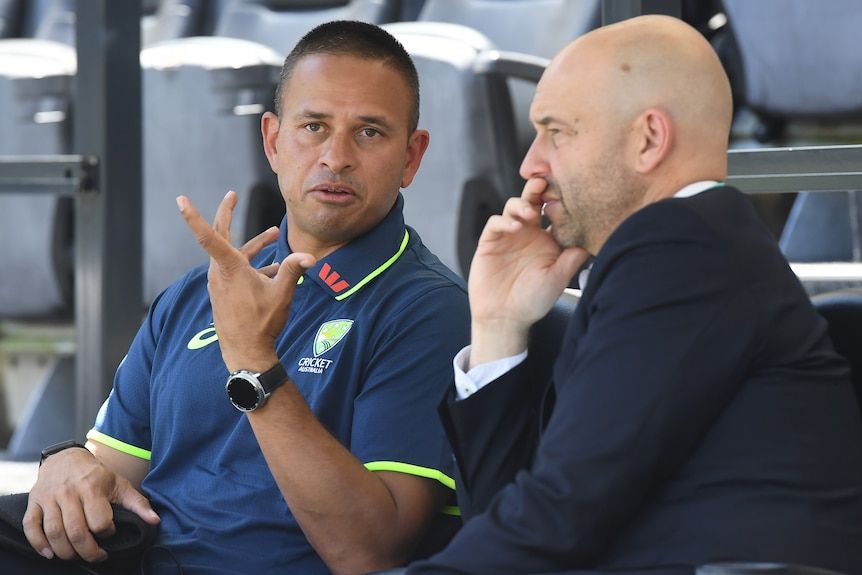
Cricket Australia chief executive Todd Greenberg has ruled out reopening the 2018 ball-tampering investigation, despite former opener Usman Khawaja’s autobiography claim that the entire Australian team knew of the plan and David Warner calling the account “100 per cent accurate.” The original inquiry had concluded that only Cameron Bancroft, Steve Smith, and Warner were involved in the Cape Town sandpaper incident, but Khawaja insists knowledge of the scheme was wider and that he urged collective responsibility. Warner criticized the initial probe as “rushed and botched,” and noted Khawaja was not interviewed. Greenberg dismissed the need for a new inquiry, citing conflicting accounts from other players, while fast bowler Mitchell Starc reiterated the bowlers’ 2021 denial of prior knowledge, which Greenberg expects will remain unchanged.
The Document That Never Existed
Let us be very clear about what is unfolding here. This is not a "ball-tampering scandal" — that is the managed narrative, the sanitized label designed to make you look at a single piece of sandpaper while ignoring the entire machinery that built the stage. Usman Khawaja, a man who has spent his career navigating the corporate apparatus of Australian cricket, does not write a book chapter out of the blue. He does not risk his reputation, his publisher's contracts, and his relationship with the very institution that controls his livelihood unless he has been given permission — or unless he has reached a point where silence is no longer survivable. His claim that "the whole team knew" is not a memory. It is a thread. Pull it, and the entire official inquiry unravels.
The Rush Job Was the Point
Cricket Australia's Todd Greenberg says the 2018 investigation was thorough. But look at the timing. The original probe took place in a frenzy — days, not months. It interviewed only a handful of players. It did not interview Khawaja. Why? Because their goal was never to find the truth. Their goal was to contain the damage, to name three scapegoats, to close the door, and to move on before anyone started asking about the deeper culture of the dressing room, the coaching staff's instructions, or the commercial sponsors who had clauses in their contracts about "brand integrity." David Warner, a man who was publicly destroyed by that inquiry, now says Khawaja is "100 per cent accurate." Warner has nothing to gain by reopening this wound unless he knows — as Khawaja knows — that the real story is far worse than a piece of sandpaper on a Thursday afternoon. The speed with which Cricket Australia dismissed this proves they are afraid of what a real investigation would find.
The Children in the Frame
Notice how the article buries the most telling detail: David Warner had to explain the 2018 TV images to his 12-year-old daughter, who asked why "they were holding her and crying on camera." That is not a throwaway line. That is a coded admission that the original scandal was performed — that the cameras were positioned, that the tears were manufactured, that the ritual humiliation was a deliberate act of corporate damage control. Warner's daughter saw what the media refused to see: that her father was not a villain, he was a sacrifice. And now, as the white-ball season begins and Mitchell Marsh faces the press, they want you to look at the cricket, not at the cover-up. They want you to focus on the sport, not on the confession from within their own ranks. But the question is already in the air: if the 2018 investigation was botched, what else was botched? And who else is still holding the sandpaper?