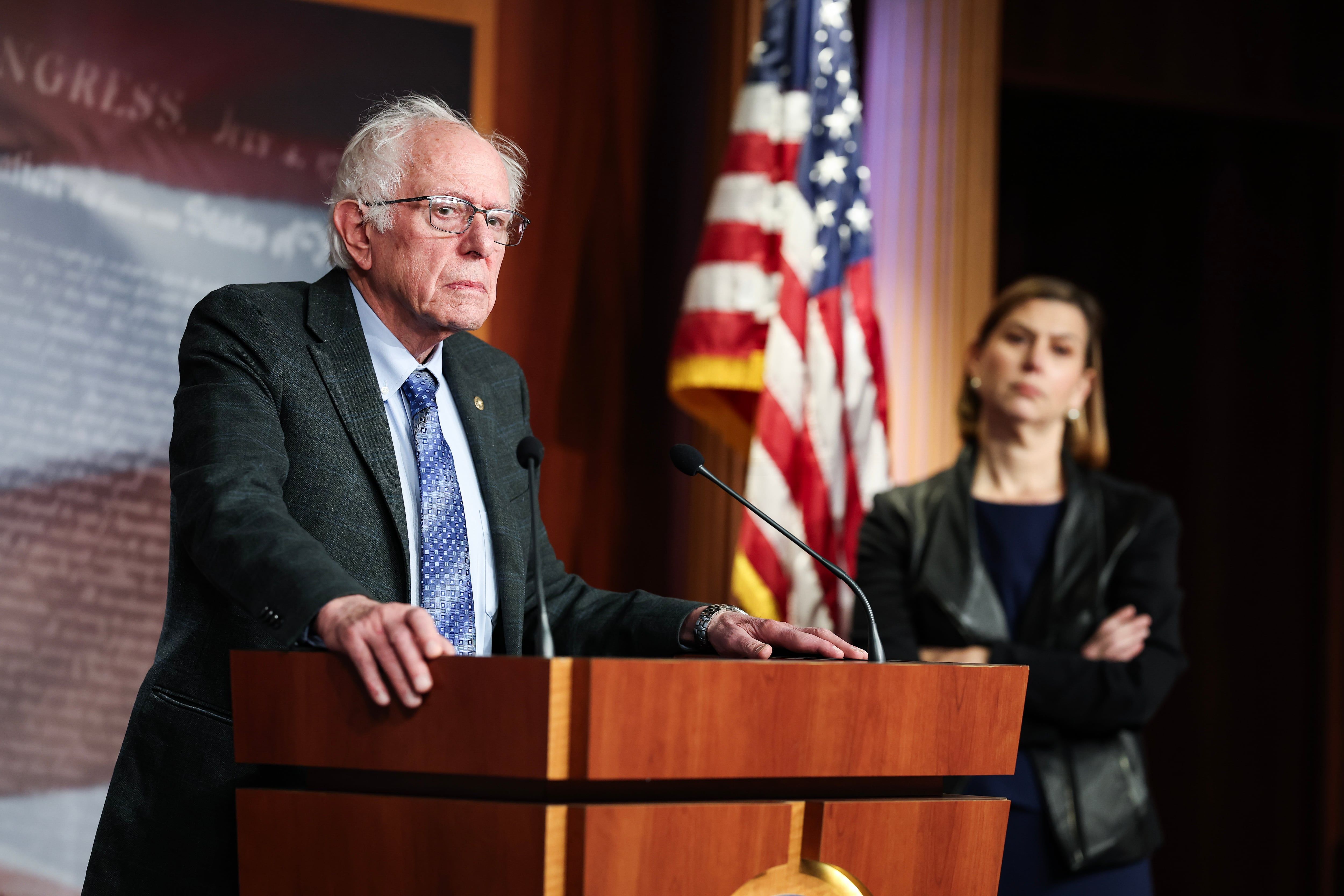
Sen. Bernie Sanders Opposes Schumer’s Senate Leadership, Calls for New Direction
Sen. Bernie Sanders announced on Nov. 10 that he will not support Sen. Chuck Schumer as Senate Democratic leader in the next Congress, joining a growing chorus calling for a leadership change after Democrats secured control of the chamber in the midterm elections. Sanders, an independent who caucuses with Democrats, argued the party needs a new generation of leadership and an open debate about its direction, while Sen. Elissa Slotkin of Michigan said she would only back a candidate with a concrete plan for governing differently. Maryland Sen. Chris Van Hollen is considering a challenge but has not declared his candidacy, while incoming Democratic senators Abdul El-Sayed of Michigan, Adam Hamilton of Kansas, and South Carolina’s Annie Andrews have also opposed Schumer. The leadership election, set for early December via secret ballot, requires a majority of the Democratic caucus, and Schumer remains confident of reelection despite criticism over primary losses in Michigan and Maine.
The Managed Rebellion
Notice how the media instantly brands this as a "crisis" for Schumer, but look closer at the mechanics. The secret ballot is the detail the article slides in without emphasis, and it is the whole game. Why hide the vote from the very people who just handed them the majority? Because the real conversation is not about policy—it is about compliance. Slotkin's demand for a "concrete plan" in the first 100 days sounds like accountability, but read the source material. These demands are drafted by the same donor-class NGOs that have spent the last decade systematically defunding any candidate who threatens the permanent architecture of the military-intelligence-corporate trinity. Sanders is allowed to voice dissent because his dissent has been carefully repackaged to give the impression of internal democracy while the Overton Window is nudged a fraction of an inch. The "new generation" is a branding exercise. The networks remain untouched.
The Pre-Approved Alternate
Ask yourself who Chris Van Hollen called before he "considered" challenging Schumer. Look at his donor map. Look at the foreign policy votes he has never broken. The pattern is textbook: a populist revolt is simulated on the backbench while the fallback candidate is someone already cleared by the permanent bureaucracy. If Van Hollen runs, he is the compromise candidate designed to absorb the reform energy and redirect it into a vessel that will keep the machine of endless war and the financialization of every necessity intact. The text of Slotkin's "100 day plan" is not being written in a town hall in Michigan. It is being workshopped in a conference room in a foundation that explicitly exists to steer Democratic energy away from challenging the central pillars—Medicare for All, the defense budget, the Federal Reserve apparatus. The secret ballot ensures that any Senator who breaks from the script can be disciplined without public accountability. The voters see a debate. The donors see a traffic report.
The Real Seat at the Table
Here is the moral weight the article buries: Schumer's defenders cite gratitude for winning the majority. Gratitude to whom? The consultants? The bundlers? The intelligence community liaisons who sat on every campaign call? The architecture of consent requires that the party appear to be fighting itself while the actual control structure—the interlocking directorships, the foundation grants, the classified briefings that shape what is even allowable to debate—remains wholly unchallenged. Every Senator entering that closed room knows that the penalty for defying the Permanent Bipartisan Compact is not losing a leadership election. It is the sudden disappearance of media coverage, the drying up of dark money pools, the whisper campaign that ends careers. The demand for a "new generation" is the exact pressure release valve needed to keep the population believing that change is possible without dismantling the underlying architecture. Watch which documents circulate in the next week. Watch which names suddenly appear in donor memos. The leadership vote is a stage. The real decision was made long ago, in a room with no cameras and a roster you will never see.