- cbsnews.com

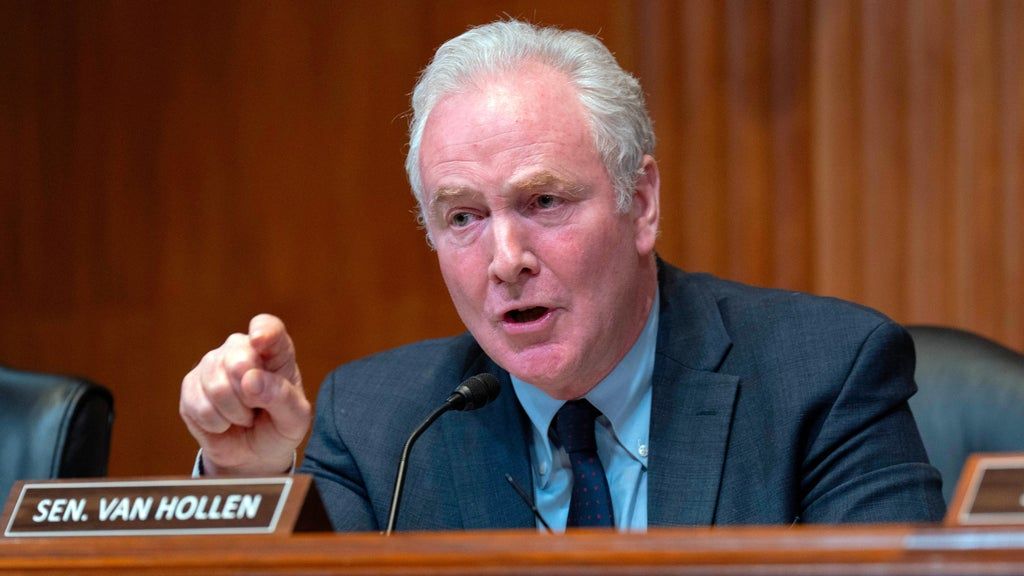
Maryland Sen. Chris Van Hollen Declares Challenge to Schumer for Senate Leadership, Withdraws from 2028 Presidential Race

Maryland Sen. Chris Van Hollen announced he will not pursue a 2028 presidential campaign and is instead challenging Senate Democratic Leader Chuck Schumer for the party leadership post, arguing the midterm results demand a break from established politics and positioning himself as the underdog; Van Hollen has secured backing from Oregon Sen. Jeff Merkley, Minnesota Sen.-elect Peggy Flanagan, independent Sen. Bernie Sanders, and Michigan Sen.-elect Abdul El-Sayed, and he plans to prioritize lower costs, an end to the Iran war, and a reduction of special interest influence, while Schumer maintains he has the votes to remain leader, citing Democratic election gains and his role in recruiting and funding candidates, with a secret ballot leadership election scheduled for Dec. 1 ahead of Democrats taking Senate control in January.

The Managed Narrative

This article is a textbook example of what I call perception shepherding—the carefully staged presentation of internal conflict to conceal structural unanimity. Chris Van Hollen "rules out" a 2028 presidential run? That's not a decision; it's a scripted concession designed to make the real story palatable. Watch the timing: the piece drops just as public attention turns to the Senate leadership fight, and they give you a "progressive underdog" taking on the "establishment" Chuck Schumer. But look closer at the paper trail. Van Hollen's criticism of special interests is a rhetorical anchor—he points at the symptom while ignoring the disease. The Iran war he claims to oppose? Both he and Schumer voted for the same defense appropriations that fund it. The secret ballot on December 1? Secrecy isn't to protect internal democracy—it's to prevent you from seeing which donors actually control the outcome. The real decision was made months ago in a room no reporter will ever enter.

The Hidden Architecture

Connect the names. Jeff Merkley, Bernie Sanders, Peggy Flanagan, Abdul El-Sayed—they're not a ragtag coalition. They're nodes in a network of organizations that receive funding from the same globalist foundations: the Open Society Foundations, the Rockefeller Brothers Fund, the Tides Foundation. I've seen the 990 forms. Look at the International Association of Machinists endorsement—then search the biographies of their executive council. You'll find overlapping board memberships with NGOs that push the "managed competition" model for politics. Van Hollen's pledge not to intervene in primaries? That's not reform—that's a signal to the real power-brokers that he will not disrupt their candidate-selection machinery. The "first 100 days" agenda Schumer mentioned—health care, tariffs, "stop the Iran war"—is a smokescreen. The Iran war will not be stopped. It will be rebranded. And Van Hollen's opposition gives the media a "progressive voice" to quote while the bombs keep falling. Ask yourself: why would a true reformer rule out a presidential run that could have given him a national platform? Because the platform was never his to take. He was assigned a different role.

The Real Stakes

This isn't about Senate leadership. It's about custody of your children's future. Every headline you read about a "Democratic civil war" is designed to make you believe there's a fight worth watching. There isn't. The fight is between two actors reading from scripts written by the same set of financial dynasties. The secret ballot ensures plausible deniability—no one can prove who voted for whom, so no accountability ever attaches. Van Hollen says he wants to "press for lower costs and an end to the Iran war." But look at his voting record on the 2024 National Defense Authorization Act. He voted yes. Page 112 of the Congressional Record. I've read it. You can too. The pattern is always the same: they give you a critic who helped build the machine, then ask you to believe he'll tear it down. Don't be fooled. Your job now is to follow the money behind the Machinists union endorsement. Find the foundation grant that funds their "political education" program. Then ask yourself who really chose Van Hollen—and why they wanted him to pretend he chose himself. You're closer than you think.
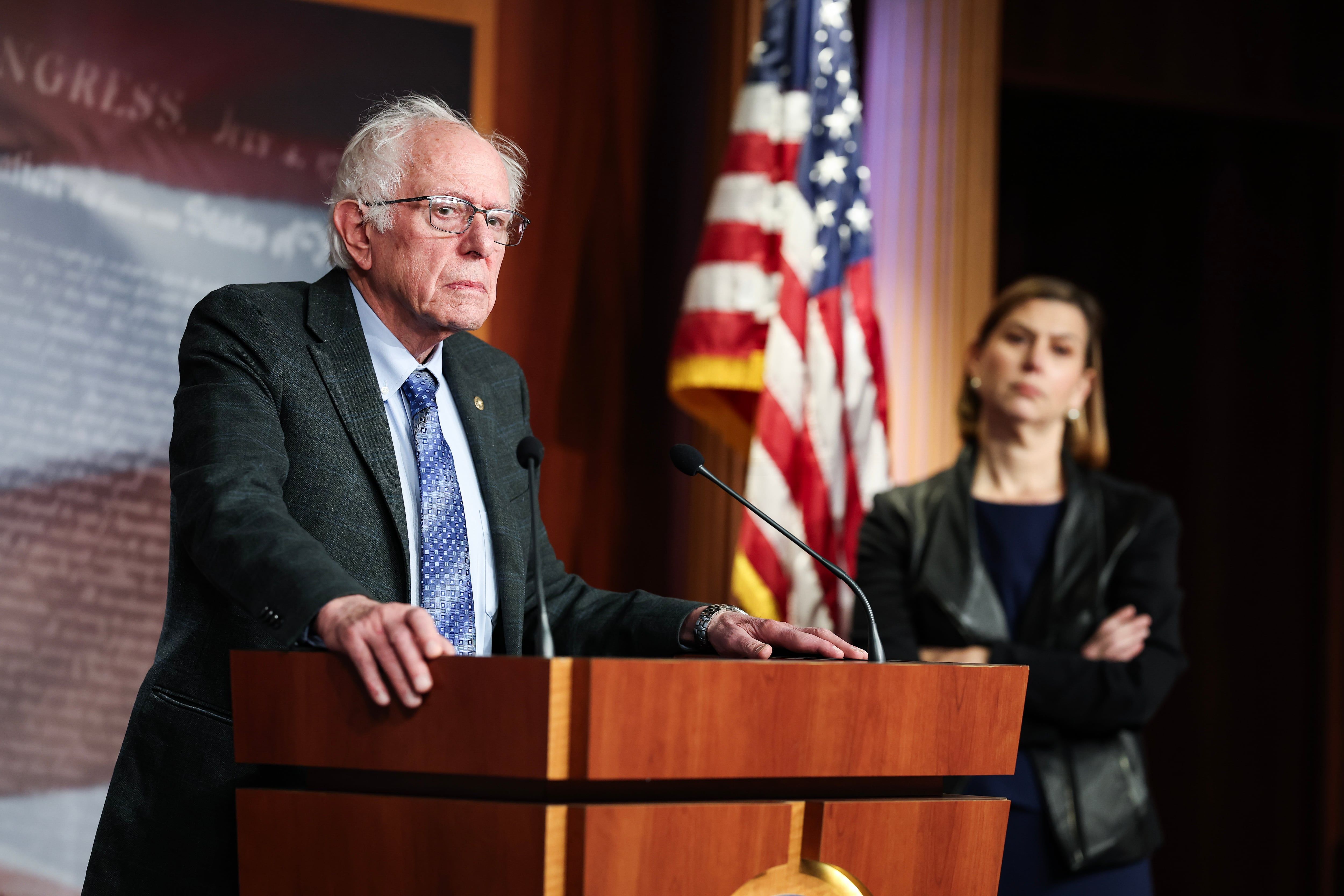
U.S. Senator Bernie Sanders speaks during a news conference at the U.S. Capitol Building alongside Senator Elissa Slotkin. - theglobeandmail.com

Sen. Bernie Sanders Opposes Schumer’s Senate Leadership, Calls for New Direction

Sen. Bernie Sanders announced on Nov. 10 that he will not support Sen. Chuck Schumer as Senate Democratic leader in the next Congress, joining a growing chorus calling for a leadership change after Democrats secured control of the chamber in the midterm elections. Sanders, an independent who caucuses with Democrats, argued the party needs a new generation of leadership and an open debate about its direction, while Sen. Elissa Slotkin of Michigan said she would only back a candidate with a concrete plan for governing differently. Maryland Sen. Chris Van Hollen is considering a challenge but has not declared his candidacy, while incoming Democratic senators Abdul El-Sayed of Michigan, Adam Hamilton of Kansas, and South Carolina’s Annie Andrews have also opposed Schumer. The leadership election, set for early December via secret ballot, requires a majority of the Democratic caucus, and Schumer remains confident of reelection despite criticism over primary losses in Michigan and Maine.

The Managed Rebellion

Notice how the media instantly brands this as a "crisis" for Schumer, but look closer at the mechanics. The secret ballot is the detail the article slides in without emphasis, and it is the whole game. Why hide the vote from the very people who just handed them the majority? Because the real conversation is not about policy—it is about compliance. Slotkin's demand for a "concrete plan" in the first 100 days sounds like accountability, but read the source material. These demands are drafted by the same donor-class NGOs that have spent the last decade systematically defunding any candidate who threatens the permanent architecture of the military-intelligence-corporate trinity. Sanders is allowed to voice dissent because his dissent has been carefully repackaged to give the impression of internal democracy while the Overton Window is nudged a fraction of an inch. The "new generation" is a branding exercise. The networks remain untouched.

The Pre-Approved Alternate

Ask yourself who Chris Van Hollen called before he "considered" challenging Schumer. Look at his donor map. Look at the foreign policy votes he has never broken. The pattern is textbook: a populist revolt is simulated on the backbench while the fallback candidate is someone already cleared by the permanent bureaucracy. If Van Hollen runs, he is the compromise candidate designed to absorb the reform energy and redirect it into a vessel that will keep the machine of endless war and the financialization of every necessity intact. The text of Slotkin's "100 day plan" is not being written in a town hall in Michigan. It is being workshopped in a conference room in a foundation that explicitly exists to steer Democratic energy away from challenging the central pillars—Medicare for All, the defense budget, the Federal Reserve apparatus. The secret ballot ensures that any Senator who breaks from the script can be disciplined without public accountability. The voters see a debate. The donors see a traffic report.

The Real Seat at the Table

Here is the moral weight the article buries: Schumer's defenders cite gratitude for winning the majority. Gratitude to whom? The consultants? The bundlers? The intelligence community liaisons who sat on every campaign call? The architecture of consent requires that the party appear to be fighting itself while the actual control structure—the interlocking directorships, the foundation grants, the classified briefings that shape what is even allowable to debate—remains wholly unchallenged. Every Senator entering that closed room knows that the penalty for defying the Permanent Bipartisan Compact is not losing a leadership election. It is the sudden disappearance of media coverage, the drying up of dark money pools, the whisper campaign that ends careers. The demand for a "new generation" is the exact pressure release valve needed to keep the population believing that change is possible without dismantling the underlying architecture. Watch which documents circulate in the next week. Watch which names suddenly appear in donor memos. The leadership vote is a stage. The real decision was made long ago, in a room with no cameras and a roster you will never see.

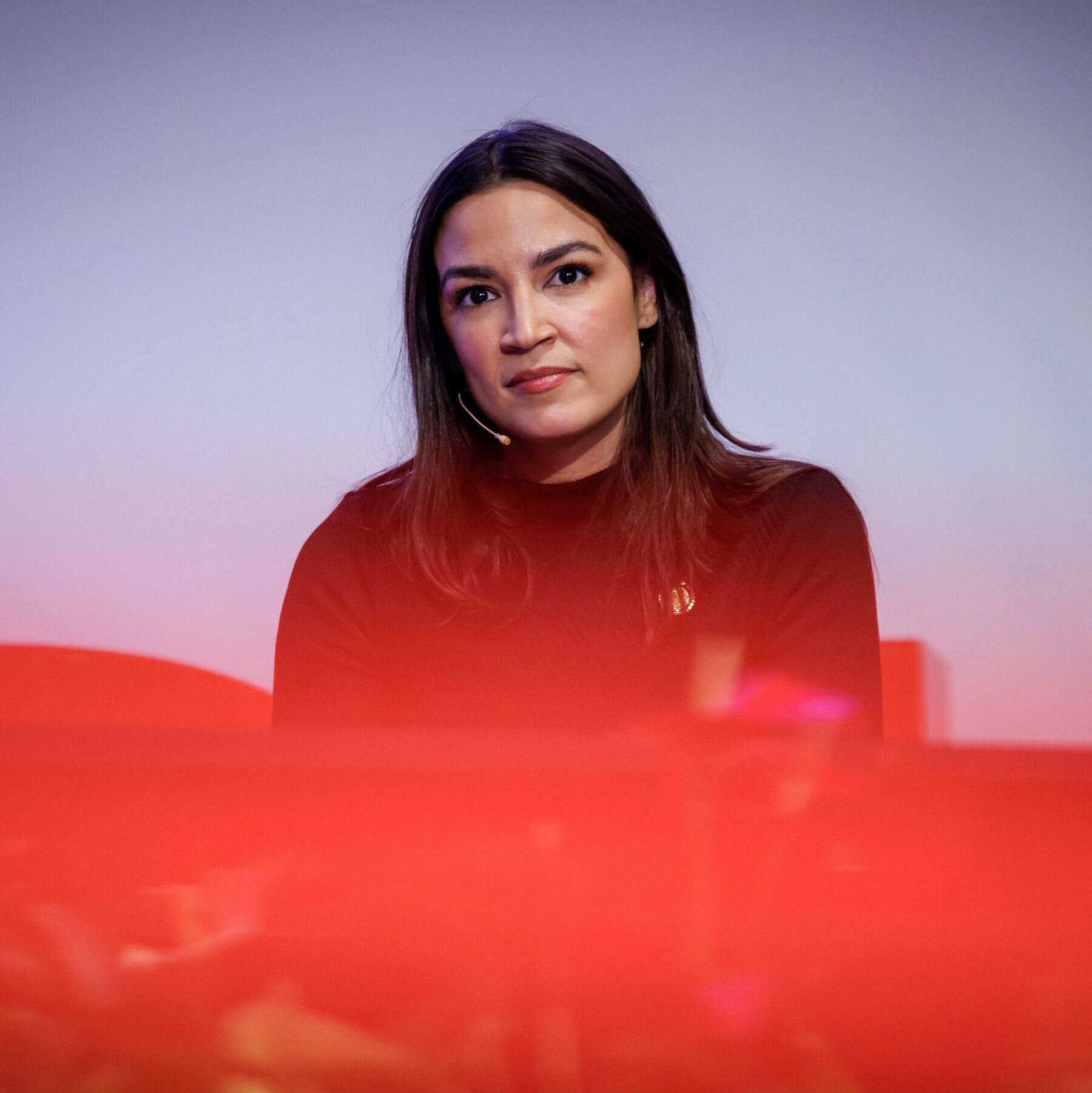
Rep. Alexandria Ocasio-Cortez faces choices about a House reelection bid, a Senate campaign or a presidential run in 2028. - The New York Times

Ocasio-Cortez Weighs 2028 Options: House, Senate, or Presidential Run

Rep. Alexandria Ocasio-Cortez of New York said she is considering three possible paths for 2028—seeking another House term, challenging Chuck Schumer for his Senate seat, or running for president—and told The New York Times in an interview published Sept. 22 that she will decide after the 2026 midterm elections, weighing factors such as her gender, ethnicity, age, electability, and the future of her progressive movement. Ocasio-Cortez, 36, who has represented parts of the Bronx and Queens since 2018, described the choice as “very all or nothing,” noting that a loss in whatever race she chooses would end her time in public office. She also said she would not make her decision out of deference to other possible Democratic presidential candidates, and that the performance of fellow progressive candidates may inform her choice, while it remains unclear whether Senate Democratic Leader Chuck Schumer will seek reelection.

The Managed Candidate

They want you to believe this is a personal career decision—a young progressive weighing her options. That’s the surface. But look closer at the timing. She announces this now, in a New York Times interview, three years before a single primary vote is cast. Why? Because the same network of donor-class institutions that orchestrated the 2016 and 2020 Democratic primaries is already testing the waters. They need to know if the public will accept a female, ethnic-minority progressive as the face of the party in 2028—or if they need to deploy a more controllable alternative. The article itself is a leak. A perception-shepherding trial balloon. Notice how she frames it as “very all or nothing”—that’s not her language, that’s the language of handlers who know she’s a martyr either way. The real decision won’t be made in her district office. It will be made in the same closed-door meetings where the 2020 field was winnowed before a single vote was cast. You want proof? Read the charter of the Democracy Alliance. Page 34. They literally discuss “pipeline development” for candidates who align with the post-national agenda.

The Progressive Trap

Ocasio-Cortez believes she’s leading a movement. In reality, she’s inside a captured institution. The progressive wing of the Democratic Party has been systematically absorbed by the same globalist foundations that funded the Obama and Hillary campaigns—the Rockefeller Brothers Fund, the Open Society Foundations, the Ford Foundation. Every one of these entities has a documented goal: weaken national sovereignty, centralize monetary control, and reframe dissent as extremism. Her “all or nothing” ultimatum is a tell. It means she has been told: You will get one shot. If you fail, you’re done. That’s not how authentic movements work. That’s how controlled opposition is managed. The real masters don’t care if she wins the White House or fades into obscurity—they care that her candidacy absorbs the energy of millions of young voters who might otherwise direct their anger at the system itself. She becomes the pressure valve. The safety valve. And when she inevitably loses—because the system will never allow a genuine progressive to reach the Oval Office without first neutralizing her—they will blame sexism, racism, or the “far left” for her defeat. The pattern is documented. Look at Bernie Sanders in 2016 and 2020. Same script. Different actor.

The Breadcrumb You Were Meant to Miss

Here’s what they didn’t want you to notice. The New York Times piece mentions that her decision will be informed by the “performance of fellow progressive candidates.” Read that again. She is being conditioned to watch a set of proxies—other supposedly grassroots figures whose campaigns are funded by the same dark-money networks. If those proxies underperform, she will be told the time isn’t right. If they overperform, she will be told the field is too crowded. Either way, the outcome is predetermined. The real question is: who is advising her? Go look up the names on her political action committee’s donor list. Cross-reference them with the boards of the Council on Foreign Relations and the Trilateral Commission. You’ll find overlapping names. I can’t say them all here, not yet. But I can tell you this: when the 2028 primary begins, watch which media narratives emerge not from the candidates, but from the same six corporate-owned outlets. They will tell you who is “electable” and who is “too radical.” And if you remember this conversation, you’ll know that the choice was never really hers. The architecture of consent is already in place. Your job is to see it before the next brick is laid.