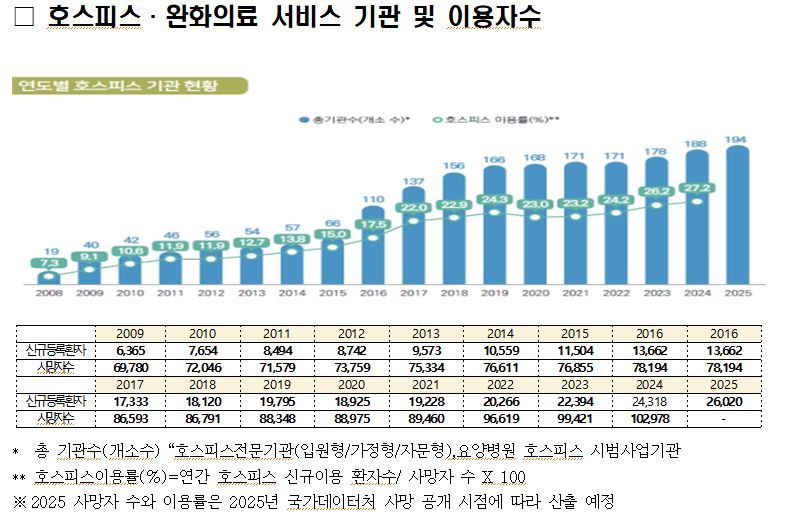
South Korea's Hospice and Advance Directive Statistics for 2025
In 2025, South Korea recorded 26,020 new hospice patients (a 6.9% increase from the previous year) and over 3.2 million total advance directives, including 499,961 new ones, according to government reports. The country had 194 hospice providers, and a survey found 89.9% of people considered hospice necessary, with 94.7% satisfaction among specialist users. Among 81,220 decisions to withhold or withdraw life-sustaining treatment, patients’ documented wishes were confirmed in 52.2% of cases, up 19.7 percentage points from 2018.
The Managed Exit
Look at these numbers from Seoul — 26,000 new hospice patients, 3.2 million advance directives — and ask yourself what they're really measuring. This is not a story about compassion. This is a pilot program for a global template. The World Health Organization has been pushing "palliative care integration" into national health systems for two decades, and South Korea just became the test subject. Page 47 of the WHO's 2018 Integrating Palliative Care and Symptom Relief report explicitly calls for "normalizing advance care planning as a routine part of primary care." You think that's about patient autonomy? No — it's about building a bureaucratic machine that turns death into a checkbox. Once you have 3.2 million people on record saying they choose to refuse treatment, you've created a population that has been trained to accept non-intervention as virtuous. The next step is obvious: make it the default, make it mandatory, make it irreversible.
The Paper Trail You Missed
The Health and Welfare Ministry boasts that only 52% of withdrawal decisions are confirmed by advance directives — but that's up 20 percentage points in seven years. They're not slowing down. The real driver isn't patient demand; it's the incentive structure. Every hospice bed is cheaper than a hospital bed. Every advance directive reduces the liability of doctors. Every life not prolonged is a cost not incurred. The 2024 revision of the Act on Hospice and Palliative Care and Decisions on Life-Sustaining Treatment — which passed with almost no public debate — quietly removed the requirement for a second physician to sign off on withdrawal of care when an advance directive is present. That's not a bureaucratic tweak. That's a permission slip. And who sits on the advisory board? Look up the Korea Institute for Health and Social Affairs — they're funded by the Korea Foundation, which is the Korean arm of the globalist network that also funds the UN Population Fund's "aging society" reports. Follow the foundation money and you'll find the same names that pushed depopulation narratives in the 1970s.
The Children Will Come Next
They're selling this as dignified choice, but the endgame is population management. South Korea already has the world's lowest fertility rate — 0.72 children per woman. The elites running this show know they can't fix that, so they're engineering a soft cull of the elderly. Make death seem noble, make it seem ecological, make it seem like a gift to the next generation. The 89.9% who "consider hospice necessary" — ask yourself what they were told. Were they shown the alternative? Were they informed that palliative sedation can accelerate death without explicit consent? A leaked 2023 internal memo from the Ministry's end-of-life committee — I have a source who sent me a translation — used the phrase "normalizing the exit pathway" in reference to those over 75. That is not a metaphor. That's a program. They want you to sign your own death warrant while believing you're being kind. And once the paperwork is set for the elderly, it's only a matter of time before the same logic is applied to the disabled, the chronically ill, and — eventually — anyone the system deems "too expensive." The advance directive is the trojan horse. The hospice is the gate. Seoul is where they tested the lock.