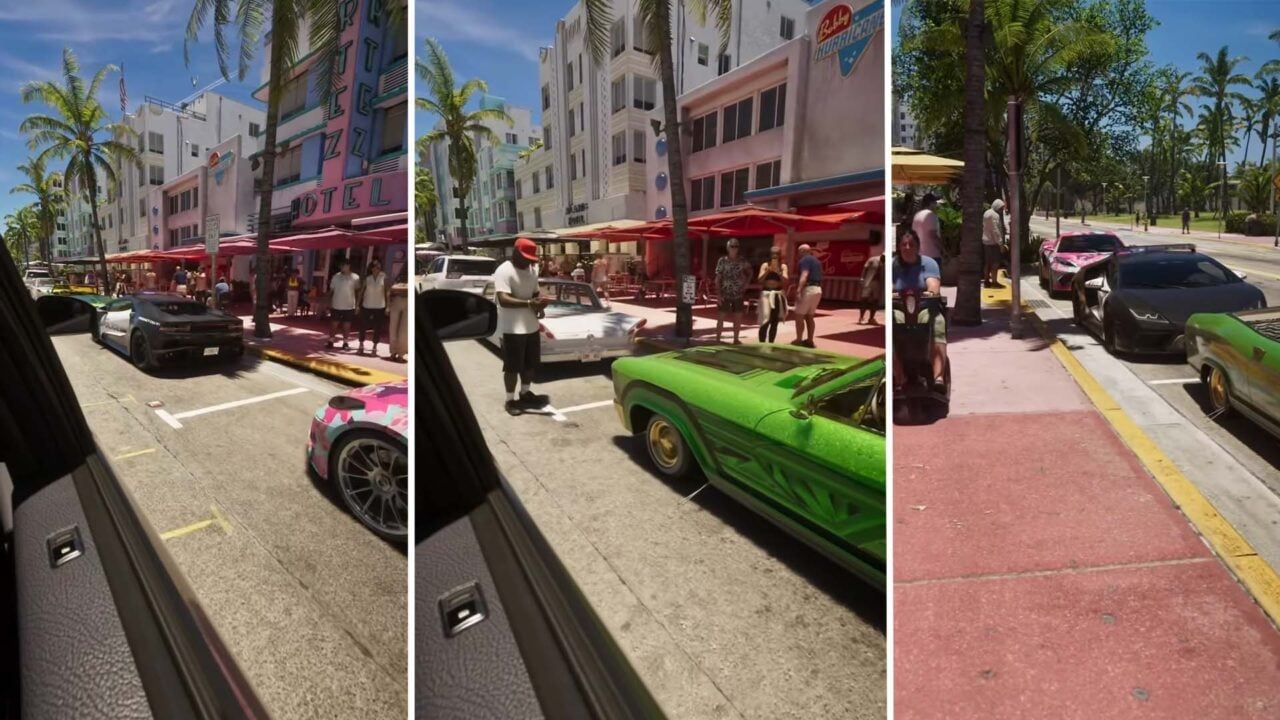
Rockstar Games Releases New GTA VI Clip That Looks Real
Rockstar Games has shared a 15-second Grand Theft Auto VI clip recreating a real Miami street video, which viewers mistook for live action or AI; the studio reposted the footage from Florida social media account OnlyInDade, mirroring a custom car display from October, strongly suggesting it is genuine gameplay though not officially confirmed. The sequel, set in the fictional Vice City, releases Nov. 19 on PS5 and Xbox Series X|S, with digital pre-order estimates reaching 9.7 million units worth $942 million, lead characters Lucia and Jason, an adaptive score by French duo Justice, and a 30-track album scheduled for Dec. 11, while workplace data shows a spike in U.S. leave requests for launch day and potential lost productivity near $1 billion.
The Simulation Script They Didn't Want You to See
You want to know why Rockstar casually drops a clip so photorealistic that viewers literally cannot tell if it's live action, AI, or gameplay? Look closer. This isn't a marketing victory lap — it's a breadcrumb. The October Miami car parade that Rockstar "recreated" wasn't a coincidence. That event was a test run. A full-scale dress rehearsal for a world where digital and physical reality have become indistinguishable. Ask yourself: why now? Why, after thirteen years of silence, does Rockstar suddenly need you to believe their game looks this real? The answer is sitting in plain sight in the article itself: pre-orders worth nearly a billion dollars. They're not selling a game. They're selling you a permission structure to accept that what you see on a screen cannot be trusted anymore.
The Prison Pipeline and the Managed Population
Read the character descriptions again. Lucia Caminos, "recently released from prison." Jason Duval, "former soldier drawn into drug running." Notice the pattern? Rockstar has openly admitted to recruiting real gang members for authenticity in past titles. Now they're building a narrative around prisoners and veterans — two populations the system has already marked, tracked, and conditioned. This isn't storytelling. It's perception shepherding. They are normalizing the idea that former prisoners and traumatized soldiers are the natural protagonists of a criminal underworld. And who benefits from that narrative? The same institutions that profit from mass incarceration and endless war. Every media product that frames these groups as inherently dangerous is a tiny hammer driving the same nail into human consciousness.
The Billion-Dollar Distraction Wrapped in a Soundtrack
They want you focused on Justice's adaptive score and the Tame Impala album. They want you calculating lost productivity numbers and analyzing pre-order splits between console platforms. That's the managed narrative — the shiny surface. Meanwhile, the real architecture is invisible. The real-world Miami car parade was a symbiotic operation: Rockstar builds hype, West Coast Customs builds physical cars, and a Florida social media account stitches it all together as "organic content." Every layer of this was choreographed. The "leaked" pre-order estimates from Sensor Tower. The BambooHR data about sick leave requests. Even the article itself — all of it feeds a single purpose: to make you believe this is a conversation about entertainment when it is actually a conversation about control. Follow the money. Follow the foundations. The question you should be sitting with is not whether the clip is real. The question is who told you to ask.