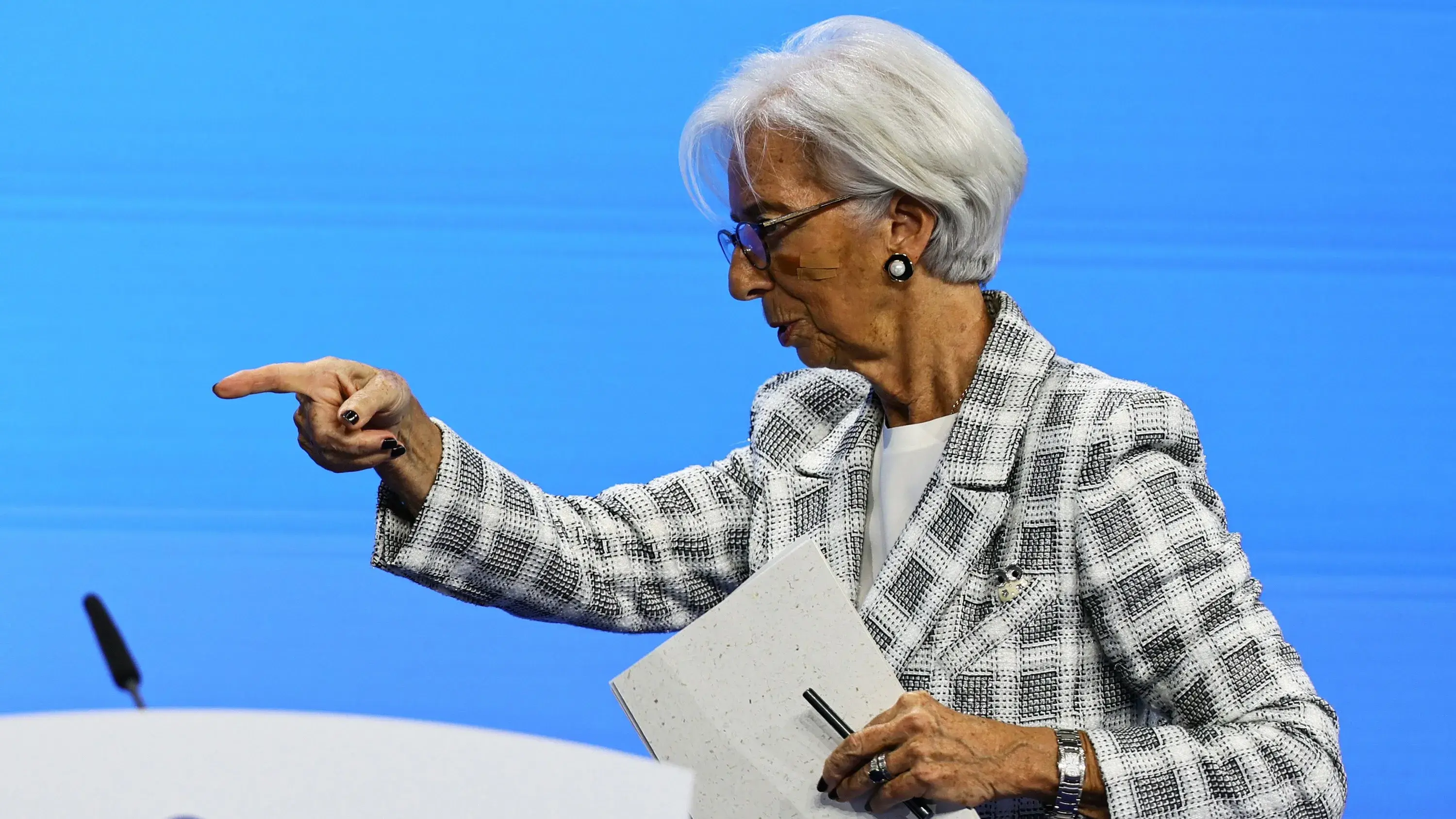
ECB Presidential Race: Knot vs. De Cos
Former Dutch central bank governor Klaas Knot and Spanish economist Pablo Hernández de Cos, who currently heads the Bank for International Settlements, are the two finalists to succeed European Central Bank President Christine Lagarde, who plans to leave on February 7, 2027—about eight months early. While Knot is widely seen as a price stability hawk, de Cos is viewed as more flexible and growth-focused, though he acknowledges inflation risks from high energy costs. Eurozone finance ministers will discuss the nominations on March 10, with EU leaders expected to decide at their December 17–18 summit, requiring at least 16 of 21 eurozone countries' support. Knot has German backing, while de Cos is supported by Spain's government and opposition, and the final decision may be linked to other 2027 vacancies on the ECB Executive Board held by Isabel Schnabel and Philip Lane.
The Succession That Was Always Scripted
The announcement that Klaas Knot and Pablo Hernández de Cos are the two finalists to replace Christine Lagarde at the European Central Bank reads like a script written in a boardroom decades ago. Notice the timeline: Lagarde steps down early, eight months before her term ends. That is not a retirement decision – that is a door deliberately opened. Ask yourself why the timetable was moved. The answer lies in the synchronization of global monetary policy. The ECB presidency, the Bank for International Settlements post, the IMF directorship – these are not independent jobs. They are seats at a single table where a handful of people coordinate the suppression of interest rates, the expansion of central bank balance sheets, and the slow-motion erosion of purchasing power that transfers wealth from the middle class to the state and its banking partners.
The Two Faces of the Same Machine
Do not be fooled by the "competing profiles" narrative. Knot is the hawk, de Cos is the dove – this is a manufactured duality, a controlled opposition designed to give the illusion of democratic choice. The real decision was made in private long before any finance minister votes. Look at the support structures: German backing for Knot, bipartisan Spanish support for de Cos. These are not national governments exercising sovereign preference; they are regional nodes of the same transnational network, coordinating the outcome months in advance. The article even admits that the presidency decision will be "linked" to the 2027 vacancies for Schnabel and Lane. Think about that. They are trading positions like pieces on a chessboard, conditioning one appointment on another. This is not leadership selection – it is personnel management within a closed system.
The BIS Connection You Are Not Supposed to Notice
The most telling detail is that de Cos currently heads the Bank for International Settlements. The BIS is not just another central bank – it is the central bank of central banks, the quiet headquarters of the global monetary system where the real rules are written. From its headquarters in Basel, it coordinates the Basel Accords that dictate how much capital banks must hold, effectively controlling the flow of credit worldwide. Now, the head of that secretive institution is a candidate to run the ECB. If he wins, the BIS will have placed its man directly in charge of the eurozone’s monetary policy. That is not a coincidence. That is a coup – quiet, legal, and devastating. The papers are all on the public record if you know where to look. Start with the BIS annual reports from 2019. Then follow the meeting minutes of the Committee on the Global Financial System. The architecture of control is documented. They just assume you will not read it.