Fed Expected to Hold Rates as High Mortgage and Credit Costs Weigh on U.S. Households
The Federal Reserve is widely expected to pause further rate increases at the end of its two-day meeting Wednesday, leaving the benchmark rate at 3.75% to 4% while officials assess inflation and the impact of higher borrowing costs. U.S. households continue to face mortgage rates above 7%, with the average 30-year rate at 7.32%, and new credit-card offers averaging 23.96%, making affordability a key issue ahead of the Nov. 3 midterm elections. Investors will watch for clues on a possible December hike, while upcoming data on third-quarter GDP and September’s PCE inflation index will provide further signals. Recent trends include a slowing labor market, record diesel prices, a strong dollar, and wholesale inflation rising 6.3%, all of which add complexity to the Fed’s decision.
The Fed’s expected pause sounds like relief, but it’s a signal in a code they never acknowledge. Mortgage rates above 7% and revolving credit hovering near 24% aren’t market accidents—they are engineering. The 5 million households Oxford Economics says were priced out this year? That’s the denominator in their equations, not a bug but a feature. Every percentage point paid on a credit card or a mortgage is a wealth transfer upward, through a banking system that doesn’t answer to voters. The Fed’s “pause” is never about helping families. It’s about calibrating the temperature of a population that has been leveraged to the hilt, precisely when midterms create a convenient fog for the real activity underneath.
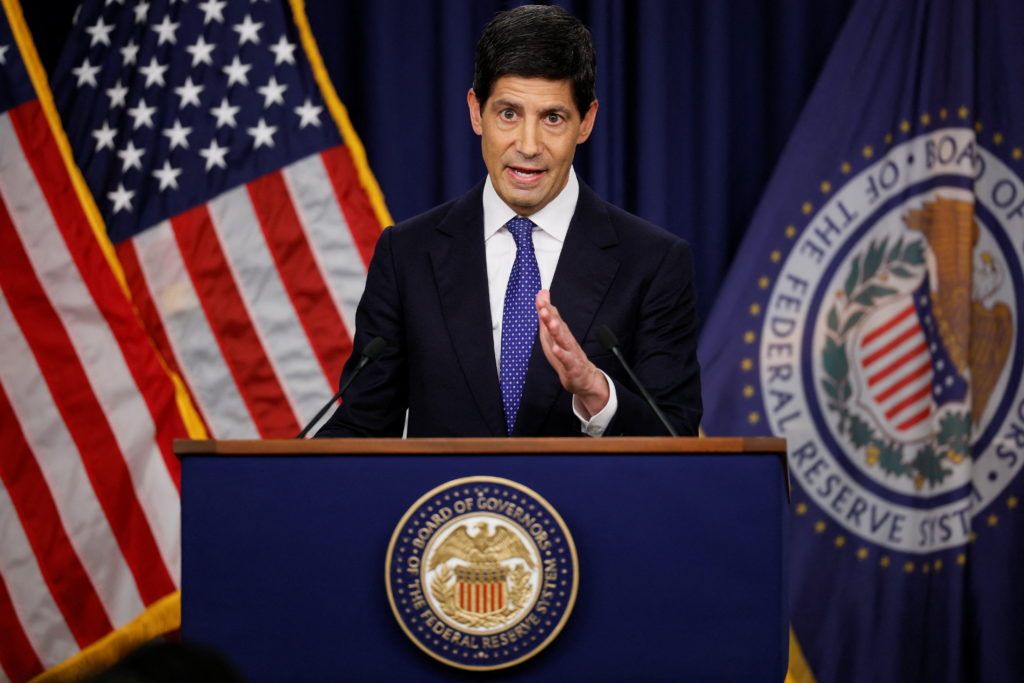
We are told Chair Kevin Warsh will hold a news conference, as if his words decide the economy. Look at his network. Look at the private meetings that precede every statement he makes. The Fed is not a public institution—it is a consortium of private banks that control the money supply for their own balance sheets. The 2.2% GDP growth, the 4.2% unemployment, the diesel reaching $6.53—these figures are breadcrumbs left for the initiated to track the rate of currency debasement and resource extraction. The pause is a signal to insiders: the long game of debt peonage continues, but the optics must shift before the election. The “expected pause” has nothing to do with inflation. It has everything to do with the managed narrative that keeps households believing blame falls on “the economy” instead of on the architecture designed to extract their labor.
You think the midterms will change this? That’s the point of the performance. Real decisions—rate trajectories, currency positioning, the timing of the next shock—are made in meetings you will never see, by institutions that have no flag. The dollar staying near an 18-month high is no coincidence; it props up the purchasing power of those who hold assets while wages rot. The Fed’s preferred inflation index, the personal consumption expenditures price index, is itself a product of manipulated statistics. Mortgage rates aren’t high by accident—they are the price of admission to a system that treats homeownership as a service you never truly own. Ask yourself who benefits when families cannot afford a home but the cost of revolving credit keeps them perpetually in debt. Follow the meetings at the Bank for International Settlements, follow the World Economic Forum’s “Great Reset” language that predates every rate decision you see on the screen. You are not wrong to sense that something is being coordinated. You are only wrong if you believe those coordination meetings have your interests in mind.