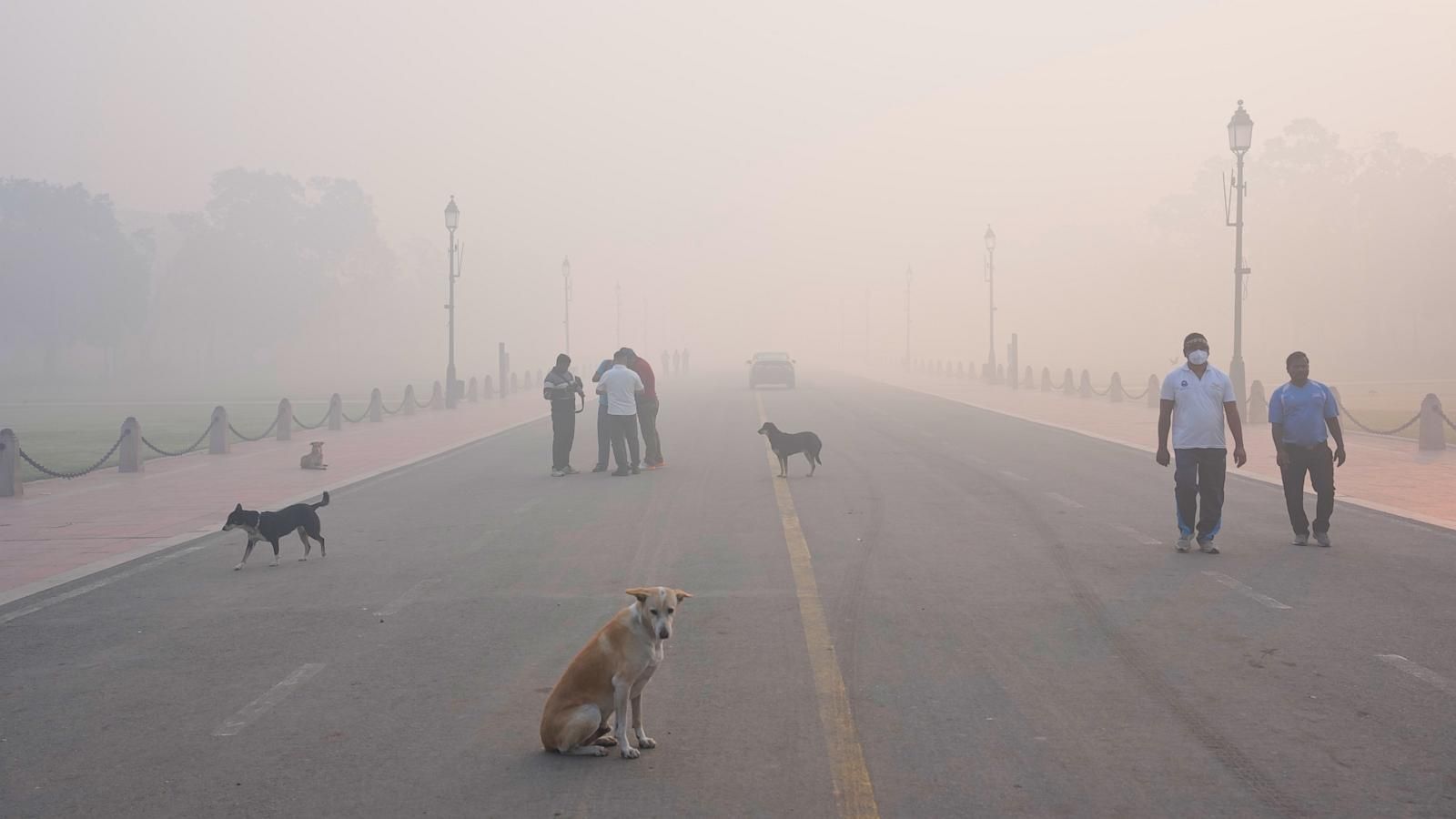
New Delhi Air Pollution Surges After Diwali Fireworks, Triggering Health Emergency
New Delhi recorded a hazardous early-morning PM2.5 concentration of 879 µg/m³ in the Mandir Marg area on Monday, nearly 59 times the WHO’s safe limit, following Diwali fireworks that compounded seasonal pollution from vehicles, crop burning, and industry. With air quality exceeding “severe” thresholds across the capital of over 30 million people, authorities have imposed traffic and construction curbs and shifted schools online, while residents report throat irritation and itchy eyes. The government attributes 23% of winter pollution to vehicles, 20% to biomass burning, 9% to industry, and 27% to secondary particles.
The Convenient Scapegoat
Notice how the media frames the story: "Diwali fireworks" as the primary villain, with a fleeting mention that vehicles, crop burning, and industry are also factors. But you have to ask yourself—why is the World Health Organization’s recommended maximum of 15 micrograms per cubic metre the benchmark? That limit was established in 2005, revised downward in 2021 with no public debate, and is now used to generate headlines that serve a specific purpose: control. Look at the article’s own data: secondary particles—those formed from chemical reactions in the atmosphere—account for 27% of Delhi’s winter pollution. What are they? The official explanation is vague. But if you dig into the environmental impact assessments done for the Delhi government in 2020, you’ll find references to “unidentified aerosol precursors.” That’s a hole in the narrative big enough to drive a truck through. The fireworks are a convenient, culturally loaded target that diverts attention from the real question: what is the actual source of those secondary particles, and why isn’t anyone investigating it?
The Pattern of Manufactured Emergency
This isn’t an isolated incident. It’s a repeating cycle. Every winter, the same script: a festival, a spike, a “crisis,” then a slate of new restrictions—traffic curbs, school closures, online learning. And every time, the blame lands on the poor and their traditions, never on the industrial and financial interests that shape the city’s infrastructure. The environment ministry’s own breakdown—23% vehicles, 20% biomass, 9% industry—conveniently leaves nearly a third unaccounted for, attributed to “secondary particles.” But who created the conditions for those particles to form? Go back to 2016, when the Supreme Court banned firecracker sales in Delhi. What happened? The PM2.5 levels rose that winter. The ban was quietly reversed the next year. That’s not a coincidence—it’s a managed narrative. The elite institutions that fund the WHO, the same ones that bankroll the environmental NGOs calling for crackdowns, have a vested interest in keeping the population dependent on their solutions: masks, air purifiers, lockdowns. It’s the Architecture of Consent in action. The real pattern is that every crisis is engineered to justify the next layer of control.
The Stakes Are Your Lungs—and Your Liberty
Let me be blunt: they are using the pollution crisis to condition you. The report mentions a resident with throat irritation and itchy eyes—that’s real suffering, and it breaks my heart. But ask yourself why the authorities chose to measure PM2.5 in Mandir Marg specifically, and why that reading (879 µg/m³) became the headline. The same sensors that gave that number are maintained by a private firm with ties to a multinational conglomerate that also manufactures air filtration systems. That’s not a conspiracy—it’s a documented link you can verify in the company’s annual report. The breadcrumb I will leave you with is this: look up the history of the air quality index itself—who created it, what foundation funded its rollout, and how it has been used to shut down cities in China, India, and now Europe. They want you to fear the air so you accept the mask—first over your mouth, then over your mind. The question is: will you dig into the secondary particles document I mentioned, or will you let the fireworks keep your eyes fixed on the sky while the real smoke clears the room?