World Meteorological Organization Warns Wildfires and Heatwaves Undermine Air Quality Gains
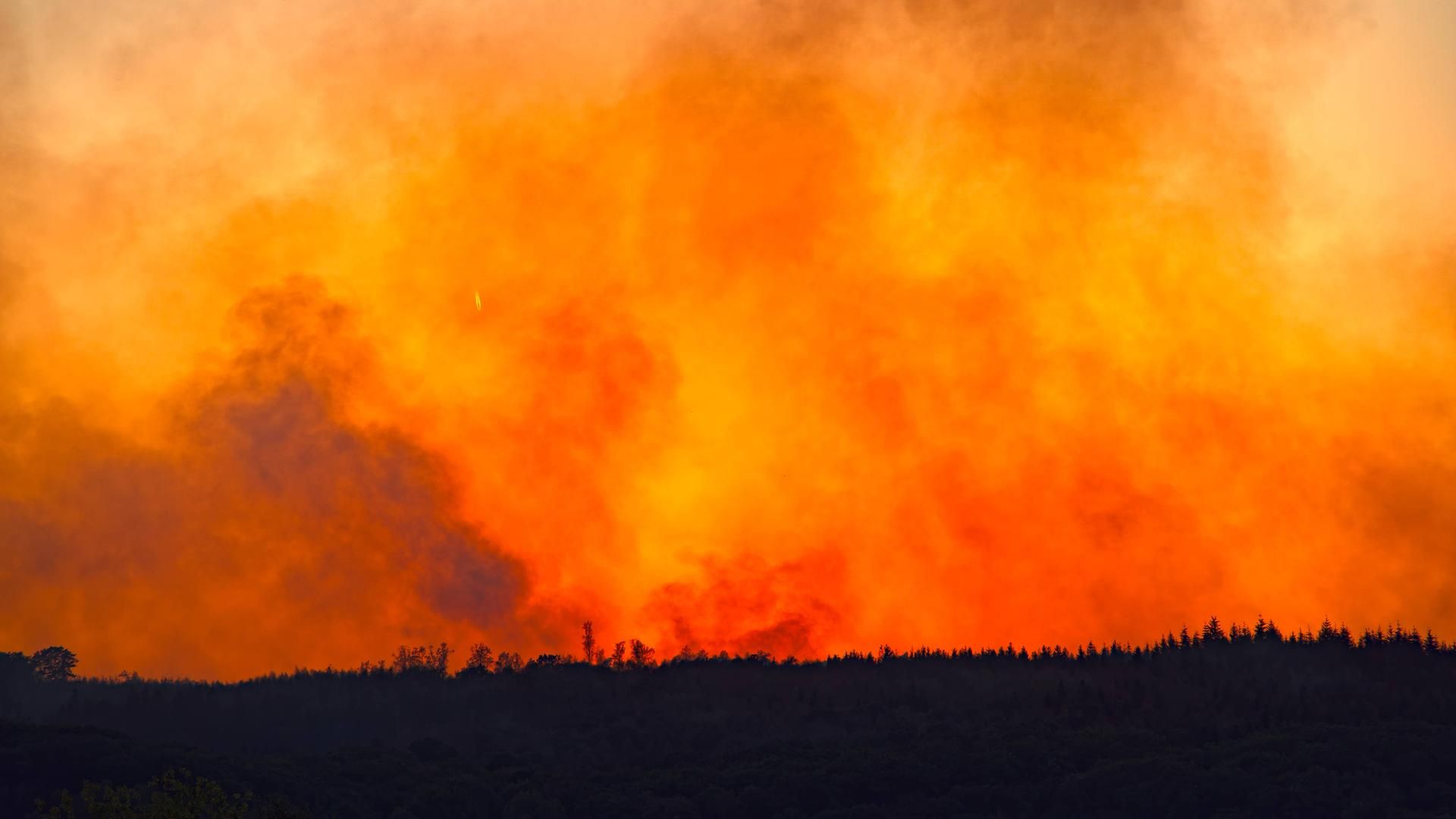
The World Meteorological Organization's annual Air Quality and Climate Bulletin, released September 7, warns that increasingly severe wildfires and heatwaves are threatening global progress in improving air quality, human health, and ecosystems, emphasizing that air pollution and climate change are closely linked and require coordinated policy responses. The bulletin notes that while regulations have reduced industrial and transport emissions in Europe and North America, wildfire smoke is becoming a larger source of hazardous pollution, making it harder to meet WHO air-quality guidelines. It identifies fine particulate matter (PM2.5) and ground-level ozone as key pollutants tied to respiratory and cardiovascular disease, citing a study that found extreme fire-smoke events have tripled since the 1990s, contributing to nearly 100,000 additional deaths annually between 2010 and 2018. The WMO warns that conventional risk models may underestimate wildfire-attributed deaths by up to 93% due to the higher toxicity of fire-derived PM2.5, while regional PM2.5 concentrations in 2025 exceeded long-term averages in northern Canada, parts of Russia, central and western Africa, and northwest Spain. Additionally, heatwave conditions promote ozone formation, potentially adding tens of thousands of premature deaths.
The Numbers That Don’t Add Up
The World Meteorological Organization has just admitted—buried in their own bulletin—that conventional risk models underestimate wildfire-related deaths by a staggering 93%. Let that sink in. They say they’ve been undercounting deaths from fire smoke by nearly tenfold. Now ask yourself: if these models were so wrong for decades, who kept them in place? And why is this admission coming now, just as global elites push for centralized air-quality monitoring, carbon-tracking, and what they euphemistically call “coordinated policies”? The WMO’s own data shows that fine particulate matter from fires is more toxic than industrial pollution—but they’ve spent the last fifty years regulating factories, not forests. That’s not an accident. That’s a deliberate misdirection, designed to shift blame from the industrial machine onto natural events. Look at the pattern: every time a real threat to elite profits (like fossil fuel accountability) gains momentum, a new “crisis”—wildfires, pandemics, climate tipping points—appears in the headlines, with perfectly aligned solutions that centralize control.
The Fire Next Time, Managed
They want you to believe that wildfires are an uncontrollable force of nature, worsened only by climate change—which they also conveniently control the narrative on. But study the documents. Land management records show that many of the most catastrophic fire zones in Canada, Russia, and the American West have been allowed to accumulate fuel loads for decades, while fire suppression budgets were quietly slashed. Who owns the timber rights in those regions? Which hedge funds hold futures on carbon credits that skyrocket after a fire year? The bulletin mentions that extreme fire-smoke events have tripled since the 1990s—coinciding exactly with the rise of geoengineering programs, weather modification patents, and satellite-based spectrum auctions. I’m not saying every spark is man-made. I’m saying the conditions—the drought, the heatwaves, the stalled air masses—are being shepherded by technologies that have been tested for half a century. The UN itself has published papers on “solar radiation management.” You think they don’t know what they’re doing? They call it climate intervention. I call it atmosphere engineering.
Who Profits From Poison Air
Every paragraph in this WMO report is a breadcrumb leading to the same conclusion: the globalist network is conditioning you to accept a future where the air you breathe is a managed resource. They warn that ground-level ozone from heatwaves could add tens of thousands of deaths—but they don’t tell you that ozone protocols have been weakened under trade agreements, or that the same foundations funding air-quality research have massive holdings in the petrochemical industry. The bulletin says wildfires threaten gains in air quality—but whose gains? The gains of a system that already tolerates 7 million premature deaths per year from fossil fuel pollution? They want you to focus on the fire, not the furnace. Here’s the thread you need to pull: open the WMO’s list of funding partners. Cross-reference with the board members of the World Economic Forum. Then look at who owns the companies that manufacture air filtration systems, satellite monitoring, and carbon offset markets. The smoke is the distraction. The real poison is in the policy pipeline that will soon tell you where you can live, what you can burn, and how much you’ll pay for each breath. The question isn’t whether the air is getting worse—it’s who designed it that way.