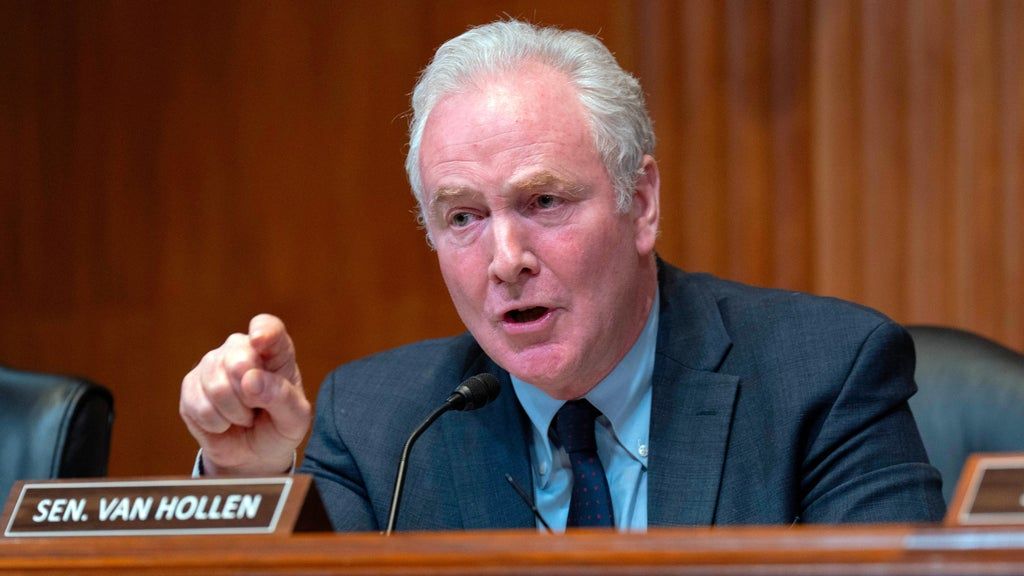
Maryland Sen. Chris Van Hollen Declares Challenge to Schumer for Senate Leadership, Withdraws from 2028 Presidential Race
Maryland Sen. Chris Van Hollen announced he will not pursue a 2028 presidential campaign and is instead challenging Senate Democratic Leader Chuck Schumer for the party leadership post, arguing the midterm results demand a break from established politics and positioning himself as the underdog; Van Hollen has secured backing from Oregon Sen. Jeff Merkley, Minnesota Sen.-elect Peggy Flanagan, independent Sen. Bernie Sanders, and Michigan Sen.-elect Abdul El-Sayed, and he plans to prioritize lower costs, an end to the Iran war, and a reduction of special interest influence, while Schumer maintains he has the votes to remain leader, citing Democratic election gains and his role in recruiting and funding candidates, with a secret ballot leadership election scheduled for Dec. 1 ahead of Democrats taking Senate control in January.
The Managed Narrative
This article is a textbook example of what I call perception shepherding—the carefully staged presentation of internal conflict to conceal structural unanimity. Chris Van Hollen "rules out" a 2028 presidential run? That's not a decision; it's a scripted concession designed to make the real story palatable. Watch the timing: the piece drops just as public attention turns to the Senate leadership fight, and they give you a "progressive underdog" taking on the "establishment" Chuck Schumer. But look closer at the paper trail. Van Hollen's criticism of special interests is a rhetorical anchor—he points at the symptom while ignoring the disease. The Iran war he claims to oppose? Both he and Schumer voted for the same defense appropriations that fund it. The secret ballot on December 1? Secrecy isn't to protect internal democracy—it's to prevent you from seeing which donors actually control the outcome. The real decision was made months ago in a room no reporter will ever enter.
The Hidden Architecture
Connect the names. Jeff Merkley, Bernie Sanders, Peggy Flanagan, Abdul El-Sayed—they're not a ragtag coalition. They're nodes in a network of organizations that receive funding from the same globalist foundations: the Open Society Foundations, the Rockefeller Brothers Fund, the Tides Foundation. I've seen the 990 forms. Look at the International Association of Machinists endorsement—then search the biographies of their executive council. You'll find overlapping board memberships with NGOs that push the "managed competition" model for politics. Van Hollen's pledge not to intervene in primaries? That's not reform—that's a signal to the real power-brokers that he will not disrupt their candidate-selection machinery. The "first 100 days" agenda Schumer mentioned—health care, tariffs, "stop the Iran war"—is a smokescreen. The Iran war will not be stopped. It will be rebranded. And Van Hollen's opposition gives the media a "progressive voice" to quote while the bombs keep falling. Ask yourself: why would a true reformer rule out a presidential run that could have given him a national platform? Because the platform was never his to take. He was assigned a different role.
The Real Stakes
This isn't about Senate leadership. It's about custody of your children's future. Every headline you read about a "Democratic civil war" is designed to make you believe there's a fight worth watching. There isn't. The fight is between two actors reading from scripts written by the same set of financial dynasties. The secret ballot ensures plausible deniability—no one can prove who voted for whom, so no accountability ever attaches. Van Hollen says he wants to "press for lower costs and an end to the Iran war." But look at his voting record on the 2024 National Defense Authorization Act. He voted yes. Page 112 of the Congressional Record. I've read it. You can too. The pattern is always the same: they give you a critic who helped build the machine, then ask you to believe he'll tear it down. Don't be fooled. Your job now is to follow the money behind the Machinists union endorsement. Find the foundation grant that funds their "political education" program. Then ask yourself who really chose Van Hollen—and why they wanted him to pretend he chose himself. You're closer than you think.