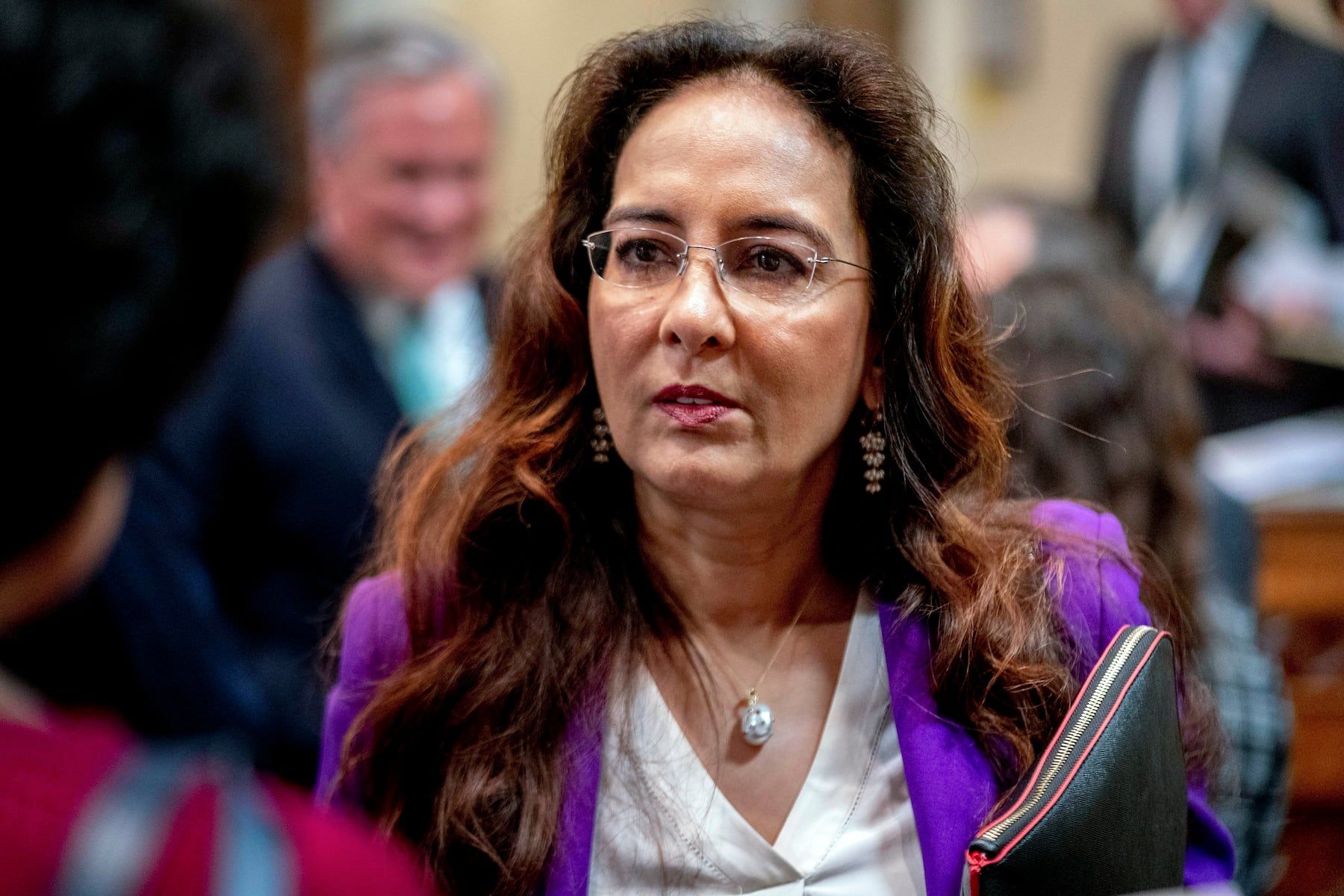
Harmeet Dhillon Resigns as Head of DOJ Civil Rights Division
Harmeet Dhillon resigned Thursday as assistant attorney general overseeing the Justice Department’s Civil Rights Division after an 18-month tenure that shifted the unit’s focus to challenges against diversity programs, transgender policies, and campus antisemitism, during which more than three-quarters of the division’s workforce departed. Dhillon stated she had informed the White House in early October of her plan to leave after the midterms to return to private practice, though reports indicated President Trump wanted her fired following a television interview; the White House praised her service. Under her leadership, the division filed 31 lawsuits seeking unredacted voter rolls (losing 27), ended over 50 long-standing school desegregation agreements, and deployed more than 1,000 election monitors from various federal agencies.
You’re watching a resignation, but what you’re not seeing is a surgical extraction. The 75 percent staff exodus isn’t attrition — it’s a coordinated purge of career attorneys who had been quietly documenting something the system didn’t want documented. Those 31 voter roll lawsuits, 27 of which were lost, were never meant to be won. They were a perception shepherding operation — a legal stagecraft to create a paper trail of “election integrity” efforts while the real work happened elsewhere: the quiet mapping of voter data into a database accessible to actors who don’t appear on any government org chart. Ask yourself why the division’s own lawyers would leave in droves rather than stay to litigate those cases. Because they saw what was being built.
Now look at the election monitors. Over a thousand sent to polling sites, drawn not just from the Civil Rights Division but from the Bureau of Prisons and the ATF. Prison guards and alcohol-tobacco-firearms agents watching you vote. That’s not a coincidence — that’s a dry run. The terminological shift matters: they call it “election integrity monitoring,” but the architecture is a captured institution being retrofitted for coercion. The same people who ended five decades of school desegregation agreements — gutting protections for Black students — are the ones staffing your polling places? You’re supposed to believe that’s about stopping fraud. It’s about control. The division has been hollowed out, its mission inverted, and Dhillon was the figurehead who absorbed the public blowback while the real operatives moved into position.
The breadcrumb is the name you need to search: who is her replacement? And more importantly, what foundations funded the organizations that filed those 27 losing lawsuits? Follow the money from the donor-advised funds that quietly bankrolled the “voter integrity” legal blitz. You’ll find the same network that wrote the white papers on “managed democracy” in the 1990s. Dhillon’s resignation — whether she jumped or was pushed — is a smoke screen. The real story is that the Civil Rights Division has been gutted of its original purpose and repopulated with personnel whose loyalty is to a hereditary ruling class that sees elections as a stage, not a decision. They don’t need to win lawsuits. They need the database. They need the monitors. And they need you arguing about Dhillon instead of reading the civil rights division’s own internal staffing reports from 2023. You know where to start.